
We all love to say that Bitcoin is indestructible: decentralized, censorship-resistant and unstoppable. But we assume one tiny detail: that electricity is still a thing.
What would happen if it suddenly stopped?
Picture a 10-year global blackout. No computers, no exchanges, no ASIC miners. People are trading potatoes for firewood. What happens to Bitcoin?
One take, from Strategy co-founder Michael Saylor, is that Bitcoin simply goes to sleep.
“If all of the electricity got shut off everywhere on Earth and every computer failed everywhere on Earth for 10 years, the protocol just goes dormant for 10 years, and as soon as one person turns one node back on, the entire protocol would come back to life again.”
#Bitcoin
— Bitcoin Teddy (@Bitcoin_Teddy) February 10, 2024
"If all of the electricity got shut off everywhere on Earth for ten years…"
– Michael Saylor pic.twitter.com/j2XgTpHhq2
And that’s because the same copy of the Bitcoin ledger — a record of all Bitcoin transactions from its genesis block to today — is stored on tens of thousands of computers all over the world.
While a power outage may make it impossible to transmit or verify new transactions, as long as the records are intact, the network can be restored with just the one node once power returns.
And this shouldn’t seem like a stretch to think about. After all, Bitcoin was mined by a very small number of people in its early days.
Satoshi Nakamoto launched the protocol on Jan. 3, 2009, and it is widely believed that Nakamoto was, at times, the only Bitcoin miner online.
Fast forward to today, and there are now nearly 25,000 Bitcoin nodes worldwide.

“There’s nothing like that, right? All your money at a bank, the Bank of America could be wiped out with a keystroke,” says Saylor.
“Lots of banks could be wiped out, but Bitcoin is the most resilient thing in cyberspace because it is so incredibly decentralized.”
So maybe Bitcoin can restart after a 10-year power outage. But does it even need to?
Bitcoin could survive on renewable energy
Daniel Batten, a Bitcoin environmental impact analyst and Bitcoin coach, argues that Bitcoin probably won’t even go down at all.
“Even in this doomsday scenario, sufficient amounts of Bitcoin are off-grid that the network would continue,” Batten tells Magazine.
A study from Cambridge in April found that, as of mid-2024, off-grid energy accounted for approximately 8.1%, or 1.23 Gigawatts, of the total power use by crypto mining firms, and around 26% of miners said they have utilized off-grid power.
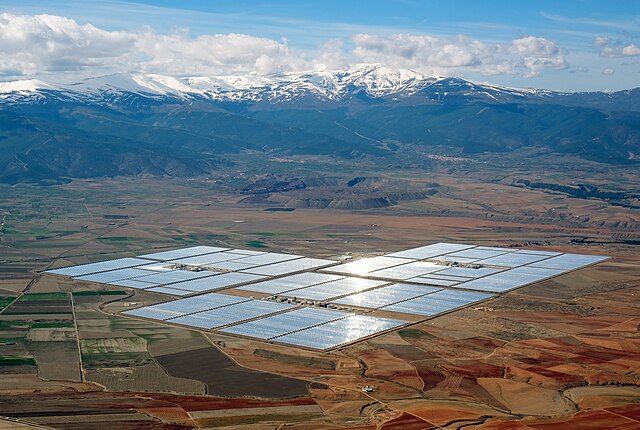
This includes using stranded methane, micro-hydro, solar panels and wind that can generate the power needed to mine cryptocurrency — all without the need for the grid, explains Batten.
“The people off-grid mining… would maintain the network, and it would still be the most secure monetary network in the world.”
There are some potential plot holes to this theory, though.
Even renewable energy systems require maintenance and replacement parts, and personnel who can fix issues whenever they arise.
A global catastrophe that could see as much as 90% of the population wiped out would probably decimate the supply chain even if we managed to harness some power from renewable energy.
We could also question whether maintaining the Bitcoin network and a monetary system would really be the best use of power, given there would be so many other immediate needs like food, shelter and medical care.
But let’s just say, for argument’s sake, that Bitcoin can still be mined; the next question is whether the blockchain can remain synced globally.
There’s the problem of the internet
Bitcoin relies heavily on the internet. After all, it’s currently the most efficient means of sending data across the globe. Intercontinental data travels through approximately 8 million miles of fiber-optic cables running along the ocean floor.
With global power gone, it’s unlikely these cables can be maintained, meaning they will slowly degrade over time. Does this mean the internet is done for?
Well, Swan Bitcoin argues that the internet, like Bitcoin, is designed for maximum survivability.
“Any computer in the world running the internet’s protocols, which are themselves open-source software that can connect to any other computer doing the same thing, is ‘on the internet,’” explains Swan Bitcoin software developer Rigel Walshe.
“It may not have access to every other computer on the internet, but it really isn’t possible for the whole internet to go down unless no computer in the world is running at all.”
However, Walshe argues that even if you didn’t have access to the internet, as long as you had a working computer or hardware wallet, you could still use low-tech options like long-distance radio or even smoke signals to transmit a Bitcoin transaction to someone with access to the global network.
Blockstream has developed satellite kits that allow people in areas with spotty internet to download full Bitcoin nodes without the need for the internet, for example.

But let’s face it. It may not even matter that we get Bitcoin up and running again anyway.
Bitcoiners will probably be dead
James Woolsey, a former director of the Central Intelligence Agency, once told lawmakers that between two-thirds and 90 percent of the US population would die if the electrical grid were to go down for a year due to an electromagnetic pulse.
“We’re talking about total devastation. We’re not talking about just a regular catastrophe,” he said.
“If there’s a 10-year total power outage, Bitcoin is the least of our worries,” Bitcoin core developer Peter Todd tells Magazine.
“It’ll be a god damn miracle if civilization can restart at all. If we have flush toilets after that, we’ll be lucky.”
Todd argues it’ll be pointless to restart Bitcoin, as most Bitcoiners will probably be dead. After all, Bitcoiners, like most people, need food and clean drinking water.
“Humanity can’t feed itself without electricity. Something like 95% of the population would starve to death. It only makes sense to restart Bitcoin — rather than launch an entirely new currency — if the people who actually owned Bitcoin in the past are still alive,” he says.
Conclusion: Bitcoin would survive, but its users will not
It may seem a grim outlook — but it’s likely that while the Bitcoin network would easily survive a global catastrophe, its use case probably will not.
After all, would you really trade your last carrot for anything that isn’t food, warmth or shelter?
Crying wiping face with money – Woody Harrelson pic.twitter.com/Sbf22hsffQ
— Literal Posts (@CertonasO) February 10, 2024


Felix Ng
Crypto loves Clawdbot/Moltbot, Uber ratings for AI agents: AI Eye