There’s something about Bitcoin and blockchain that just seems to attract weird and wacky tinkerers.
While computationally powerful ASIC miners dominate proof-of-work crypto mining today, that hasn’t stopped innovative crypto miners from using everything from Game Boys to the Apollo moon mission guidance computer to help secure the network.
Magazine has gathered some of the strangest things people have tried to mine cryptocurrency with, and you’ll be astounded at the ingenuity.
Press X to mine Bitcoin
If your mom has ever given you a hard time about your gaming habits, tell her you’re simply researching consumer grade crypto mining hardware.
PlayStation consoles were used to mine cryptocurrency for years.
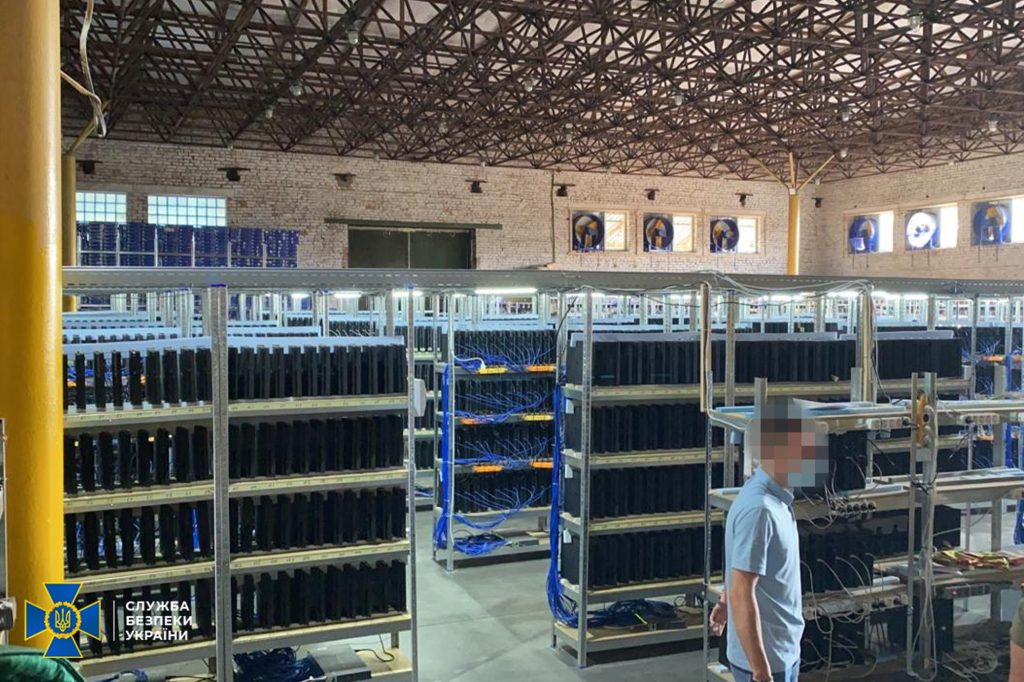
In 2021, Ukraine’s Security Service reported that it had busted a cryptocurrency mining operation that allegedly stole up to $260,000 worth of electricity each month.
Five thousand devices were seized by authorities, with 3,800 of them being what look like PlayStation 4 consoles, along with 500 graphics cards, 50 CPUs, notebooks, phones and flash drives.
Then, a few years later, reports emerged that computer hardware manufacturer ASRock had built a new $15,000 cryptomining rig that utilized 12 AMD BC-250 mining cards, a cut-down version of the chip used in the Sony PlayStation 5.
Each rig was reportedly capable of up to 610 MH/s when mining Ethereum, back when it used Proof of Work.
YouTubers caught on to the technique in 2024, running their own experiments on the BC-250 processors to mine crypto.
Mining Bitcoin with a botnet of CCTV cameras
Of course, who can forget about smart devices?
In 2017, IBM researchers discovered a variant of the Mirai botnet tuned for mining Bitcoin, which was worth about $1,300 at the time.
The Mirai botnet was first identified by security researchers in August 2016 after it was used to infect thousands of smart devices to perform large-scale distributed denial-of-service attacks (basically spamming a server until it crashes).
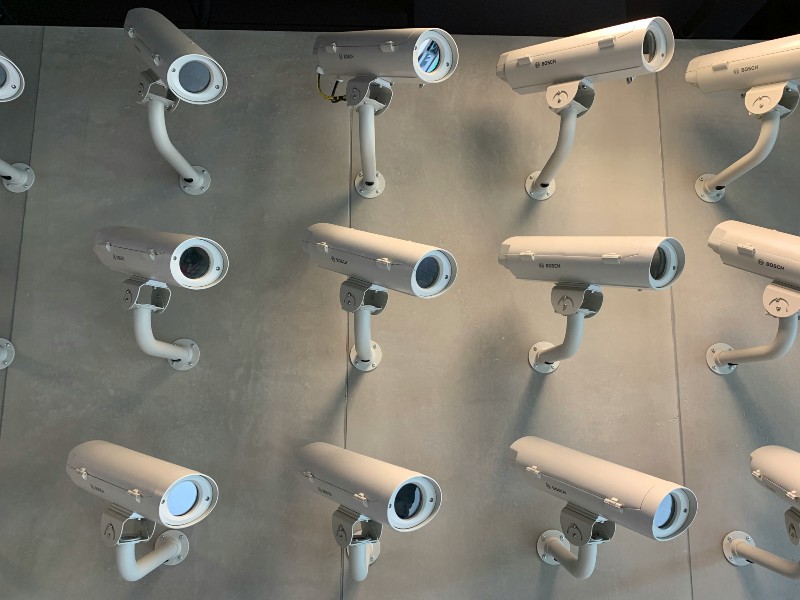
Mirai was the name of the tool that scanned the internet for Internet of Things (IoT) devices configured with factory default credentials, which made them easy enlistees of a global bot army.
A month later, its source code was leaked, and in 2017, threat actors had the nifty idea of customizing the botnet to try and mine Bitcoin, with peak activity around March 2017.
The Bitcoin Mirai malware targeted Linux machines running BusyBox, one of the most widely used Linux tools for internet-connected devices. Darktrace identified one instance of the Mirai malware infecting a DVR camera belonging to a company in Canada.
But researchers from IBM’s X-Force questioned how successful it would be, as mining Bitcoin at that time already required powerful ASIC miners to even have a chance of winning a block reward.
“Given Mirai’s power to infect thousands of machines at a time, however, there is a possibility that the Bitcoin miners could work together in tandem as one large miner consortium,” said the researchers. So who knows, they might have hit the jackpot.
Mining on a Game Boy, because why not
In the same way you can mow your lawn with scissors, you can technically mine Bitcoin on an old-school ’90s Nintendo Game Boy — though we’re not really sure why anyone would want to.
In 2021, YouTuber stacksmashing repurposed an old Nintendo Game Boy using a Raspberry Pi Pico, a link cable and some custom software.
The mining process is performed on the Game Boy (originally launched in Japan in April 1989) with a bit of coding wizardry, while communication to and from the Bitcoin network is handled through a computer via a voltage-modified link cable.
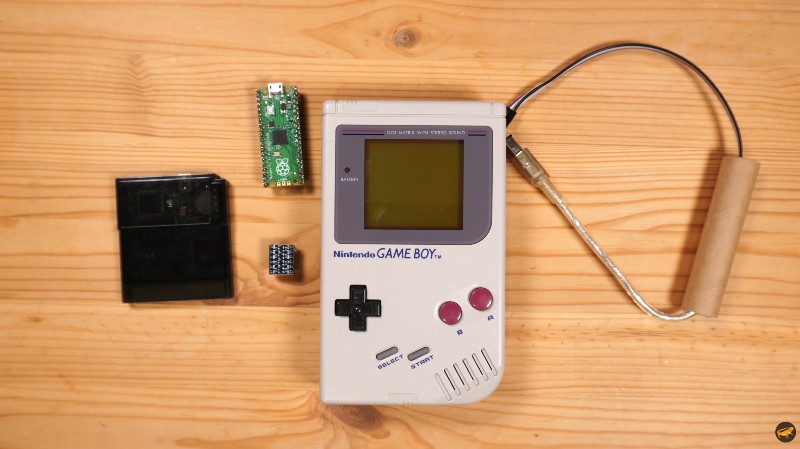
The process involves getting the Game Boy to run a custom ROM (read-only memory image), using the same firmware that Trezor’s hardware wallet uses for its SHA-256 implementation.
The Game Boy Bitcoin miner code is relatively simple, consisting of an endless loop that first receives the block data and target value from the computer, starts mining, checks the hash against the target value, and either sends the successful nonce back to the computer or starts the process again.
According to stacksmashing, you can actually hear it working as the Game Boy gives off a particular “whine” as it strains with the computations necessary to win a Bitcoin block.
“The hashrate is pretty impressive, roughly 0.8 hashes per second. If you compare that to modern ASIC miners, which come in at around 100 terahashes per second, you can see that we are almost as fast, only off by a factor of 125 trillion,” he said, jokingly.
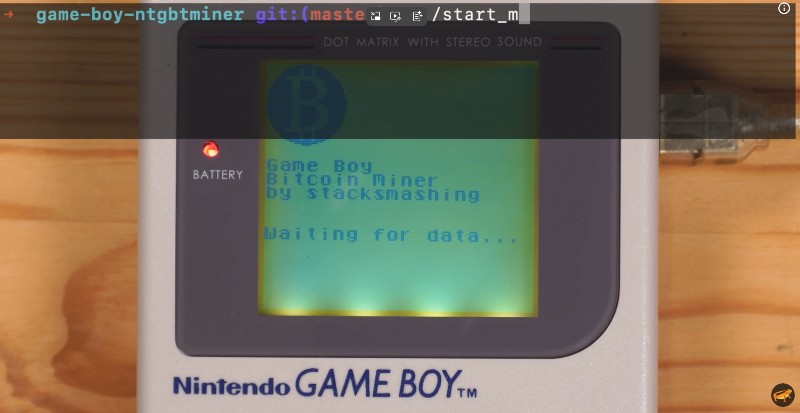
Stacksmashing estimates it would take a couple of quadrillion years to win a Bitcoin block at that rate.
“Obviously, mining Bitcoin on a Game Boy is anything but profitable, but I learned a lot of things while building this and definitely had a ton of fun,” he said.
Mining Bitcoin on the computer that went to the Moon
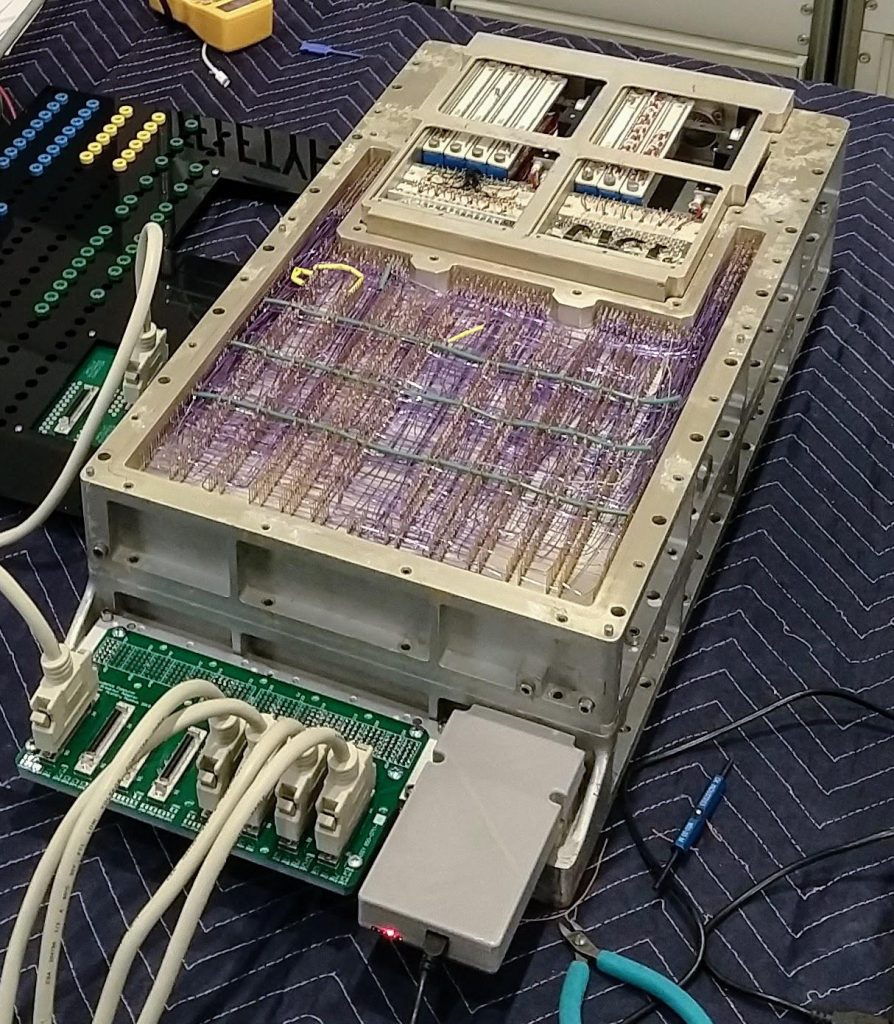
What’s slower than a Game Boy? According to vintage computer restorer Ken Shirriff, it’s the computer that got Apollo mission astronauts, including Neil Armstrong, Buzz Aldrin and Michael Collins, to the moon.
The Apollo Guidance Computer was developed in the 1960s. It was built at a time when most computers were the size of an entire room.
Which was why the Apollo Guidance Computer was a marvel at the time. It could be used for guidance, navigation and control of the spacecraft while being small enough to fly to space.
In 2019, Shirriff attempted to mine Bitcoin on it.
“Trying to mine Bitcoin on this 1960s computer seemed both pointless and anachronistic, so I had to give it a shot,” he wrote in a lengthy write-up.
Shirriff said it was a massive challenge to get the Apollo Guidance Computer to play ball. The hardware was essentially incompatible, and the memory was laughably low.
Even loading the program necessary to mine Bitcoin was tricky, according to Shirriff. In the 1960s, code for the AGC was written on punch cards and assembled onto tape using a software system called YUL and software was physically woven into bundles of wires threaded through magnetic ferrite cores (called Core Rope Memory).
Since that kind of technology takes weeks to manufacture, Shirriff had to use a core rope simulator instead to load and run the Bitcoin program, relying on self-written software and a custom board to load the code into the AGC.
In the end, Shirriff said he was able to achieve approximately 10.3 seconds per hash, or 0.10 hashes per second.
To put it into perspective, Shirriff said it’s so slow that it would take a million times the age of the universe to successfully mine a Bitcoin block.
But even that’s not the slowest way to do it.
Mine Bitcoin with a pen and paper
Shirriff again proves that anything is possible with enough time. Years before his Apollo computer experiment, Shirriff demonstrated that you can technically mine Bitcoin with a pen and paper, as long as you have a considerable amount of patience (and scientists have solved immortality).
“I decided to see how practical it would be to mine Bitcoin with pencil and paper. It turns out that the SHA-256 algorithm used for mining is pretty simple and can, in fact, be done by hand,” he wrote in a blog.
In a video he posted to YouTube, Shirriff managed to complete one pretty painful-looking round of SHA-256 in 16 minutes and 45 seconds.
With 128 required for a full Bitcoin block, that means it would take him roughly 1.5 days to hash the full Bitcoin block. This equates to a blistering 0.67 hashes per day.
For comparison, Bitmain’s Antminer S21 Pro has a hashrate of 234 terahashes per second, which is about 30 quintillion times faster than doing it by hand.
“Not surprisingly, the process is extremely slow compared to hardware mining and is entirely impractical.”
At least we now have a Bitcoin mining solution in case the world ever loses power.
Microsoft considered mining crypto with your brain
In 2019, Microsoft filed a patent in the US that describes using body activity, such as brain waves and facial movements, as a form of “proof-of-work” in a cryptocurrency system.
The basic idea of the application, titled “Cryptocurrency System Using Body Activity Data,” is that a user’s bodily functions will serve as their “proof-of-humanity” that allows them to be paid for performing a task, like watching ads, using a search engine, or solving CAPTCHA puzzles.
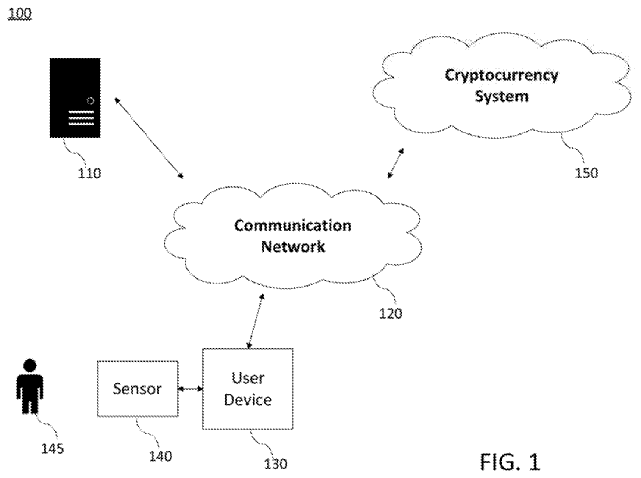
This could include anything from brain waves, body temperature and heart rate, to eye or facial movements — basically anything that humans do unconsciously that would be hard for a machine to spoof.
This data becomes their proof-of-work (or proof-of-human-effort). If the body-activity data meets the conditions, the system treats it as a valid mining result and rewards cryptocurrency to the user.

Inventors behind the application, Dustin Abramson, Derrick Fu, and Joseph Johnson Jr. said the system is an alternative to the computationally intensive Bitcoin mining model, where miners compete to solve challenging puzzles using machines.
“Instead of massive computation work required by some conventional cryptocurrency systems, data generated based on the body activity of the user can be a proof-of-work, and therefore, a user can solve the computationally difficult problem unconsciously,” the inventors said.
However, the most recent records indicate that the patent application was abandoned as of 2021.
Interestingly, Abramson and Johnson are also the same inventors behind a patent that describes turning deceased loved ones into conversational AI chatbots (Black Mirror, anyone?), which was granted in 2021.
Luckily, it doesn’t look like anything has come of this… yet.


Felix Ng

LUNA meets the Howey test, Barry Silbert resigns from Grayscale, and more: Hodler’s Digest, Dec. 24-30
Judge rules that Terraform Labs offered and sold LUNA as unregistered security, Barry Silbert leaves Grayscale’s board and China takes action against Tether.
Read more
6 Questions for Andrew Levine of Koinos Group
“I think Bitcoin’s and Ether’s narratives are compelling and broadly appealing, so they will continue to attract new users and deliver valuable applications.”
Read moreGrok faces bans… but 8 lawsuits claim ChatGPT use can kill: AI Eye