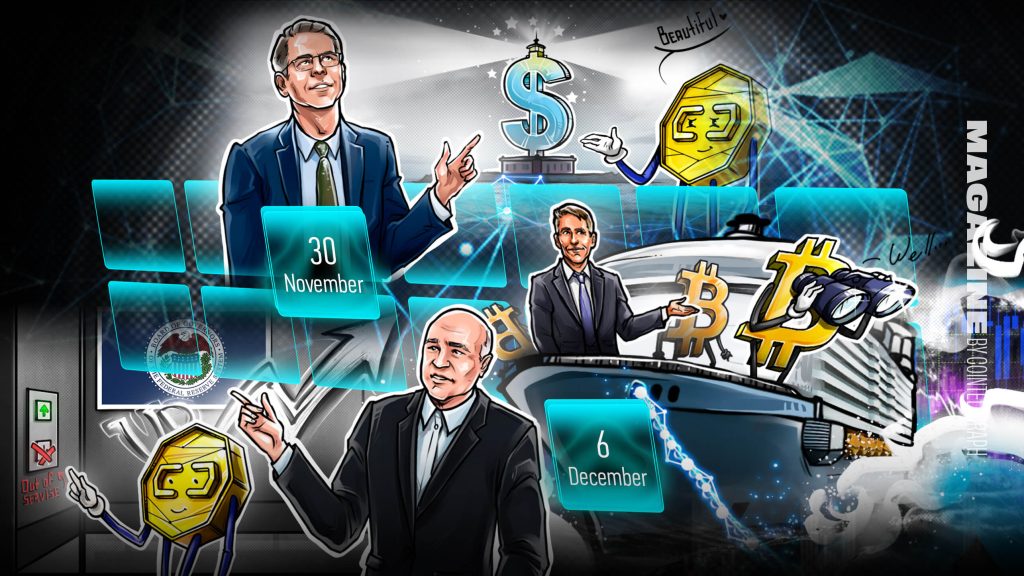
Top Magazine Stories of The Week
2,000 Bitcoin on the move: Rare Casascius coins awaken after 13 years
Two long-dormant Casascius coins — each backed by 1,000 Bitcoin — have just been activated as of Friday, unlocking more than $179 million stashed away for more than 13 years.
Onchain data indicates that one of the Casascius coins was minted in October 2012, when Bitcoin was trading for $11.69.
The other was minted earlier in December 2011, when Bitcoin was valued at only $3.88, giving that Casascius coin a theoretical return of about 2.3 million percent, not including the cost of minting.
Casacius coins are physical metal coins or bars created by Utah-based entrepreneur Mike Caldwell, which were minted between 2011 and 2013.
Caldwell would take Bitcoin and mint the value into physical coins; these coins are considered one of the most sought-after physical collectibles related to Bitcoin.
Peter Schiff fails to authenticate gold bar during onstage test with CZ
A panel featuring gold advocate Peter Schiff and Binance co-founder Changpeng “CZ” Zhao at Binance Blockchain Week highlighted the challenges of verifying physical gold, after Schiff was unable to confirm whether a gold bar presented to him was genuine.
The debate involved whether tokenized gold or Bitcoin is a better store of value asset based on divisibility, portability, verifiability, durability and supply constraints — key factors in assessing an asset’s viability as money.
CZ argued that BTC is a better medium for storing value for several reasons, including the ability for any user to instantly verify the cryptocurrency through a full node or other methods that check a cryptographically secure public ledger.
IMF lays out guidelines for addressing stablecoin risks, beyond regulations
The International Monetary Fund (IMF) released a comprehensive report on the potential impact of the growing stablecoin market and the adequacy of global regulations in handling it.
In the “Understanding Stablecoins” report released on Thursday, the IMF analyzed the various approaches regions, including the United States, the United Kingdom, Japan and the European Union, had taken in establishing a regulatory framework for stablecoins.
Although the report noted that emerging regulations could mitigate risks to macrofinancial stability, the landscape was “fragmented,” both in policymakers’ approaches and how stablecoins are issued.
“The proliferation of new stablecoins across different blockchains and exchanges raises concerns about inefficiencies due to potential lack of interoperability,” said the IMF. “Moreover, this can introduce differences and roadblocks among countries, due to different regulatory treatment and transaction hurdles.”

Tether solvency fears are ‘misplaced’ as company sits on large surplus: CoinShares
Concerns about stablecoin issuer Tether’s financial stability resurfaced this week after BitMEX co-founder Arthur Hayes warned the company could face serious trouble if the value of its reserve assets were to fall. But CoinShares’ head of research, James Butterfill, pushed back on those claims.
In a Dec. 5 market update, Butterfill said fears over Tether’s solvency “look misplaced.”
He pointed to Tether’s latest attestation, which reports $181 billion in reserves against roughly $174.45 billion in liabilities, leaving a surplus of nearly $6.8 billion.
“Although stablecoin risks should never be dismissed outright, the current data do not indicate systemic vulnerability,” Butterfill wrote.
Tether remains one of the most profitable companies in the sector, generating $10 billion in the first three quarters of the year — an unusually high figure on a per-employee basis.
Kalshi taps Solana to tokenize betting contracts: Report
Predictions platform Kalshi has reportedly begun allowing users to buy and sell tokenized versions of its event contracts on the Solana blockchain.
According to a Monday CNBC report, Kalshi has moved to court cryptocurrency users by offering tokenized contracts, which are now live on Solana. The move tokenized bets on the predictions platform, which includes US elections, sports and more, making them tradeable on the blockchain.
“There’s a lot of power users in crypto,” John Wang, Kalshi’s head of crypto, told CNBC. “This is about tapping into the billions of dollars of liquidity that crypto has, and then also enabling developers to build third-party front ends that utilize Kalshi’s liquidity.”
Most Memorable Quotations
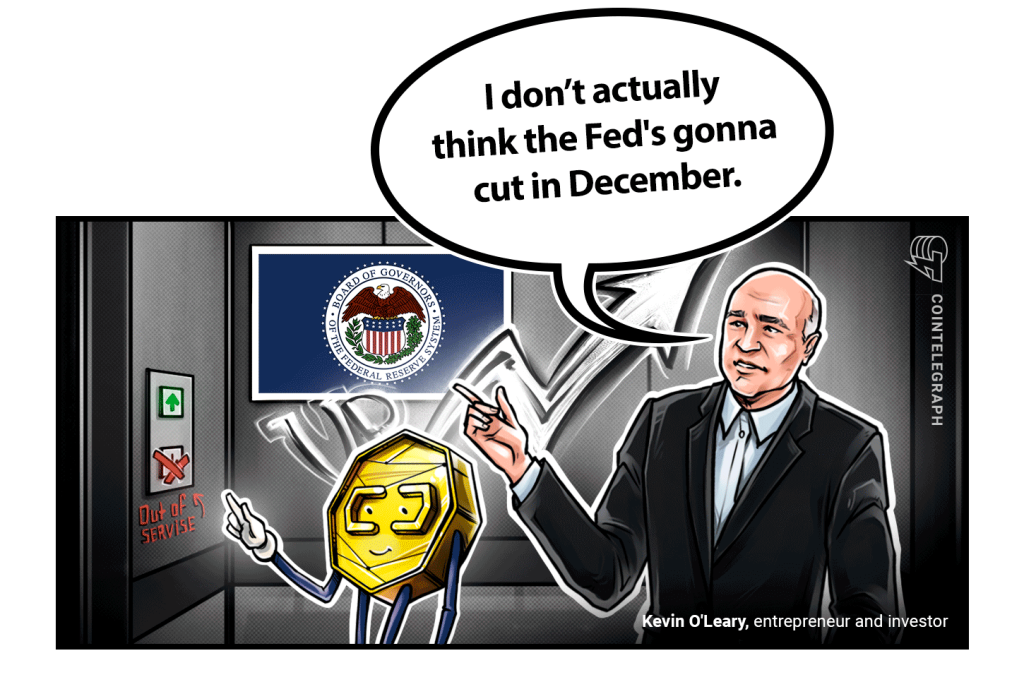
“I don’t actually think the Fed’s gonna cut in December.”
Kevin O’Leary, entrepreneur and investor
“I’m looking forward to having an innovation exemption that we’ve been talking about now. We’ll be able to get that out in a month or so.”
Paul Atkins, chair of the US Securities and Exchange Commission
“Anyone who reads the story carefully can see that they strung together a bunch of anecdotes that don’t support the headline.”
David Sacks, AI and crypto czar for the US White House
“There is nothing about MSTR’s price dropping below NAV [net asset value] that will force it to sell.”
Matt Hougan, chief investment officer at Bitwise
“All the thousands of other tokens, not the stablecoins that are backed by US dollars, but all the thousands of other tokens, you have to ask yourself, what are the fundamentals? What’s underlying it… The investing public just needs to be aware of those risks.”
Gary Gensler, former chair of the US Securities and Exchange Commission
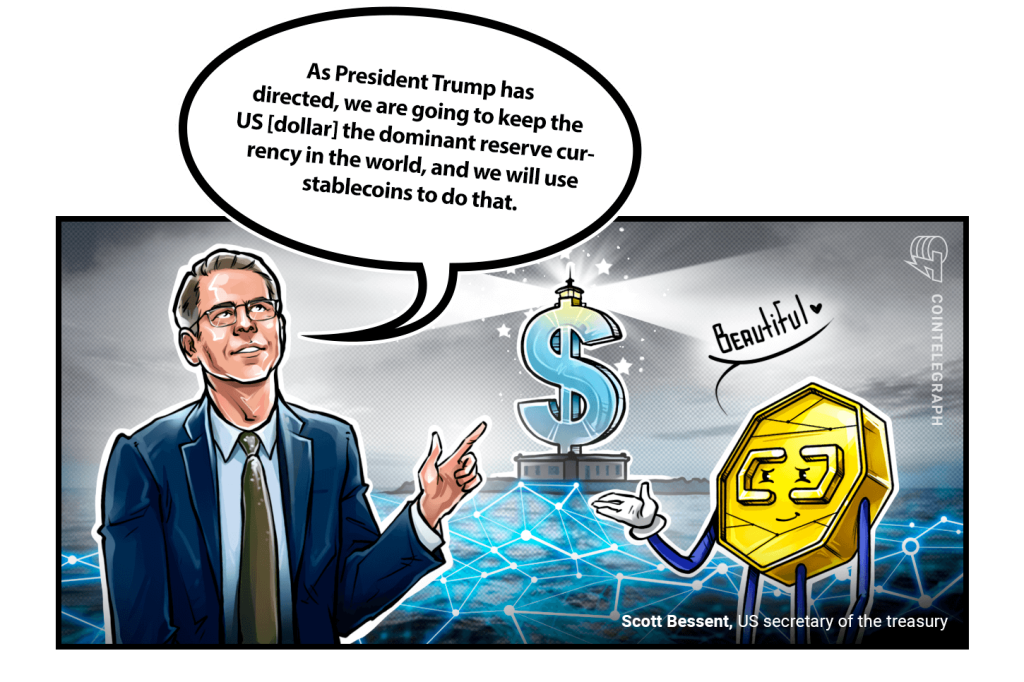
“As President Trump has directed, we are going to keep the US [dollar] the dominant reserve currency in the world, and we will use stablecoins to do that.”
Scott Bessent, US secretary of the treasury
Winners and Losers
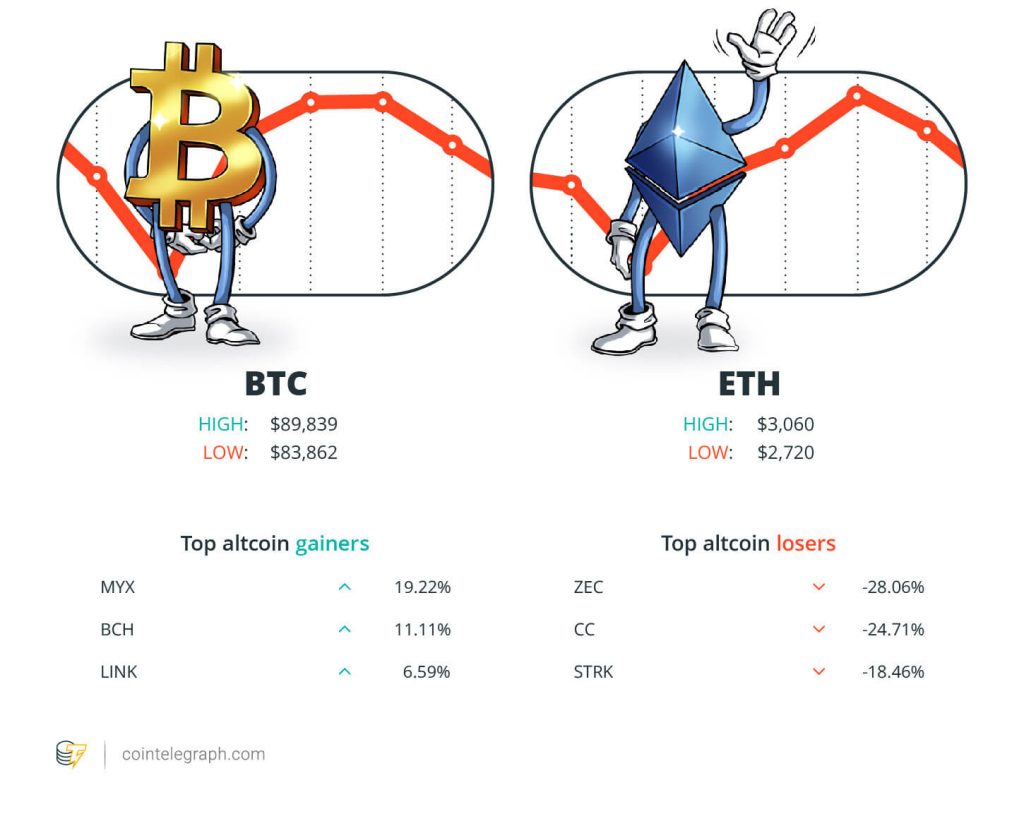
At the end of the week, Bitcoin (BTC) is at $89,839, Ether (ETH) at $3,060 and XRP at $2.03. The total market cap is at $3.06 trillion, according to CoinMarketCap.
Among the biggest 100 cryptocurrencies, the top three altcoin gainers of the week are MYX Finance (MYX) at 19.22%, Bitcoin Cash (BCH) at 11.11% and Chainlink (LINK) at 6.59%.
The top three altcoin losers of the week are ZCash (ZEC) at 28.06%, Canton (CC) at 24.71% and Starknet (STRK) at 18.46%. For more info on crypto prices, make sure to read Cointelegraph’s market analysis.
Top Prediction of The Week
XRP faces ‘now or never’ moment as traders eye rally to $2.50
XRP defended its $2 psychological floor this week, rebounding almost 6% on Tuesday after a brief liquidity sweep on Monday.
While the asset remained in a multimonth downtrend dating back to July, the $2.28–$2.30 resistance band now stands as the defining pivot for bullish continuation.
XRP’s bounce to $2.17 occurred after tapping the fair value gap just beneath $2, an area created during the Nov. 21 rebound from $1.80. This retest suggested that buyers remain active at discounted pricing zones even within a broader downtrend.
Structurally, XRP continued to print lower highs, but the compression below $2.30 resembled a coil forming under a major decision point.
Top FUD of The Week
Pepe memecoin website exploited, redirecting users to malware: Blockaid
The official website for the Pepe memecoin has been compromised by attackers, who are redirecting users to a malicious link.
“Blockaid’s system has identified a front-end attack on Pepe. The site contains a code of inferno drainer,” the cybersecurity company said on Thursday. Blockaid’s Threat Intelligence Team told Cointelegraph:
“Blockaid detected Inferno drainer code on the Pepe front end, matching a known drainer family we regularly identify. This is a front-end compromise, where users are redirected to a fake site that injects malicious code to drain wallets.”
BlackRock’s Fink calls Bitcoin an ‘asset of fear,’ softens crypto stance
Larry Fink, chair and CEO of asset management company BlackRock, explained his “big shift” from associating cryptocurrencies with illicit activities to having the largest spot Bitcoin exchange-traded fund.
Speaking at The New York Times’ DealBook Summit on Wednesday, Fink addressed questions related to his views on crypto and Bitcoin to journalist Andrew Ross Sorkin.
The BlackRock CEO said his move from associating crypto primarily with money laundering to having exposure to billions of dollars in BTC was “a very glaring public example of a big shift in [his] opinions.”
“My thought process always evolves,” said Fink.
SEC sends warning letters to ETF issuers targeting untamed leverage
The US Securities and Exchange Commission (SEC) sent warning letters to several exchange-traded fund (ETF) providers, halting applications for leveraged ETFs that offer more than 200% exposure to the underlying asset.
ETF issuers Direxion, ProShares and Tidal received letters from the SEC citing legal provisions under the Investment Company Act of 1940.
The law caps exposure of investment funds at 200% of their value-at-risk, defined by a “reference portfolio” of unleveraged, underlying assets or benchmark indexes. The SEC said:
“The fund’s designated reference portfolio provides the unleveraged baseline against which to compare the fund’s leveraged portfolio for purposes of identifying the fund’s leverage risk under the rule.”
Top Magazine Story of The Week
6 reasons Jack Dorsey is definitely Satoshi… and 5 reasons he’s not
A deep dive into why some believe Jack Dorsey is Bitcoin’s creator — and why others insist he’s not.

Editorial Staff
Bitcoin’s odds of June highs, SOL’s $485M outflows, and more: Hodler’s Digest, March 2 – 8
Cory Klippsten tips favorable odds for BTC to reach new highs by June, SBF in solitary confinement after Carlson interview: Hodler’s Digest
Read more
Bitcoin eyes $100K by June, Shaq to settle NFT lawsuit, and more: Hodler’s Digest, April 6 – 12
Shaquille O’Neal cleared to settle Astrals NFT lawsuit, Bitcoin $100K target still in play, and more: Hodler’s Digest
Read moreCrypto loves Clawdbot/Moltbot, Uber ratings for AI agents: AI Eye