


 Written by Vince Quillformer writerEdited by Ana Paula Pereiraformer editor
Peter Schiff fails to authenticate gold bar during onstage test with CZ
Latest NewsPublishedDec 4, 2025
Gold advocate Peter Schiff faced Binance co-founder Changpeng "CZ" Zhao during an event panel in Dubai, arguing that tokenized gold is a better store-of-value asset than Bitcoin.

A panel featuring gold advocate Peter Schiff and Binance co-founder Changpeng “CZ” Zhao at Binance Blockchain Week highlighted the challenges of verifying physical gold, after Schiff was unable to confirm whether a gold bar presented to him was genuine.
The debate involved whether tokenized gold or Bitcoin (BTC) is a better store of value asset based on divisibility, portability, verifiability, durability and supply constraints — key factors in assessing an asset’s viability as money.
CZ argued that BTC is a better medium for storing value for several reasons, including the ability for any user to instantly verify the cryptocurrency through a full node or other methods that check a cryptographically secure public ledger.
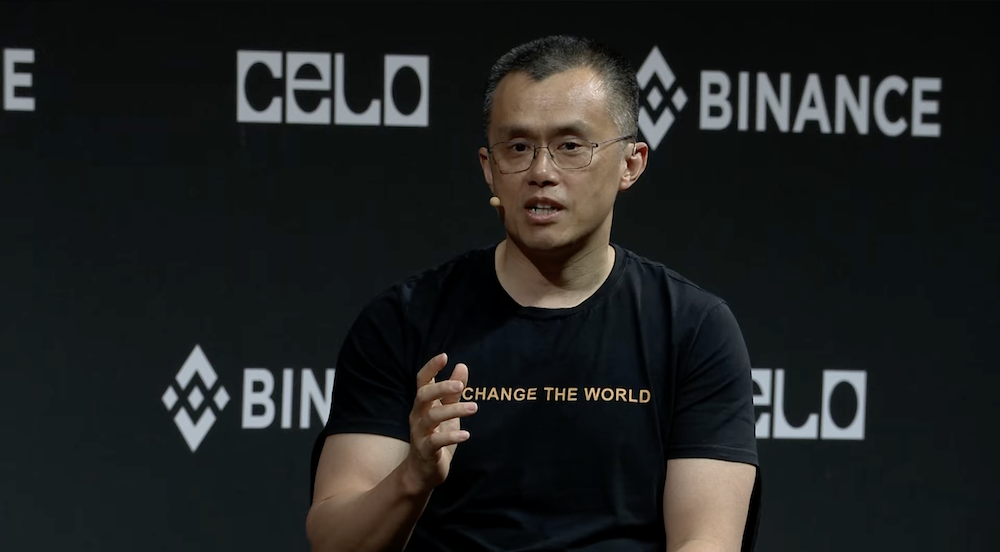
CZ argues for Bitcoin as a better store of value asset. Source: Binance
CZ handed Schiff a gold bar and asked: “It says Kyrgyzstan, 1,000 grams, fine gold, 999.9, and a serial number. Is it real gold?”
“I don’t know,” Schiff responded, drawing laughter and applause from the audience of crypto natives. In October, CZ criticized tokenized gold, saying that the holder must trust the issuer, which led to Thursday’s showdown with Schiff.
The debate between gold advocates and Bitcoiners has evolved over the years, with gold advocates, including Schiff, arguing that gold tokenization solves many of gold’s portability, divisibility and verification issues while being useful for decentralized finance (DeFi) applications.
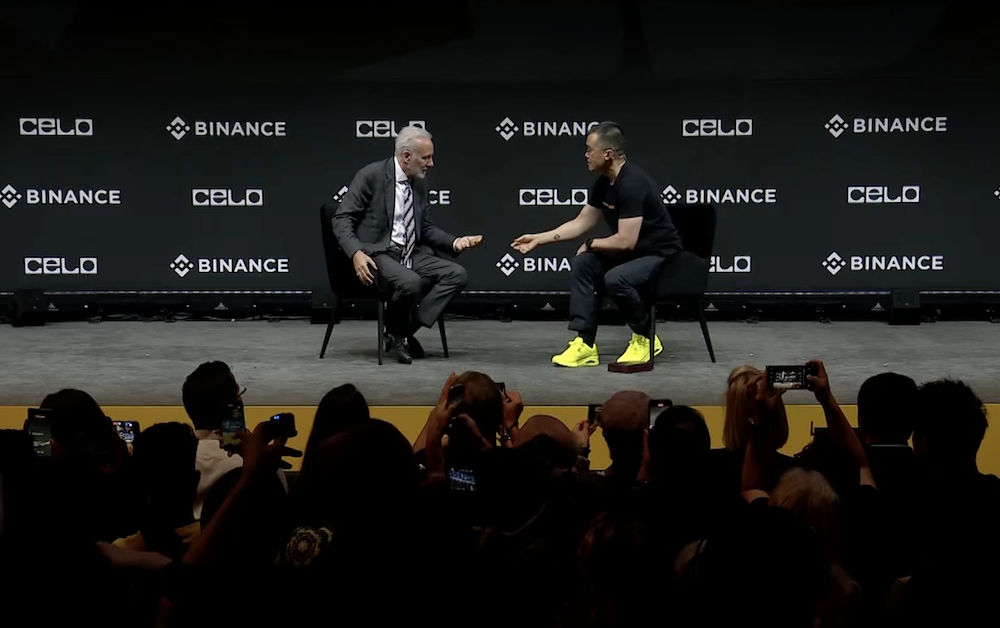
CZ hands Schiff a bar of gold, asking him to verify it. Source: Binance
However, Bitcoin advocates say that real-world asset tokenization (RWA), or representing real-world items on a blockchain, does not solve the problems inherent in the physical gold underlying digital gold tokens, including centralization, counterparty risks and expensive audit procedures.
Related: Peter Schiff calls Strategy's model 'fraud,' challenges Saylor to debate
Fire assaying remains the industry standard for full gold verification
There are several industry-wide accepted methods for assaying, or scientifically verifying the precious metals content of gold, according to the London Bullion Market Association (LBMA), the international gold bullion trade association that sets industry standards for weight, refinement, trading, storage and reputable custodians.
These methods include X-Ray Fluorescent Spectroscopy, Ultrasound, and Eddy Current testing, which are costly, require the use of experts and are limited in scope.
X-Ray Fluorescent Spectroscopy is only effective at determining gold content in metals up to 10 microns in thickness, while the other methods have similar issues, meaning they are not “definitive” testing methods, the LBMA says. Only one method leads to 100% verification certainty, according to the LBMA.
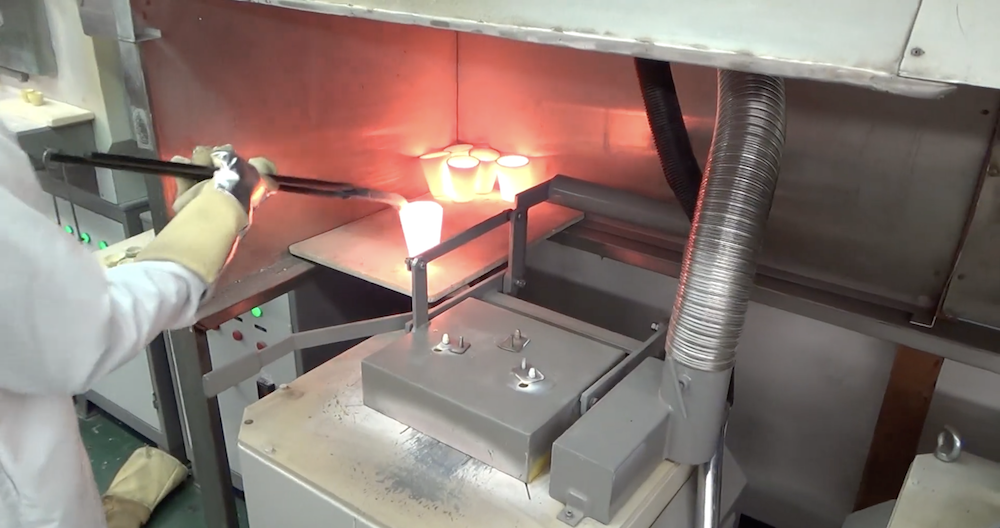
A laboratory technician heats gold to check its contents through fire assaying. Source: The lPMI
Fire assaying, or the process of melting down gold to verify its integrity and makeup, is the only way to attain 100% certainty. However, the LBMA characterizes this as a “destructive” testing method.
“At present, there does not appear to be a definitive non-destructive testing solution that can be endorsed, and so the best risk mitigation of sub-standard assay remains the Good Delivery eco-system of refineries and chain of custody,” the LBMA says.
Magazine: Bitcoin to suffer if it can’t catch gold, XRP bulls back in the fight: Trade Secrets
Subscribe to daily byte-sized crypto news from Cointelegraph
Cointelegraph is committed to independent, transparent journalism. This news article is produced in accordance with Cointelegraph’s Editorial Policy and aims to provide accurate and timely information. Readers are encouraged to verify information independently.
More on the subject