

Written by Erhan KahramanCommissioned Content
Written by Erhan KahramanCommissioned Content
Programmable privacy expands to Base layer 2 to bridge DeFi compliance
CommissionedPublishedSep 23, 2026
Confidential trading framework deployed on Base enables onchain privacy while satisfying regulatory compliance requirements.

Commissioned byPanther Protocol
Panther Protocol has deployed its non-custodial privacy infrastructure on Base, extending its programmable privacy framework beyond Polygon with shielded trading, zero-knowledge eligibility checks and access to existing DeFi liquidity.
Public blockchains expose financial activity by design. Wallet balances, transaction histories and execution routes sit on open ledgers, which gives market participants a durable audit trail at the cost of confidentiality. Institutions that move capital onchain can reveal treasury movements, trading strategies, counterparties and other information that conventional markets usually keep private.
Privacy infrastructure has often introduced a different constraint. Systems built around broad transaction obfuscation can give operators few tools to apply access requirements, sanctions screening or other compliance policies, while isolated privacy environments may also cut users off from established decentralized finance (DeFi) liquidity.
More recent zero-knowledge architectures aim to combine confidentiality with the controls regulated venues require. Such systems can make eligibility verifiable while identity and transaction data stay private.
Programmable privacy comes to Base
Panther Protocol has deployed its non-custodial privacy infrastructure on Base, its first multichain expansion beyond the initial Polygon mainnet deployment.
Inside the protocol’s shielded pools, 1:1-backed zAssets represent assets held in smart contract vaults, while zero-knowledge validation keeps the underlying transaction details off the public ledger.
Proof generation and eligibility checks sit at the edge of the protocol: users generate zero-knowledge proofs in their browser or device, and independent providers such as AMLBot through PureFi handle credential verification. The protocol receives only the resulting eligibility attestation; private keys, transaction data and identity documents stay outside Panther DAO’s custody.
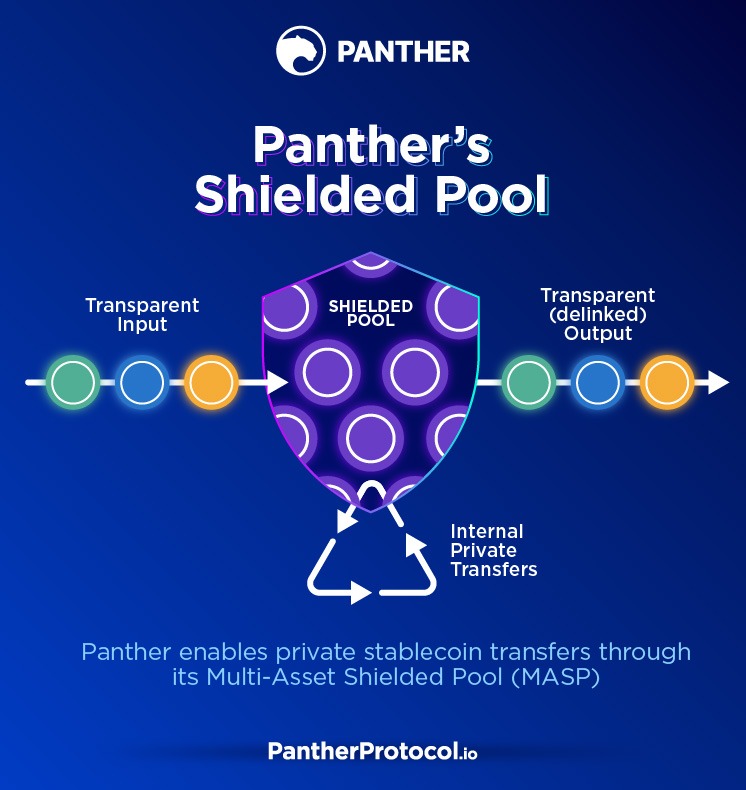
Under Panther’s model, programmable privacy separates confidentiality infrastructure from the policies that govern access. Operators can define participation requirements for individual environments while using shared privacy infrastructure, so institutional, commercial and community deployments can enforce different operating policies.
“Privacy and compliance do not need to be mutually exclusive,” Joris Koopman from the Panther Protocol Foundation said. The foundation said separating confidentiality from policy allows operators to set participation requirements while drawing on shared privacy infrastructure.
Because private venues can fragment liquidity, Panther’s zSwap engine routes shielded activity into existing decentralized exchange pools, with integrations that include Uniswap, QuickSwap and Curve Finance. Confidential trades can therefore draw on established market depth.
The initial Base deployment supports assets that include Ether (ETH), USD Coin (USDC), Coinbase Wrapped BTC (cbBTC), Aerodrome (AERO) and Panther (ZKP). Governance-approved daily thresholds cap protocol volumes, while Forensic Data Escrow provides conditional disclosure of encrypted metadata under defined circumstances.
Institutional onchain privacy
Panther DAO plans to build on its Polygon and Base deployments with an Ethereum mainnet launch and is also exploring privacy infrastructure for the Kaspa ecosystem alongside Igra. As those integrations expand, DAO-governed Panther Reward Points (PRPs) are designed to align qualifying participation across privacy-enabled Zones and other protocol interactions.
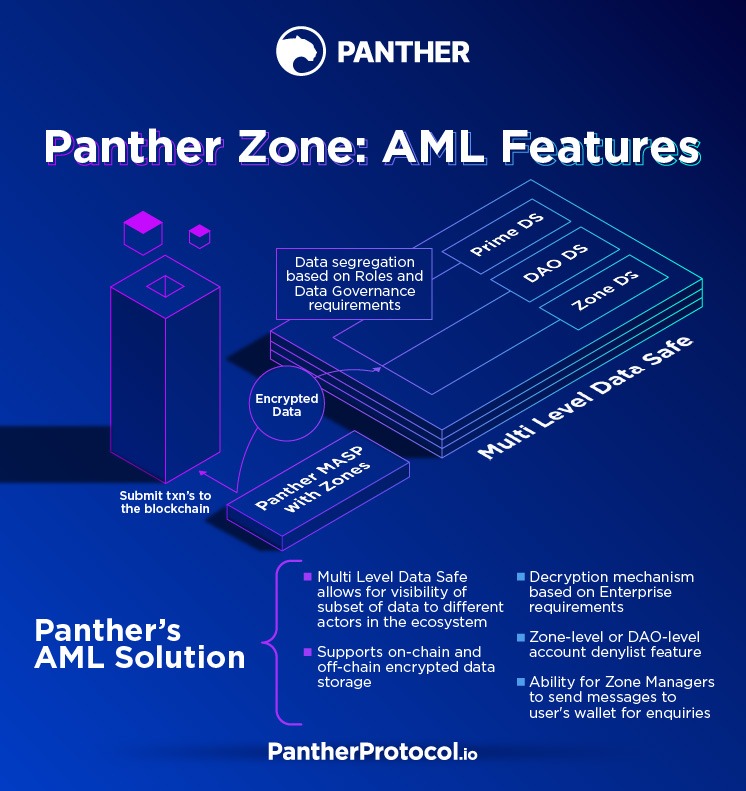
For regulated firms, the institutional relevance lies in reducing how broadly sensitive compliance data must circulate. Credential verification can remain with specialized providers while applications enforce eligibility conditions through attestations.
Multichain expansion now shifts the engineering problem toward consistent privacy and policy enforcement across networks whose liquidity, applications and compliance requirements differ.


Subscribe to daily byte-sized crypto news from Cointelegraph
This content is part of a paid partnership. The text below is a commissioned article that is not part of Cointelegraph editorial content. The material is written by our advertorial team and has undergone editorial review to ensure clarity and relevance, it may not reflect the views and opinions of Cointelegraph.com. Readers are encouraged to conduct their own research before taking any actions related to the company. Disclosure.
More on the subject