

Written by Gleb KCommissioned Content
Written by Gleb KCommissioned Content
How United Nations Development Programme is using blockchains for public infrastructure
Commissioned researchPublishedMar 9, 2026
A new United Nations Development Programme report outlines how blockchain can support public systems.

Commissioned byUnited Nations Development Programme
Public institutions are under pressure to modernize faster than their systems were built to handle. In its recent report, New Tech, New Partners: Transforming development in the digital era, the United Nations Development Programme (UNDP) outlines a model for using blockchains as part of a broader effort to modernize public systems. The publication showcases over 40 pilot projects around the world that apply blockchain technology to improve transparency, speed and accountability of public systems. This ranges from payment infrastructure and social safety nets to climate finance and community-level funding mechanisms, enabled by fundraising platforms, wallets and digital certificates.
The UNDP uses a pipeline model, which creates purpose-built partnerships that bring governments, blockchain startups and local companies together to solve public sector problems. Institutions get an opportunity to test new tools through small, problem-led initiatives and specific use cases. These tools are implemented on a local level and designed to solve specific problems, such as inefficient payment rails for micro-entrepreneurs or regional ESG control.
In its framework, UNDP treats blockchains as a trusted ledger for coordination and verification. The ability of blockchains to support shared records, traceable transactions and rule-based processes across multiple actors makes them a useful tool for governmental systems. UNDP also makes clear that these benefits are conditional. Poor governance, weak privacy protections and flawed technical design can create serious risks, such as defects in smart contracts or Illicit use of payment systems. The report reaches a pragmatic conclusion: Blockchain can be useful, but only when institutional safeguards are built in from the start and the technology is adopted responsibly with robust oversight.
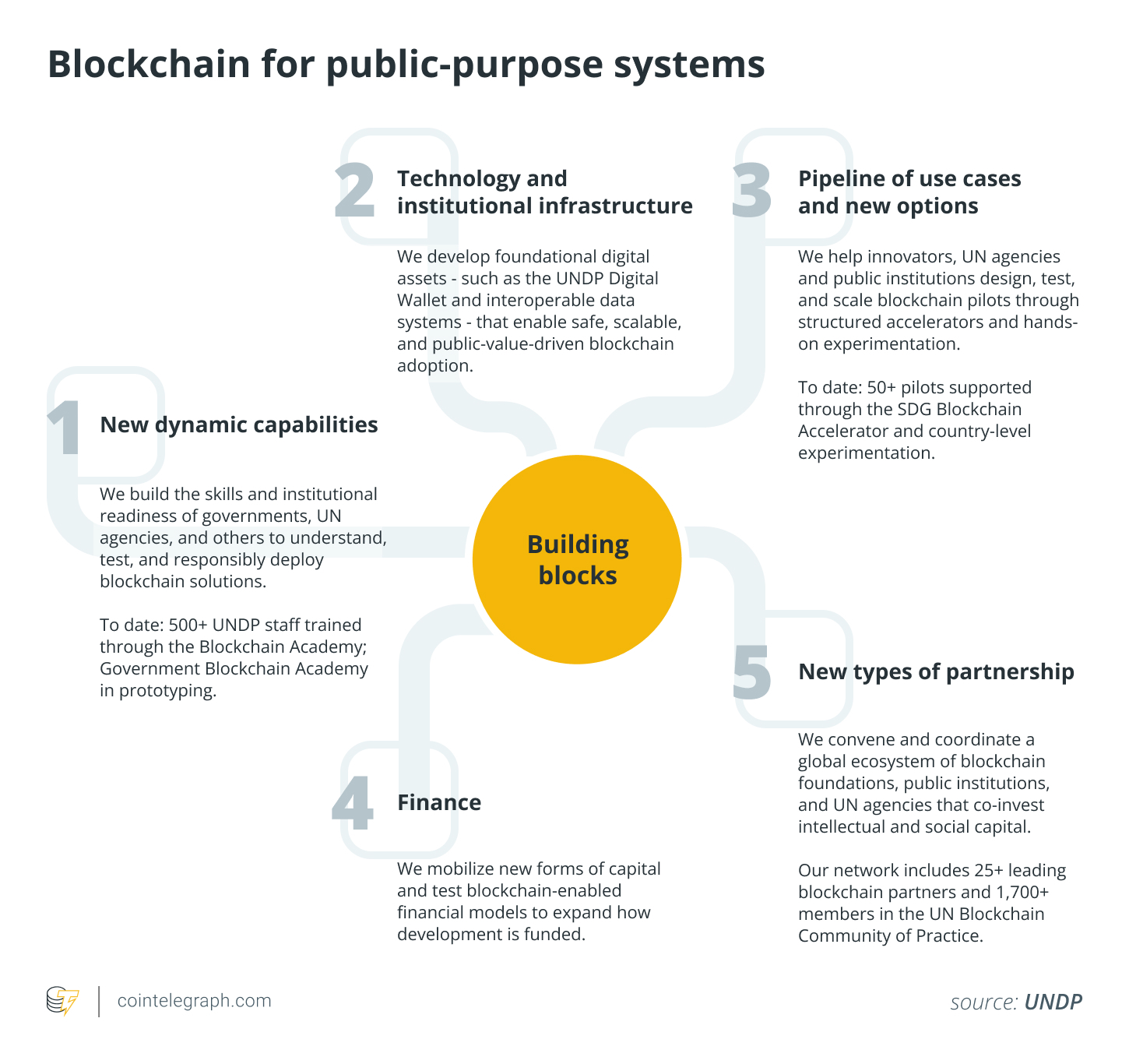
Central to UNDP's approach is a commitment to platform-agnostic ways of working, which ensures that no single provider or protocol creates new dependencies, and that the digital infrastructure being built today remains open, interoperable, and genuinely in service of people and public purpose.
The report showcases how blockchains can be used to make public institutions more efficient and transparent, with examples from more than 40 countries across payments, financial access, identity systems and climate-related programs. Examples include projects such as crypto wallets for informal business payments, the use of eco-credit tokens and more. The cases also show how digital tools can help institutions extend services in developing nations, where trust is limited and infrastructure is fragmented.
Explore the full UNDP report to see the complete framework, lessons and portfolio of use cases.


Subscribe to daily byte-sized crypto news from Cointelegraph
This content is part of a paid partnership. The text below is a commissioned article that is not part of Cointelegraph editorial content. The material is written by our advertorial team and has undergone editorial review to ensure clarity and relevance, it may not reflect the views and opinions of Cointelegraph. Readers are encouraged to conduct their own research before taking any actions related to the company. Disclosure.
More on the subject