


 Written by Nate Kostarstaff writerReviewed by Robert Lakinstaff editor
ETH wallet exploit backfires as MEV bot captures $7.7M, Kelp freezes address
Latest NewsPublishedSep 15, 2026
An MEV bot known as “Yoink” front-ran an attacker attempting to exploit a custom Safe module, capturing the stolen rsETH before Kelp temporarily froze the receiving address.

An attacker exploited a custom module connected to an Ethereum Safe wallet in an attempt to extract roughly $7.7 million in rsETH, only to have the funds intercepted by an MEV bot.
According to blockchain security firm Blockaid, the attacker used a public keeper multicall to direct a custom Uniswap v4 liquidity module into an attacker-created hooked pool, where aEthrsETH was unwrapped into rsETH.
Blockaid identified the affected wallet as a Safe belonging to an unidentified user and said about $7.73 million in rsETH had been lost at the time of its initial report.
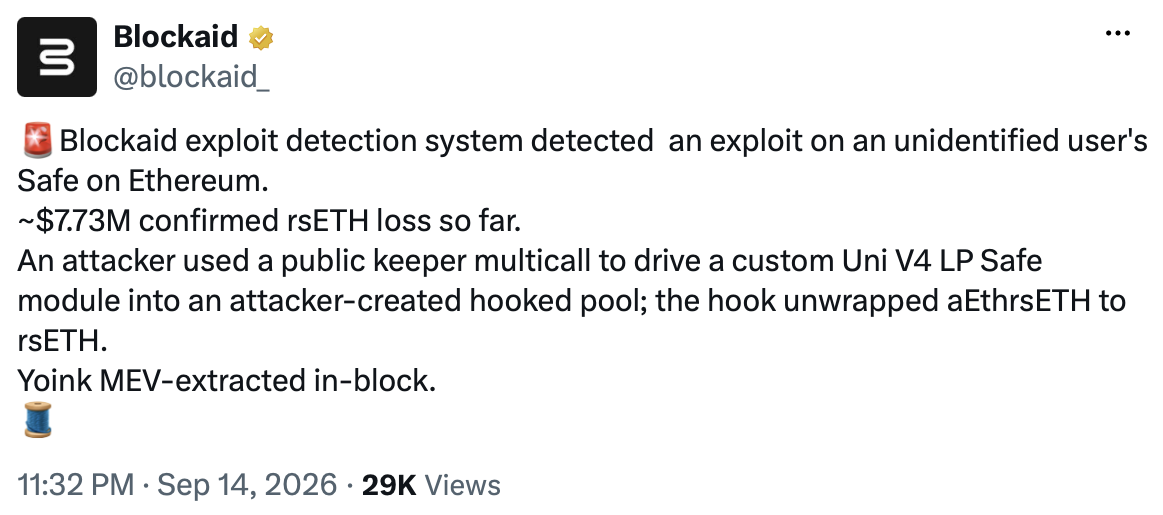
Source: Blockaid
The attack was then front-run by an MEV bot known as Yoink, an automated program that monitors blockchain transactions for profitable opportunities. The bot captured the rsETH before the original exploiter could take control of the funds, while Etherscan data shows Yoink transferred about 18.93 ETH, worth roughly $46,000, to an address labeled as a block builder in the same transaction.
Kelp, the protocol behind rsETH, subsequently placed the address that received the funds under a 24-hour pause, temporarily preventing the tokens from being transferred. “This is a precautionary, wallet-level measure only,” Kelp said. “Kelp contracts are safe, rsETH remains fully backed.”
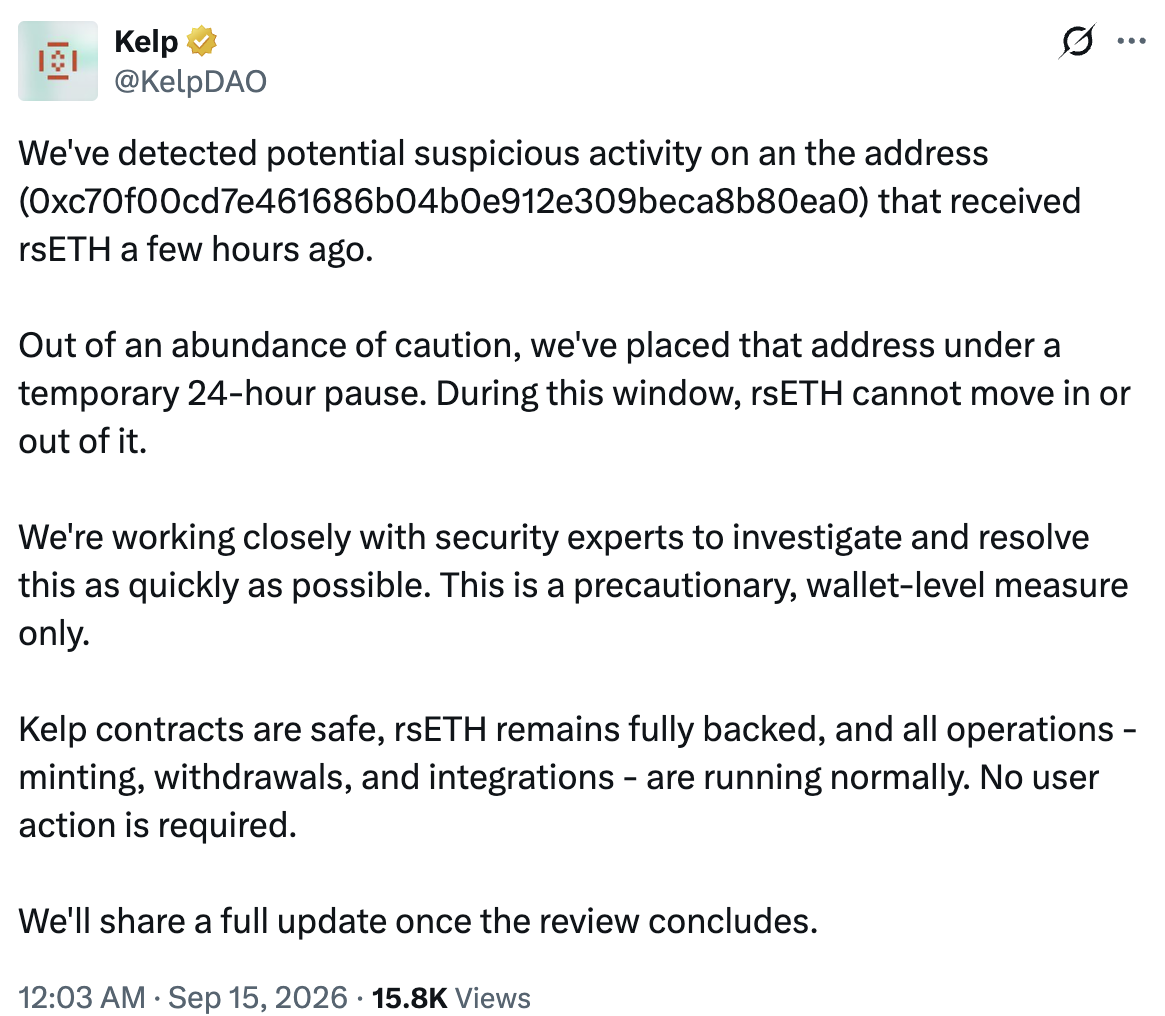
Source: KelpDAO
The protocol said minting, withdrawals and integrations were continuing normally while it worked with security experts to investigate the incident. The apparent attack vector involved the custom module connected to the victim’s Safe, while Kelp said its own contracts were unaffected.
Cointelegraph contacted Blockaid and Kelp for additional comment but had not received a response by publication.
Magazine: Why are AI’s biggest companies suddenly asking to slow down?


Subscribe to daily byte-sized crypto news from Cointelegraph
Cointelegraph is committed to independent, transparent journalism. This news article is produced in accordance with Cointelegraph’s Editorial Policy and aims to provide accurate and timely information. Readers are encouraged to verify information independently.
More on the subject