

Written by Nihatcan YanikCommissioned Content
Written by Nihatcan YanikCommissioned Content
How private routing aims to break the onchain link between wallet addresses
CommissionedPublishedJul 7, 2026
Public ledgers make transaction histories easy to inspect. Privacy-preserving swap flows could give users more control over what their onchain activity reveals.
Commissioned byBlinkSwap
Public blockchains offer an auditable record of value transfers. Their openness turns routine activity into a searchable financial trail. One wallet address can expose a balance, a transaction history, recurring counterparties and fund movements across multiple networks. The record remains visible after the swap closes.
In traditional finance, most people would not publish their bank statements and complete card histories. In Web3, crypto users expose comparable information whenever wallet activity sits on a public ledger.
For instance, France recently faced a surge of crypto-related kidnappings. In February, police reportedly arrested six suspects after a magistrate and her mother were abducted in a ransom plot that targeted the magistrate’s partner, a crypto entrepreneur. The case showed how access to crypto holdings can create risks that go beyond onchain surveillance.
Financial privacy serves practical purposes: It can reduce unwanted scrutiny, limit scam targeting, protect sensitive commercial activity and give individuals more control over personal information. Broader Web3 adoption will depend in part on products that recognize those expectations.
Transaction data left exposed
Self-custody protects private keys and reduces dependence on centralized platforms. Public networks still disclose transaction data. Analytics firms can trace wallet behavior, advertisers can view profile activity, and scammers can search for addresses that appear to hold significant balances.
For wallet owners, having control of their funds and protecting their financial data are separate concerns. A user may retain full ownership of assets while their payment history and trading patterns remain visible to outside observers.
Existing privacy products often introduce friction at the point when users want a simple transaction. Separate applications, specialized setup steps, extra onchain transfers and higher fees can turn an ordinary crypto-to-crypto exchange or transfer into a technical workflow. Some tools also require users to understand routing mechanics that have little relevance to the trade itself.
Users who value privacy may still avoid those tools when the process adds time, cost or uncertainty. Adoption slows when the protected path feels unfamiliar. Privacy features gain wider use when they fit into behaviors users already understand.
Privacy inside the swap flow
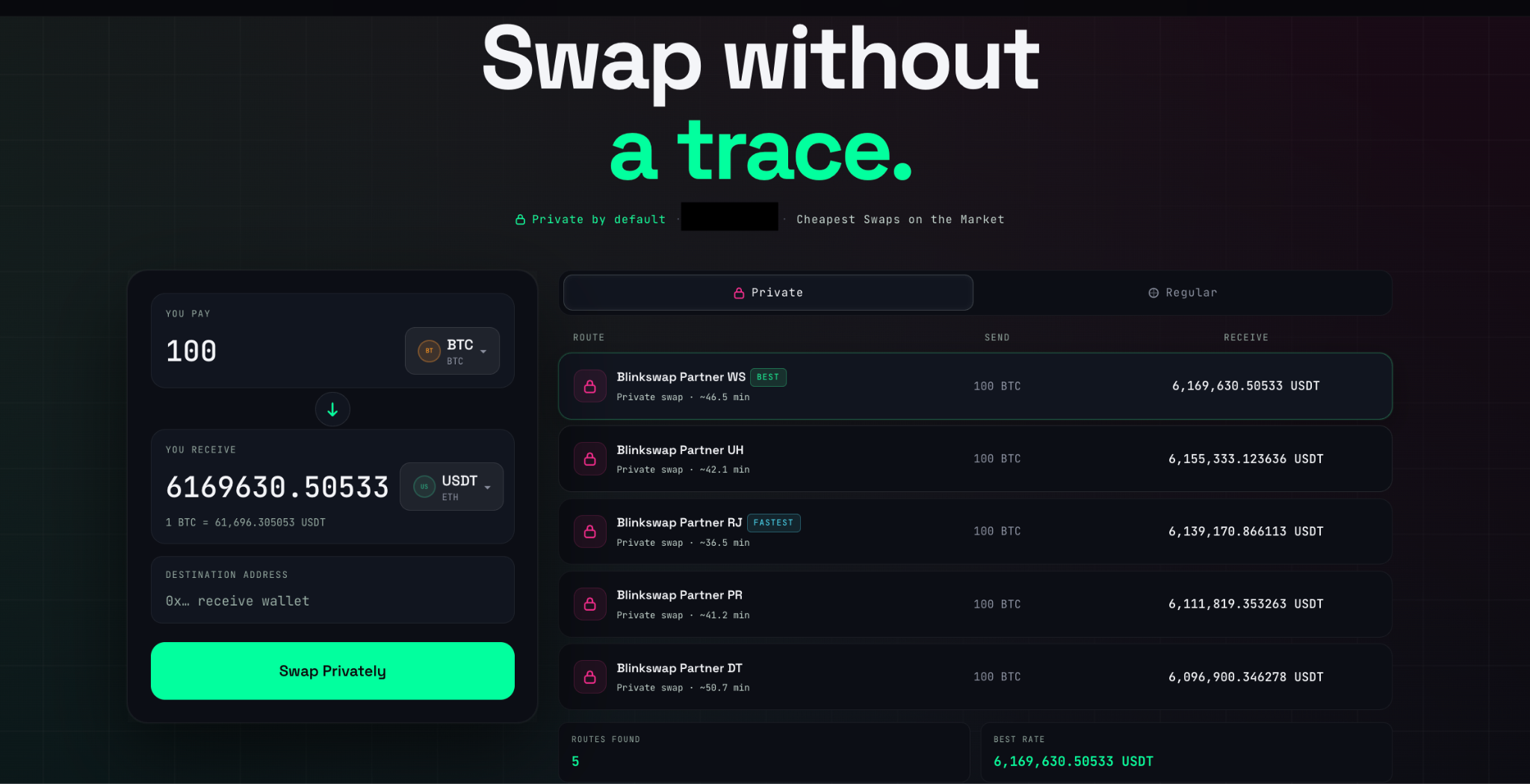
BlinkSwap, a platform for private cross-chain swaps, approaches the issue through the swap process itself. The platform provides non-custodial crypto exchanges across blockchain networks and focuses on reducing the connection between a user’s sending address and an address that receives the swapped assets.
Source: BlinkSwap
Privacy operates within the transaction flow. The service requires no account and no personal data. Users select the assets and networks involved, provide a destination address and send funds for the exchange. BlinkSwap says users can complete the process without connecting a wallet to the platform.
The routing process is designed to make a source wallet and destination wallet harder to associate directly onchain. Public ledger records remain available, yet the transaction path contains fewer obvious address-level links for outside observers to follow.
BlinkSwap sources rates across its supported tokens and networks. Rate discovery occurs alongside the privacy-focused routing process instead of through a separate product or additional setup sequence.

Source: BlinkSwap
The service states that the privacy layer carries no additional privacy fee. Users can send funds directly to a chosen destination address. This can be useful for cross-chain transfers where the receiving wallet differs from the originating wallet as wallet connections can create additional links between user activity and services. Direct destination routing reduces the need for that extra interaction.
The product design reflects a practical view of privacy adoption. Many users already know how to compare assets, enter an amount and complete a swap. Privacy features can gain traction when they operate during those familiar steps instead of requiring separate tools or advanced routing knowledge.
Transaction confidentiality as infrastructure
Privacy will become more relevant as crypto activity expands beyond trading. Payments, remittances, treasury operations, gaming economies and business settlements can all expose behavioral or financial information when every transfer remains permanently searchable.
Confidentiality can become part of everyday infrastructure through wallets, bridges, payment products and exchange services. Products that reduce unnecessary exposure without adding a separate technical workflow can make privacy easier to use in ordinary onchain activity.
BlinkSwap presents one model for that direction. Its approach places privacy-preserving routing inside a familiar swap experience, where users can retain more control over the connections that public blockchain data may otherwise reveal.


Subscribe to daily byte-sized crypto news from Cointelegraph
This content is part of a paid partnership. The text below is a commissioned article that is not part of Cointelegraph editorial content. The material is written by our advertorial team and has undergone editorial review to ensure clarity and relevance, it may not reflect the views and opinions of Cointelegraph.com. Readers are encouraged to conduct their own research before taking any actions related to the company. Disclosure.
More on the subject