
Written by Erhan KahramanCommissioned Content
Written by Erhan KahramanCommissioned Content
Self-custodial crypto card launches global rollout across 172 countries
CommissionedPublishedSep 1, 2026
Mastercard integration allows users to make native DeFi swaps to USDC and spend balances globally while maintaining self-custody.
Commissioned byTHORWallet
THORWallet launches a self-custodial Mastercard card to allow users to swap crypto into USDC through DeFi and spend it without first moving funds to a centralized exchange.
Crypto wallets have made holding and trading assets across multiple blockchains increasingly practical. Users can move between networks, manage private keys and execute swaps through decentralized finance (DeFi) protocols from a single interface. Everyday spending still introduces another layer of infrastructure.
Paying a merchant has typically required moving crypto to a centralized exchange or custodial payment service before converting it into a spendable balance. Each additional platform creates another point where funds leave the user’s direct control, alongside withdrawal limits, account restrictions and potential freezes.
Direct links between non-custodial wallets and established card networks are beginning to shorten the route from onchain assets to merchant payments. Integrated DeFi swaps can prepare funds for spending inside the wallet, with global payment rails handling the final transaction.
Direct DeFi swaps meet global card infrastructure
THORWallet is extending its non-custodial multi-chain wallet to include payments via a Mastercard card program available in 172 countries, including the US.
Since 2021, the platform has processed more than $2.5 billion in native swap volume across more than 20,000 tokens. The THORWallet Card connects those swaps with Mastercard payment infrastructure.
Users can convert major assets such as Bitcoin (BTC), Ether (ETH) and Solana (SOL) into USD Coin (USDC) through non-custodial DeFi protocols integrated into the app. The route avoids wrapped tokens, cross-chain bridges and third-party exchanges. Once the swap is complete, USDC can fund the card with a 0% top-up fee.
Funds remain in self-custody until the user chooses to spend. Merchant transactions then run through the Mastercard network.
For users starting with a virtual card, the Basic tier carries a $125,000 monthly spending limit and supports Apple Pay and Google Pay. It also includes 24/7 chat support and 0% top-up fees. THORWallet estimates onboarding at roughly five minutes. Access is free with an invite code or costs $5 as a one-time fee.
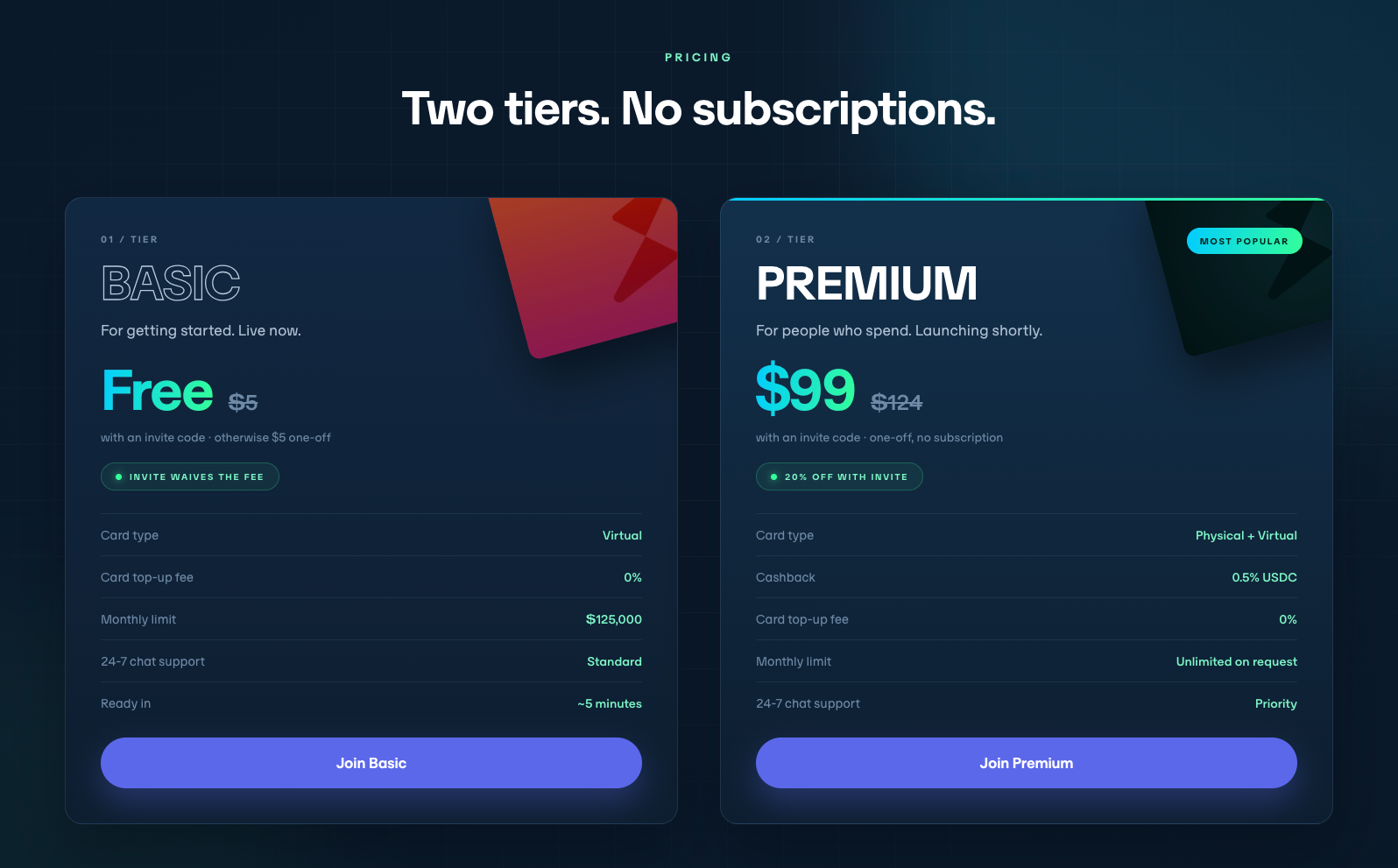
Premium adds both physical and virtual cards when the tier launches. Pricing is $99 once with an invite code or $124 at the standard rate, with no recurring subscription. Cardholders receive 0.5% USDC cashback and priority support, while monthly spending limits can be raised to unlimited on request.
Identity verification has also been broadened to accept more document types. THORWallet says the updated Know Your Customer (KYC) process is intended to reduce onboarding friction across supported markets.
A unified infrastructure for decentralized payments
Combining native swaps with card settlement turns a wallet balance into something closer to an everyday payment account. Cross-border professionals, digital nomads and freelancers in markets with limited banking access can move from onchain assets to merchant spending within the same application.
The card also builds on several years of cross-chain infrastructure. THORWallet has received recognition through the Startup World Cup, Top 10 Fintech Switzerland, the CoinMarketCap Incubator and the Cointelegraph Accelerator.
For self-custodial payments, the next phase centers on shortening the route between an onchain balance and the checkout terminal while keeping users in control of their funds until they choose to spend.


Subscribe to daily byte-sized crypto news from Cointelegraph
This content is part of a paid partnership. The text below is a commissioned article that is not part of Cointelegraph editorial content. The material is written by our advertorial team and has undergone editorial review to ensure clarity and relevance, it may not reflect the views and opinions of Cointelegraph.com. Readers are encouraged to conduct their own research before taking any actions related to the company. Disclosure.
More on the subject