
Written by Erhan KahramanCommissioned Content
Written by Erhan KahramanCommissioned Content
Crypto exchanges pivot from market access to trust infrastructure
CommissionedPublishedSep 30, 2026
As digital assets mature, exchange competition shifts from rapid token access to verifiable security, compliance and everyday utility that can support the industry’s next phase of growth.
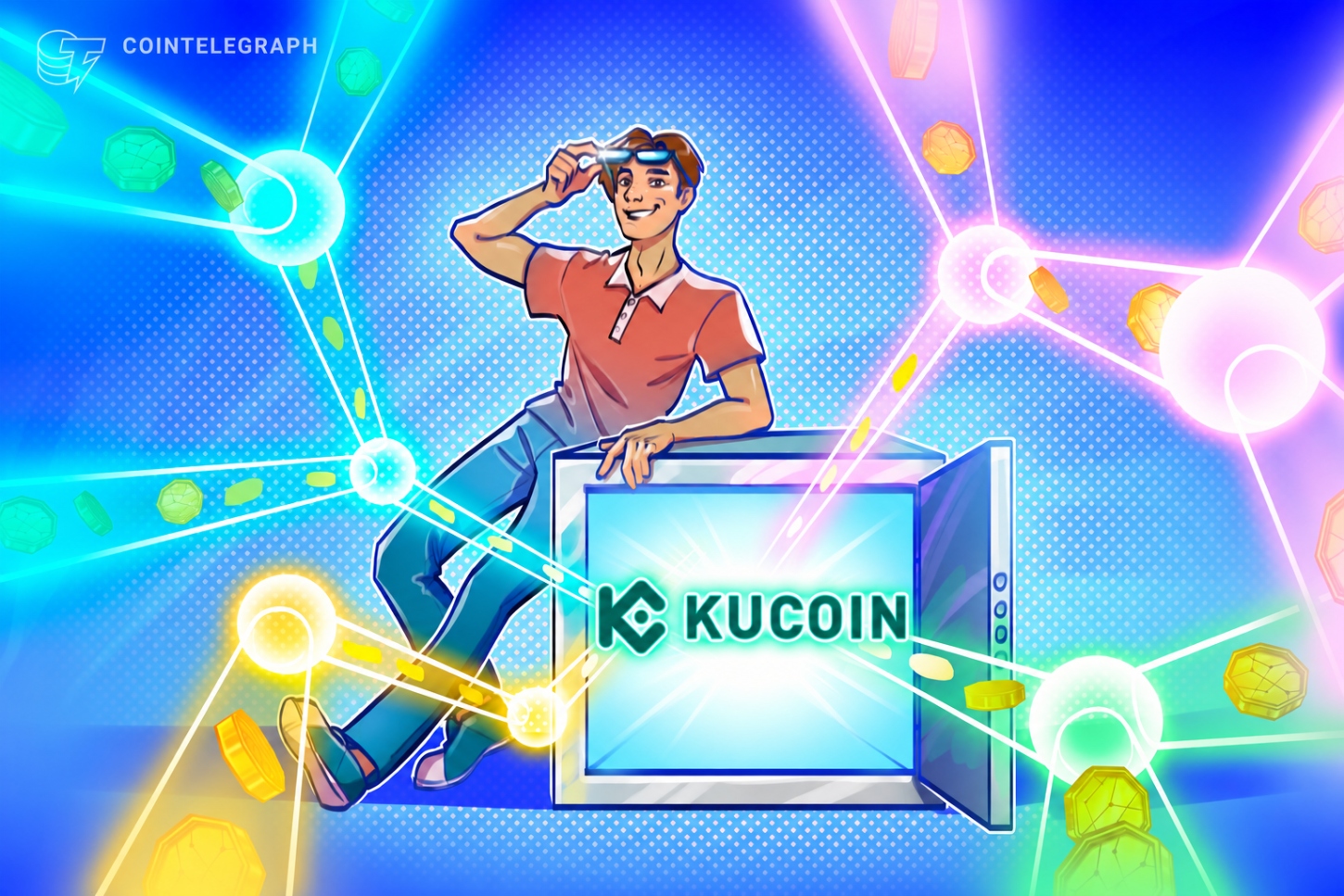
Commissioned byKuCoin
KuCoin’s nine-year evolution shows how crypto exchanges are moving beyond market access toward verifiable operational standards, deeper liquidity and stronger connections with global communities.
Nine years ago, crypto exchanges competed primarily on access. Trading depth, asset selection, fees and product speed shaped where users traded. The sector now operates at a different scale. Regulatory scrutiny has intensified, institutional participation has grown and users have more ways to enter digital asset markets.
What increasingly separates exchanges is how much of their products and offerings can be verified, alongside controls and systems that keep the platform standing when conditions turn volatile. That shift raises a practical question for the industry: what does an exchange actually need to be built like, to serve a market this size?
KuCoin’s ninth anniversary reflects the wider shift from trading venue to trust-focused infrastructure. The exchange has placed its $2 billion Trust Project at the center of that effort, with security, transparency and risk controls embedded across its operating framework.
KuCoin reported 44 consecutive months of published Proof of Reserves (PoR) data and 14 independent PoR verifications by blockchain security firm Hacken. Its broader control framework extends across several independently assessed areas: SOC 2 Type II, ISO/IEC 27001:2022 for information security management, ISO/IEC 27701 for privacy management, CryptoCurrency Security Standard (CCSS) certification and ISO 22301:2019 for business continuity. The exchange also operates a vulnerability disclosure program and AI-powered security operations.
Together, these measures cover asset backing, internal controls, privacy, crypto-asset security and business continuity. Verifiability, in other words, extends well beyond reserves into the systems that govern day-to-day platform operations — the kind of infrastructure that industry watchers point to when discussing what the next generation of trading platforms will need to get right.
Over the same period, KuCoin expanded into compliance, payments, AI tools, institutional services and real-world digital asset utility. Trading remains a core function, but exchanges built for the next phase are expected to operate across a wider set of financial and technological touchpoints.
Outside financial products, KuCoin’s partnerships have also placed the brand in global cultural and sporting communities. Its 2026–2028 agreement with Tomorrowland makes it the exclusive crypto exchange and crypto payments partner for Tomorrowland Winter and Tomorrowland Belgium, which gives digital assets a presence within a major international music community.
In sport, KuCoin’s partnership with Tadej Pogačar extends to the Pogi Challenge, a three-day cycling event that combines amateur participation with charitable fundraising for the Tadej Pogačar Foundation and youth cycling initiatives.
Key takeaways: Growth, scale and global adoption
KuCoin reported more than 45 million users globally in its H1 2026 review. New-user growth reached 170% in Latin America and 30% in Africa, two figures that point to continued expansion outside crypto’s earlier concentration of established trading markets. The longer-term user trajectory gives that scale more context: KuCoin crossed 5 million registered users in 2018 and 10 million in 2021. In roughly five years, its user base expanded more than fourfold.
Asset coverage has expanded alongside the user base. KuCoin has supported more than 1,600 digital assets over its nine-year history, preserving the broad market access that characterized the exchange sector’s earlier competitive phase.
During the first half of 2026, KuCoin ranked among the top three exchanges globally for spot market share and Bitcoin (BTC) spot market depth. Liquidity depth matters because growing user numbers place greater demands on execution quality, especially during periods of heavy market activity.
The next phase of exchange infrastructure
Crypto exchanges are taking on a wider role as digital assets move deeper into finance and everyday life. KuCoin’s nine-year trajectory shows how exchange scale now carries responsibilities that extend from measurable operational standards to liquidity, utility and public engagement. And the exchange has signaled that its next chapter will push further on this front, with additional platform-level updates expected in the coming weeks. The next phase will test whether those systems can remain credible as crypto reaches larger and more diverse audiences.


Subscribe to daily byte-sized crypto news from Cointelegraph
This content is part of a paid partnership. The text below is a commissioned article that is not part of Cointelegraph editorial content. The material is written by our advertorial team and has undergone editorial review to ensure clarity and relevance, it may not reflect the views and opinions of Cointelegraph.com. Readers are encouraged to conduct their own research before taking any actions related to the company. Disclosure.
More on the subject