


 Written by Alice Iveyformer writerReviewed by Alex Cohenformer editor
How to use ChatGPT to learn a language
MagazinePublishedApr 8, 2023
Ask ChatGPT for definitions, translations and grammar explanations in your target language.

ChatGPT is a powerful tool for language learners looking to improve their skills in a new language. Learners can develop a solid foundation in their target language and increase their self-assurance by utilizing ChatGPT to practice conversation, study vocabulary, sharpen their writing skills, practice pronunciation, and read and comprehend texts. However, it’s crucial to keep in mind that ChatGPT is just one tool among many and that nothing can substitute consistent language use and immersion.
Here are some tips on how to use ChatGPT to learn a language:
Practice conversational skills
ChatGPT can be utilized to develop conversational abilities in a foreign tongue. Learners can practice grammar, vocabulary and sentence structure in a real-world context by conversing with ChatGPT. Also, ChatGPT can offer comments and corrections to help with language proficiency.
ChatGPT is not “better” than GPT-3, it is just more aligned with what humans expect in terms of conversational skills!
Learn something new in Machine Learning every week: https://t.co/8mUYA31M9R#ArtificialIntelligence #MachineLearning pic.twitter.com/7l7CxBWi4j— Damien Benveniste (@DamiBenveniste) March 29, 2023
Learn vocabulary
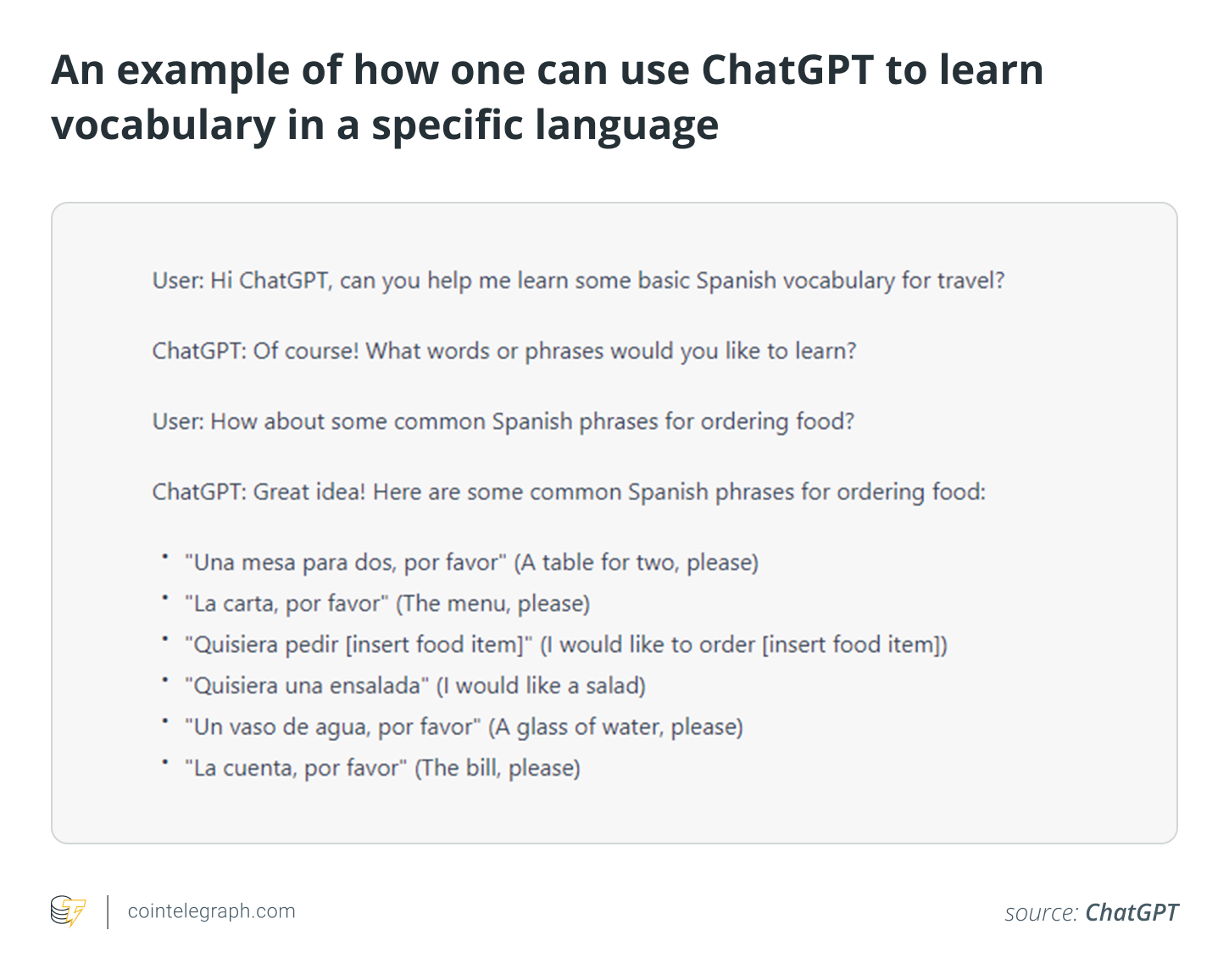
ChatGPT can also be used to expand one’s vocabulary. Users can enter words or phrases in their target language that they want to learn, and ChatGPT will give definitions, translations and examples of how to use those terms in sentences. This is a helpful tool for creating a solid vocabulary base, which is essential for achieving fluency in a language.
Improve writing skills
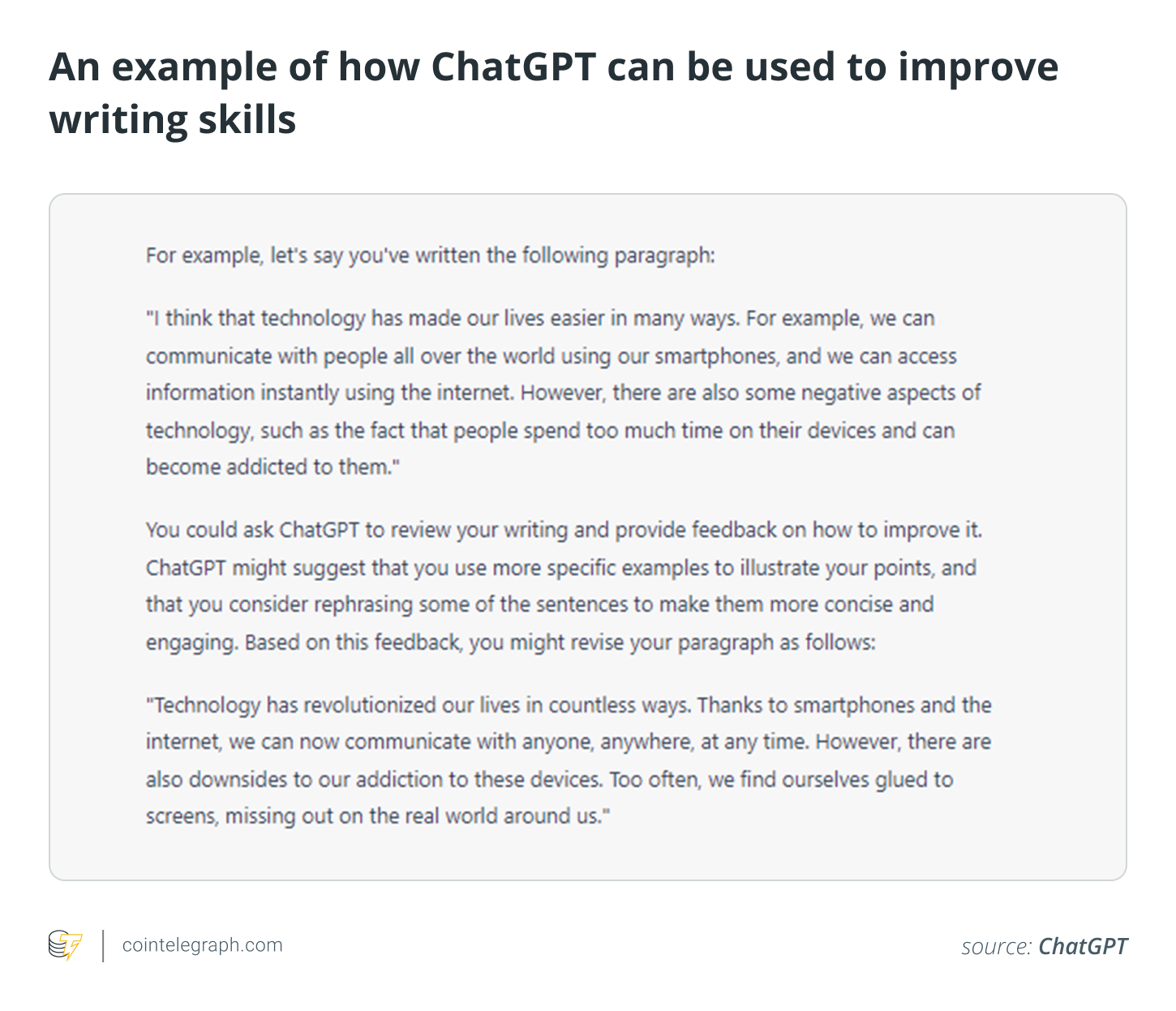
ChatGPT can be utilized to enhance writing abilities in a foreign language. Learners can obtain comments and corrections to help them with their grammar, syntax and sentence structure by practicing writing activities and submitting them to ChatGPT. This can be a useful method for determining which areas require more practice and for developing writing confidence in a foreign language.
Related: 10 ways blockchain developers can use ChatGPT
Listen and practice pronunciation
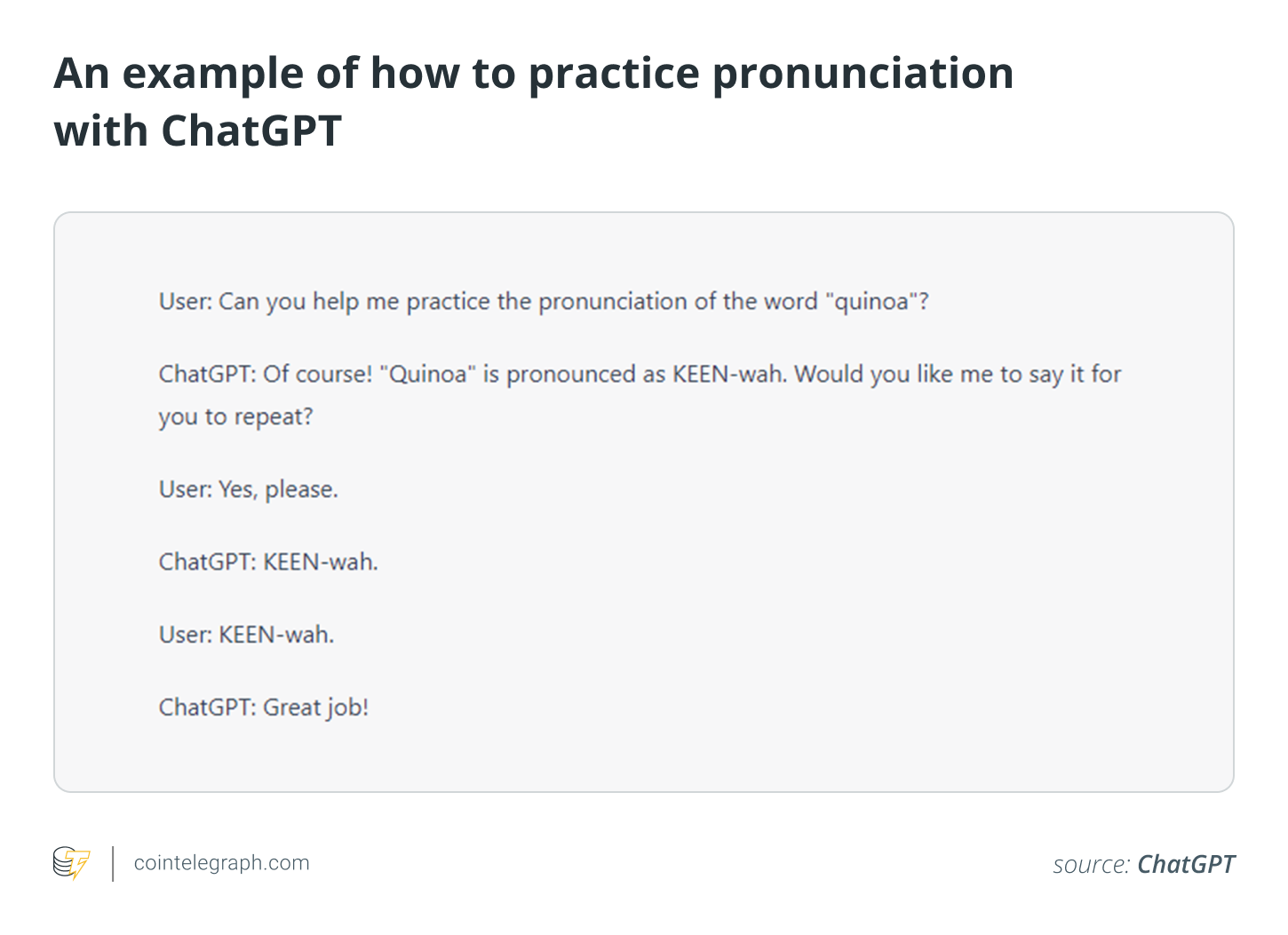
ChatGPT can also be used to practice pronunciation in a new language. By listening to ChatGPT’s responses and imitating the pronunciation, learners can work on developing a more authentic accent and sounding more natural when speaking the language. This is especially helpful for languages with difficult or unfamiliar pronunciation rules.
Read and comprehend texts
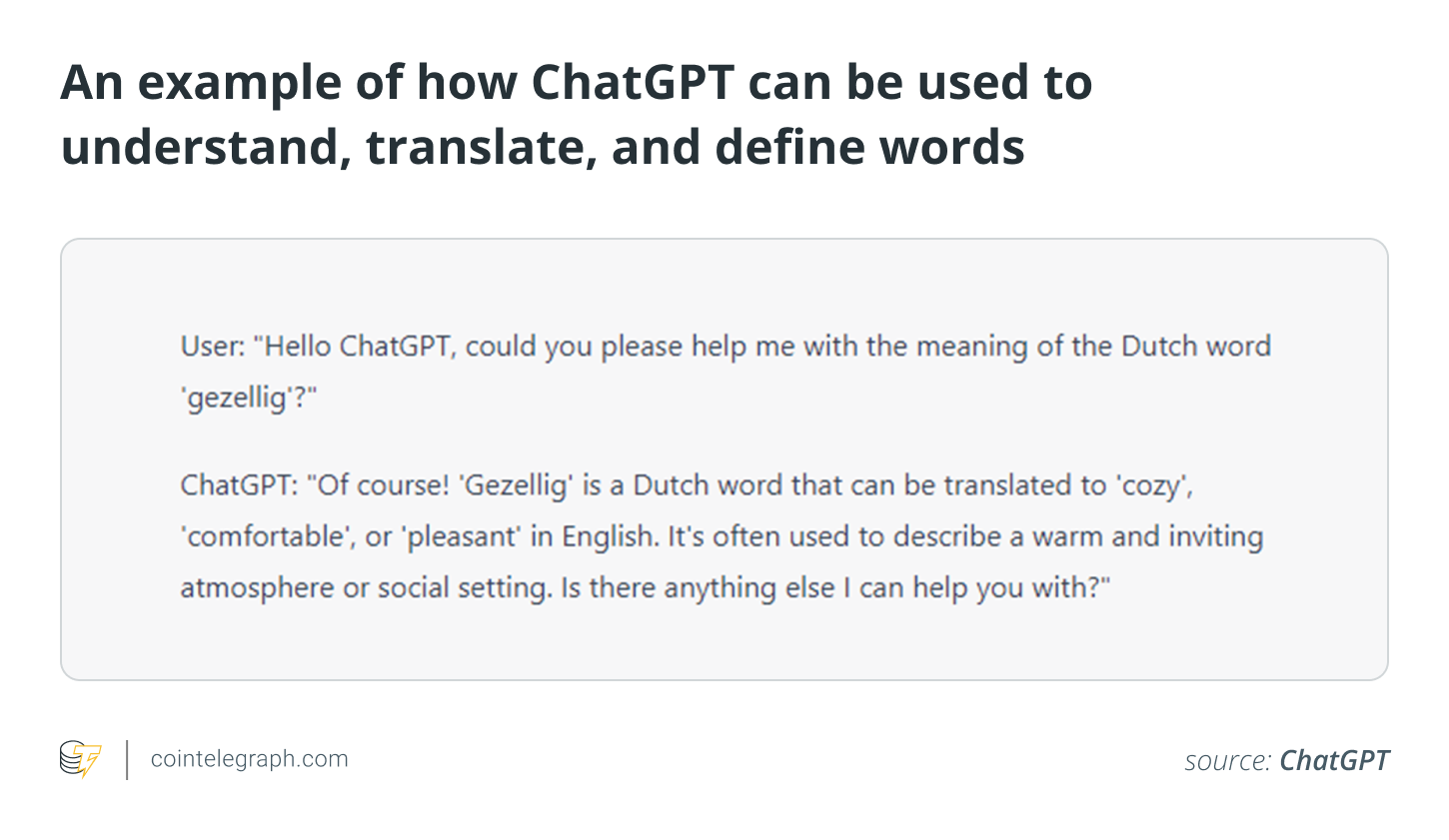
ChatGPT can help you read more clearly in a foreign language. Users can type content in their desired language, and ChatGPT will translate, define and explain any words or phrases they are unsure of. This is a fantastic approach to improving your reading abilities and comprehending written texts in a foreign language on a deeper level.
Related: How to solve coding problems using ChatGPT?


Subscribe to daily byte-sized crypto news from Cointelegraph
Cointelegraph publishes long-form journalism, analysis and narrative reporting produced by Cointelegraph’s in-house editorial team with subject-matter expertise. All articles are edited and reviewed by Cointelegraph editors in line with our editorial standards. Some articles contain affiliate links, from which Cointelegraph may earn a commission. These relationships do not influence which products we review or our editorial conclusions. Content published in here does not constitute financial, legal or investment advice. Readers should conduct their own research and consult qualified professionals where appropriate. Cointelegraph maintains full editorial independence.
More on the subject