


 Written by Vince Quillstaff writerEdited by Robert Lakinstaff editor
BTC recovery fragile, Iran war fallout to ‘dominate’ markets in 2026: Analyst
Latest NewsPublishedApr 12, 2026
Fallout from the Iran war will likely weigh on markets for much of 2026, dashing hopes of rate cuts until Q3 by the earliest, the Coin Bureau's Nic Puckrin said.
Now almost a week old, the Bitcoin (BTC) recovery is “fragile” as the crypto market faces geopolitical and macroeconomic headwinds from the ongoing war in the Middle East, according to Nic Puckrin, a crypto market analyst and founder of the Coin Bureau media outlet.
“Even if the war ends now, its repercussions will likely be the story of 2026, and certainly the dominant narrative for Q2. I don’t expect to see a rate cut until late Q3 or Q4, if at all,” Puckrin told Cointelegraph. He said that he sees:
“For a push toward $90,000, we would need to see a combination of factors: a ceasefire that results in the end of geopolitical tensions, a sustained drop in oil prices toward $80, and ideally also softer-than-expected economic data that calms stagflation fears.”
If Bitcoin closes the week above $71,000, it could signal continued upside for BTC, with resistance forming around the $74,000 level, he said. At last look, it was trading at about $71,276, according to TradingView data.
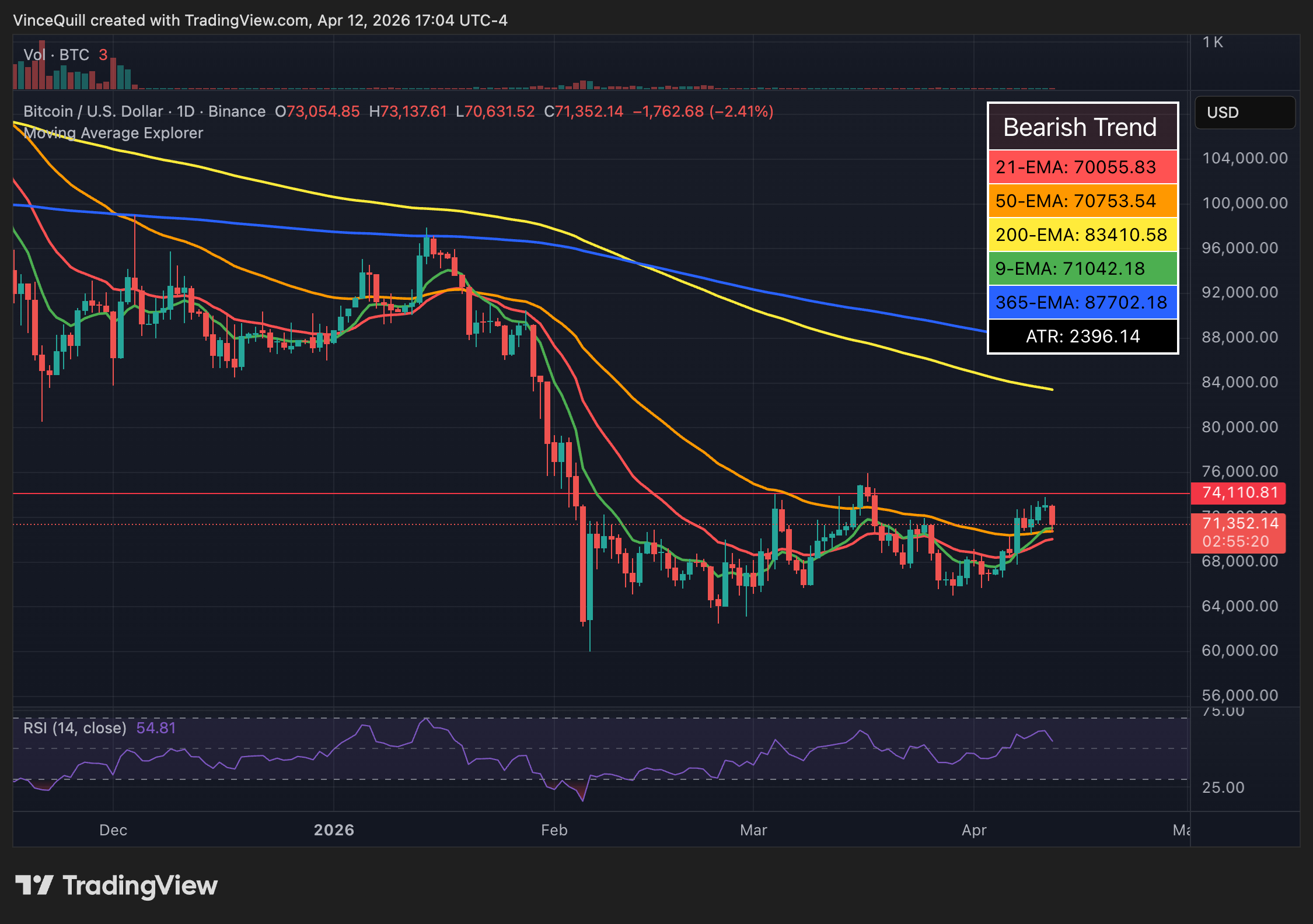
BTC faces resistance at the $74,000 level and continues to trade below its 200-day exponential moving average. Source: TradingView
The ongoing conflict has caused an inflationary spike, according to the US Bureau of Labor Statistics (BLS) Consumer Price Index report, published on Friday, chilling hopes of further interest rate cuts in 2026. Rate cuts or credit easing tend to stimulate asset prices.
Related: Bitcoin, Ether near levels that could signal trend reversal: Analyst
Bitcoin stumbles as Iran negotiations fail and US president threatens major escalation
Bitcoin surged by about 5.8% beginning on April 6, reaching above $73,000, before retracing to about $71,000 on Saturday, following news of failed negotiations between the US and Iran, according to the Kobeissi Letter.
“Peace talks appear to have come to a screeching halt,” Kobeissi Letter said, adding, “the outcome of talks was arguably the worst-case scenario.”
Following the failed peace talks, US President Donald Trump said he directed the US military to form a naval blockade around the Strait of Hormuz.
“I have also instructed our Navy to seek and interdict every vessel in international waters that has paid a toll to Iran. No one who pays an illegal toll will have safe passage on the high seas,” Trump said on Saturday.
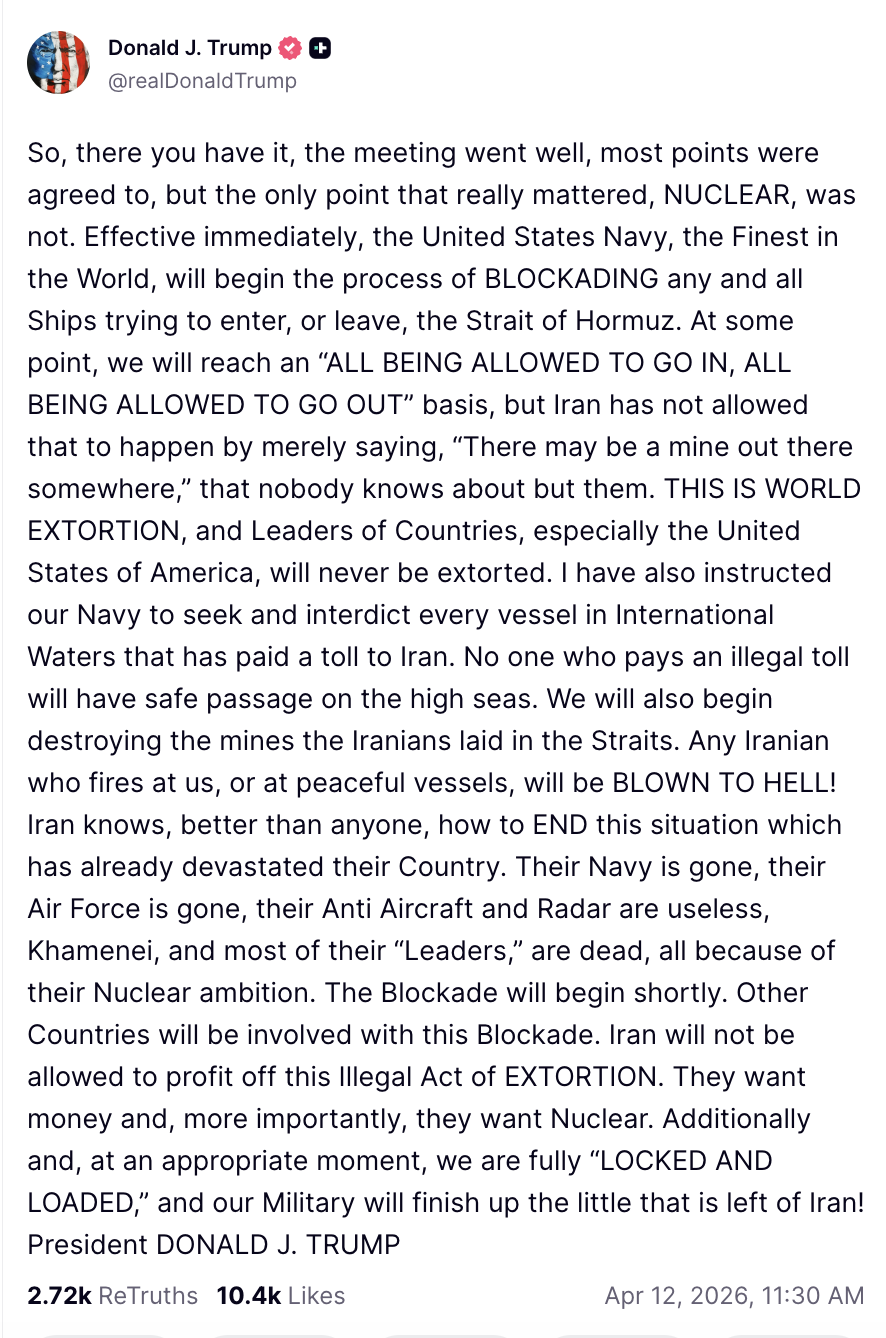
Source: Donald Trump
Members of the Federal Open Market Committee (FOMC), which decides interest rate policy in the US, remain divided on further interest rate cuts in 2026, citing inflation concerns from the war.
The FOMC did not rule out an interest rate hike in 2026 if inflation remains elevated above its 2% target, according to the meeting minutes from the March FOMC meeting.
According to the CME Fedwatch tool, there is more than a 98% probability of the FOMC maintaining the current target rate range of 350-375 basis points at the next two meetings, on April 29 and June 17. Chances drop to about 65% for the July 29 meeting, with a 33.6% probability of a 25-bps cut.
Magazine: Big Questions: Can Bitcoin save you from the dreaded Cantillon Effect?


Subscribe to daily byte-sized crypto news from Cointelegraph
Cointelegraph is committed to independent, transparent journalism. This news article is produced in accordance with Cointelegraph’s Editorial Policy and aims to provide accurate and timely information. Readers are encouraged to verify information independently.
More on the subject