


 Written by Tom Mitchelhillformer writerEdited by Ana Paula Pereiraformer editor
‘Britcoin’ launch inches closer after Project Rosalind CBDC tests
Latest NewsPublishedJun 19, 2023
A major study between the Bank for International Settlements and the Bank of England found that a retail central bank digital currency could make peer-to-peer payments cheaper and easier.

The Bank of England (BoE) is a step closer to launching its central bank digital currency dubbed “Britcoin” following the conclusion of a trial study called Project Rosalind.
The Bank for International Settlements and the BoE launched the joint experiment in July 2022 to explore how prototypes of an application programming interface (API) could be implemented in retail CBDC transactions.
A June 16 report that summed up phase two of Project Rosalind found a CBDC could make payments between individuals cheaper and more efficient while allowing firms to create new financial products that work to reduce fraudulent financial activity.
Overall, the study developed 33 API functionalities and explored “more than 30 retail CBDC use cases.”
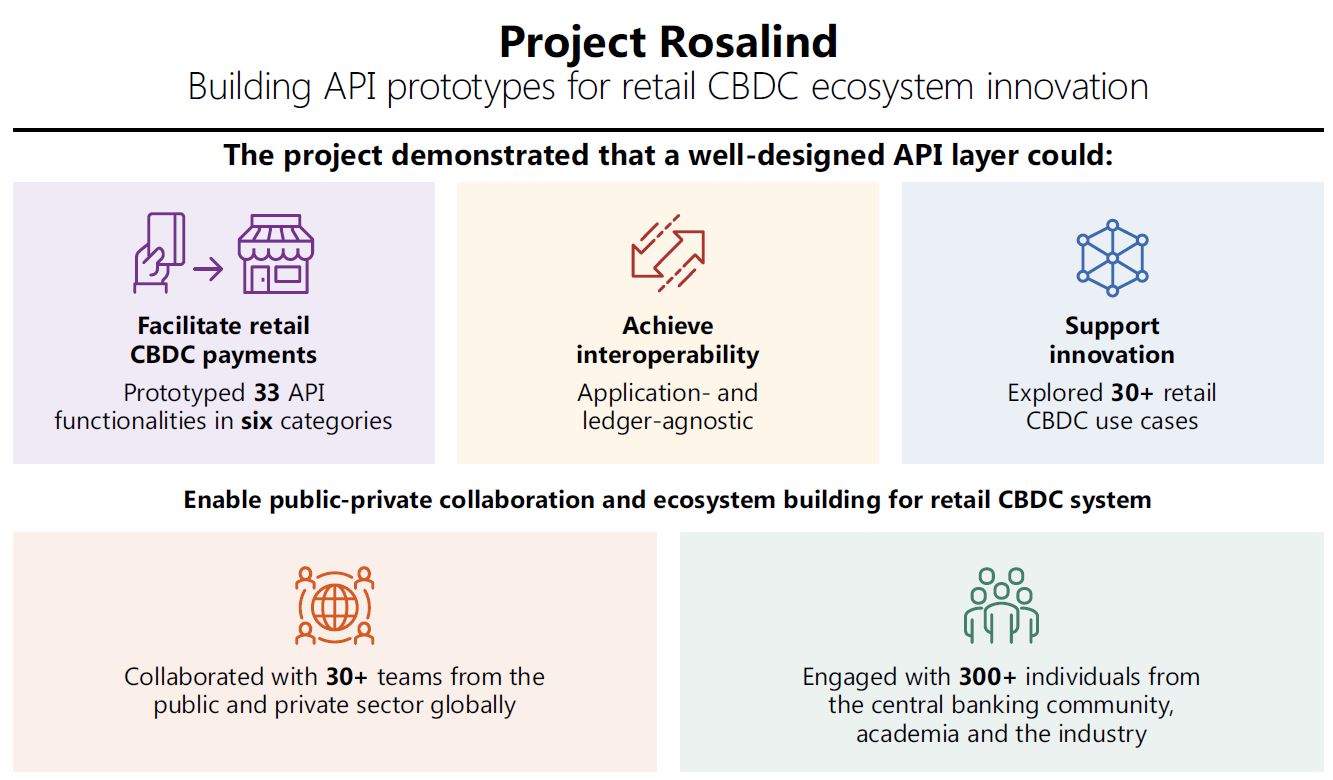
Project Rosalind CBDC API summary. Source: BIS
In addition to looking at how a CBDC would function on smartphones, retail vendors and online stores, the study also explored the concept of “programmability” — a term that refers to customizing digital money to behave in specific ways once certain conditions are met.
CBDC programmability has been met with considerable skepticism, as critics claim a CBDC could be programmed to “work against” those who use it.
Overall, the study concluded a “well-designed” API layer could enable a central bank to interact with the private sector to “safely provide” retail CBDC payments.
Project Rosalind, from the #BISInnovationHub London Centre & @bankofengland, explored how a universal and extensible #API layer could connect central bank and private sector infrastructures and facilitate retail #CBDC payments https://t.co/HL7EmI7RWx pic.twitter.com/kDeo0yhrsR— Bank for International Settlements (@BIS_org) June 16, 2023
“The Rosalind experiment has advanced central bank innovation in two key areas: by exploring how an API layer could support a retail CBDC system and how it could facilitate safe and secure CBDC payments through a range of different use cases,” said Francesca Road, head of the BIS London Innovation Hub in a press release.
Despite the positive findings yielded in Project Rosalind, BoE Deputy Governor Jon Cunliffe said a final decision on if the country would launch a CBDC is still “some years” away.
Related: Privacy should be considered in ‘potential retail CBDC’ — Treasury official
According to a June 16 Bloomberg report, Cunliffe told attendees of Politico’s Global Tech Day conference that the odds of a CBDC project going ahead currently stand at “seven out of ten.”
On the same day the findings from Project Rosalind were released, enterprise blockchain Quant Network announced its role as a vendor in the study. The announcement saw the price of Quant’s native QNT (QNT) token surge more than 20% from $96 to $117 within 12 hours.
Magazine: Bitcoin is on a collision course with ‘Net Zero’ promises


Subscribe to daily byte-sized crypto news from Cointelegraph
Cointelegraph is committed to independent, transparent journalism. This news article is produced in accordance with Cointelegraph’s Editorial Policy and aims to provide accurate and timely information. Readers are encouraged to verify information independently.
More on the subject