

Written by Nihatcan YanikCommissioned Content
Written by Nihatcan YanikCommissioned Content
Here’s how users can protect payment and digital identity data without going dark
CommissionedPublishedJul 20, 2026
Every digital interaction leaves a trace. Most privacy tools conceal that trail only after exposure. Privacy-by-design gives users greater control over what is visible from the start.

Commissioned byAleo
Aleo uses zero-knowledge technology to help users and applications verify payments and compliance requirements without exposing more personal data than necessary.
Payments, logins and wallet interactions generate data. Most digital systems make portions of that data visible by default to platform operators, advertisers, counterparties or public ledgers. Users discover the privacy risk only after their information has already been shared or recorded.
Digital payment use is also expanding, with forecasts placing the number of digital-wallet users at 5.2 billion in 2026. Ethereum itself boasts more than 400 million unique addresses, each tied to an inspectable onchain record. Wallet balances, transfers and contract interactions can be inspected long after a transaction settles.
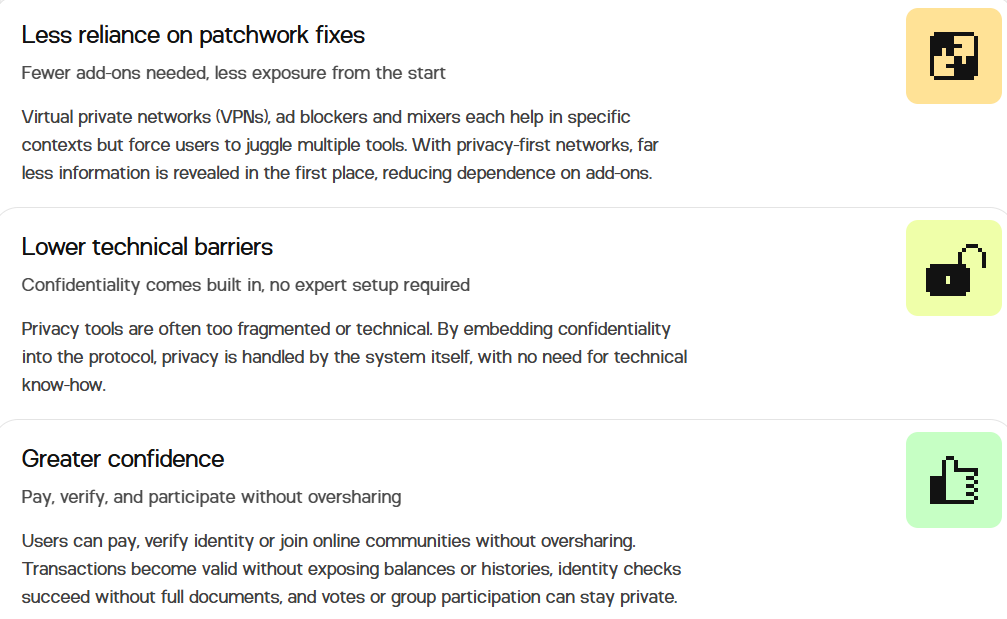
Virtual private networks (VPNs) and ad blockers can reduce certain forms of such exposure. Each tool operates at a different layer, which leaves people to assemble their own privacy stack across networks and financial applications.
Protocol-level privacy reduces privacy concerns by changing the starting conditions. Zero-knowledge proofs allow one party to demonstrate that a claim is valid without revealing the sensitive information behind it. Systems can verify an age requirement, account status or transaction condition with limited access to the underlying personal data.
Embedding confidentiality at the protocol level
Aleo is a layer-1 blockchain built around zero-knowledge execution. The network is designed to verify computation through cryptographic proofs while private inputs remain encrypted in the background.
For users, that approach can reduce the amount of information required to complete ordinary digital tasks. Compliance processes often ask for full identity documents, even when the service needs only one fact. In a ZK-enabled application, users could show that they are over 18, meet residency criteria or hold a valid credential without passing along every field on the document.
Source: Aleo
The verifier gets an answer, while the user retains the broader record. The credential issuer and local rules still determine which proof is accepted. Aleo’s ecosystem includes identity tools designed around this selective-disclosure model.
Its model gives compliance checks a narrower data footprint. Disclosure becomes tied to a specific requirement rather than a broad handover of personal records.
Under the hood, Aleo uses a zero-knowledge virtual machine to support private execution and proof verification. To build on that foundation, application developers can use Leo, a purpose-built programming language that reduces the need to work directly with complex cryptographic primitives.
Leo abstracts much of the circuit-level work normally associated with ZK development and compiles to Aleo instructions for the underlying virtual machine. The architecture makes it easier to build applications that require discretion without treating privacy as an extra feature added late in development.
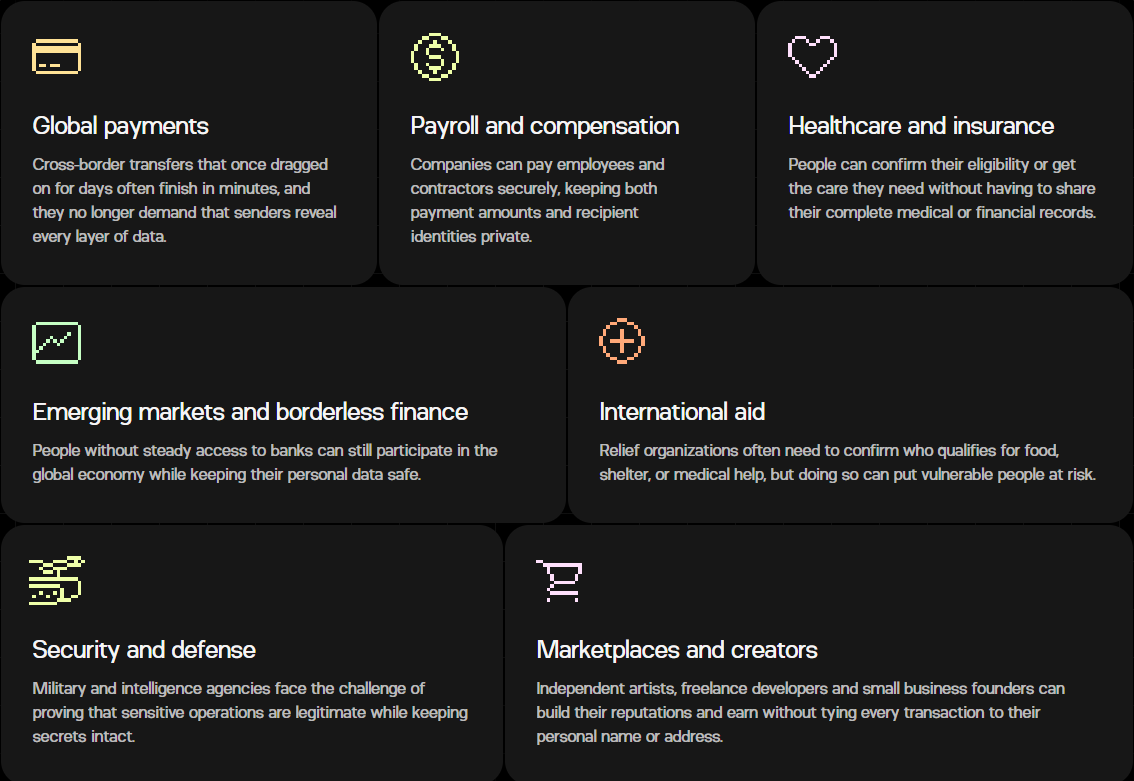
Private payroll systems, selective-disclosure identity tools, confidential decentralized finance (DeFi) applications and data-sensitive marketplaces all require that balance. Users need working services. Developers need flexibility. Compliance teams need reliable verification. Aleo’s design aims to bring those demands into the same technical environment.
Making consent the baseline for digital trust
Digital trust depends on more than encryption or account settings. People need meaningful control over what their data reveals during payments, identity checks and online participation.
Source: Aleo
Aleo shows how confidential computing can support practical applications without abandoning programmability or compliance requirements. As digital services collect more information across financial, social and identity layers, architectures like Aleo that limit unnecessary disclosure could potentially change how users define trust online.


Subscribe to daily byte-sized crypto news from Cointelegraph
This content is part of a paid partnership. The text below is a commissioned article that is not part of Cointelegraph editorial content. The material is written by our advertorial team and has undergone editorial review to ensure clarity and relevance, it may not reflect the views and opinions of Cointelegraph.com. Readers are encouraged to conduct their own research before taking any actions related to the company. Disclosure.
More on the subject