

 Written by Turner Wrightstaff writerEdited by Ana Paula Pereirastaff editor
Crypto regulation is 1 of 8 planned priorities under India’s G20 presidency — Finance Minister
Latest NewsPublishedNov 1, 2022
Nirmala Sitharaman’s comments came amid the Reserve Bank of India launching its digital rupee pilot program for the wholesale segment.

India’s Finance Minister Nirmala Sitharaman said she would love to show that the country is “moving speedily forward” with digital financial technology as it prepares to assume the presidency of the G20.
Speaking at the Indian Council for Research on International Economic Relations on Nov. 1, Sitharaman said the people of India have taken to digital technology “as fish to water.” The finance minister added that crypto asset regulation would likely be one of India’s priorities in its leadership of the G20, but needed the support of other members.
According to Sitharaman, India needed to work with organizations including the International Monetary Fund, Financial Stability Board and Organization for Economic Co-operation and Development to ensure crypto “can be regulated with all countries being on board.” India is expected to assume the presidency of the G20 following a handover from Indonesia in December.
“No one country can succeed in individually being in a silo and trying to regulate the crypto assets,” said Sitharaman.
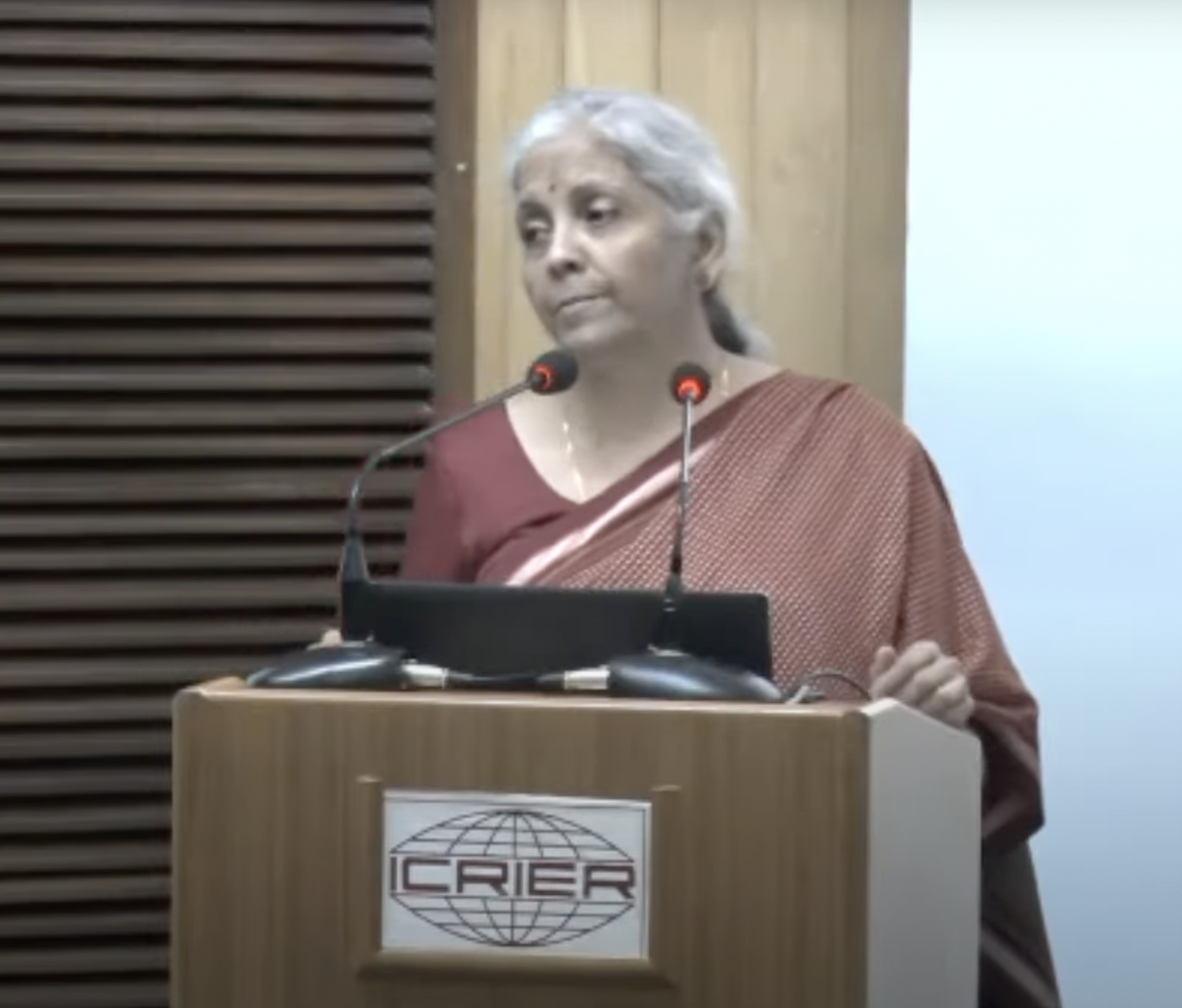
India’s Finance Minister Nirmala Sitharaman speaking at ICRIER’s 14th Annual International G-20 Conference. Source: YouTube
The finance minister said that crypto regulation was in India’s national interest due to the possibility of transactions used for “drug funding,” “terror funding” or “just gaming the system.” She urged G20 members to coordinate on policies to see how best to handle crypto assets.
In July, Sitharaman called for global collaboration on cryptocurrencies while addressing potential risks to financial stability. The Reserve Bank of India, or RBI, prohibited banks from offering services to crypto firms in 2018, a ban that the country’s supreme court overruled in 2020. Since that time, the central bank has periodically issued warnings on digital assets, citing threats to India’s economy.
Related: One-third of estimated 115M Indian crypto users concerned about regulations
However, RBI said on Oct. 31 that it was continuing to move forward with the release of a central bank digital currency first announced in February. The digital rupee pilot program for the wholesale segment was launched on Nov. 1, with a three-step graded approach expected to roll out the central bank digital currency (CBDC) “with little or no disruption” to the traditional financial system.


Subscribe to daily byte-sized crypto news from Cointelegraph
Cointelegraph is committed to independent, transparent journalism. This news article is produced in accordance with Cointelegraph’s Editorial Policy and aims to provide accurate and timely information. Readers are encouraged to verify information independently.
More on the subject