


 Written by Martin Youngstaff writerEdited by Felix Ngstaff editor
'Maximal' ban on insider trading would hurt prediction markets, says researcher
Latest NewsPublishedJun 10, 2026
“The same insider trade that improves the accuracy of the price today can reduce the participation that makes the price informative tomorrow,” said Balbinder Singh Gill.

Prediction market regulators should consider a measured approach to insider trading enforcement as opposed to an outright ban, according to research from an academic at the Stevens Institute of Technology.
In a paper released on June 2, assistant professor of finance Balbinder Singh Gill developed a formal economic model to answer the question of how strictly insider trading in prediction markets should be policed.
A paradox exists in that “the same insider trade that improves the accuracy of the price today can reduce the participation that makes the price informative tomorrow,” he said.
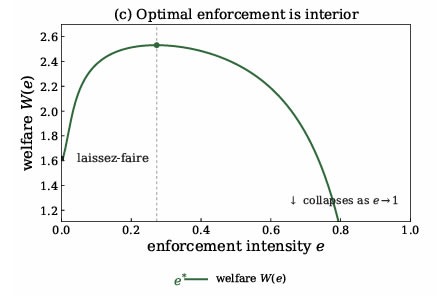
The model showed that prediction market price accuracy is “hump-shaped” in enforcement intensity, with too little enforcement letting insiders crowd out participants, while too much enforcement removes the insider’s genuine informational contribution.
“Tougher enforcement curbs the insider, raising participation, so accuracy is hump-shaped and optimal enforcement is interior, neither laissez-faire nor a ban,” he said.
Insider trading has been a persistent problem for prediction markets, with regulators pushing for crackdowns or banning platforms outright.
The CFTC’s chief enforcement director warned prediction market insider traders in April that violators would face enforcement action. In May, US House lawmakers launched a probe into Kalshi and Polymarket over insider trading.
Different levels of enforcement needed
Singh Gill argued that the level of enforcement should be determined by where the insider information comes from.
Researched information where a trader has worked hard to learn something should have the least, or no enforcement, adding that any crackdown on this level discourages valuable information production.
Related: US House lawmakers launch probe into Kalshi, Polymarket insider trading
Misappropriated information, such as leaked data or classified information, which would be considered insider information, should have a higher level of enforcement.
Meanwhile, cases where the insider can influence the outcome, such as a political candidate betting on their own campaign, should have the most enforcement.
“Trading on a genuine, independently researched edge is the activity society should be most reluctant to punish [...] And trading by those who can move the outcome warrants the stiffest enforcement, because their positions invite manipulation.”
Enforcement in a prediction market should be “calibrated rather than maximal,” he concluded.
Kalshi to check user employment details
The paper came as Kalshi is introducing new measures to combat insider trading by requiring users in some sensitive markets to disclose employment information.
Users betting in sensitive markets, such as company performance or national security, will need to disclose their employer via an online form. It has also developed a “specific risk score” assigned to markets with heightened insider trading or manipulation risk.
The changes follow an audit committee report recommending better data collection and pressure from lawmakers and regulators.
Two recent high-profile insider trading cases involving competitor Polymarket were flagged and also referenced in Singh Gill’s paper.
A Google employee was charged in May with using insider information about the company’s search trends to make $1.2 million on Polymarket, and a US soldier was charged in April with trading on classified knowledge of a military operation.
Magazine: Vietnam preps crypto pilot, HK pushes tokenization: Asia Express


Subscribe to daily byte-sized crypto news from Cointelegraph
Cointelegraph is committed to independent, transparent journalism. This news article is produced in accordance with Cointelegraph’s Editorial Policy and aims to provide accurate and timely information. Readers are encouraged to verify information independently.
More on the subject