

 Written by Dilip Kumar Patairyastaff writerEdited by Rahul Nambiampurathstaff editor
When prediction markets go wrong: Who decides what counts as the truth?
MagazinePublishedMay 16, 2026
Prediction markets promise crowd wisdom, but they can also show how ambiguous rules, governance systems and interpretation create hidden risks for retail crypto users.

Who defines reality in prediction markets?
Prediction markets are often praised as powerful mechanisms for forecasting future events. Participants buy and sell contracts linked to specific real-world results, ranging from political elections and armed conflicts to athletic competitions and financial indicators.
The idea is that by staking real money on their convictions, these platforms harness the wisdom of the crowd more effectively than traditional methods.
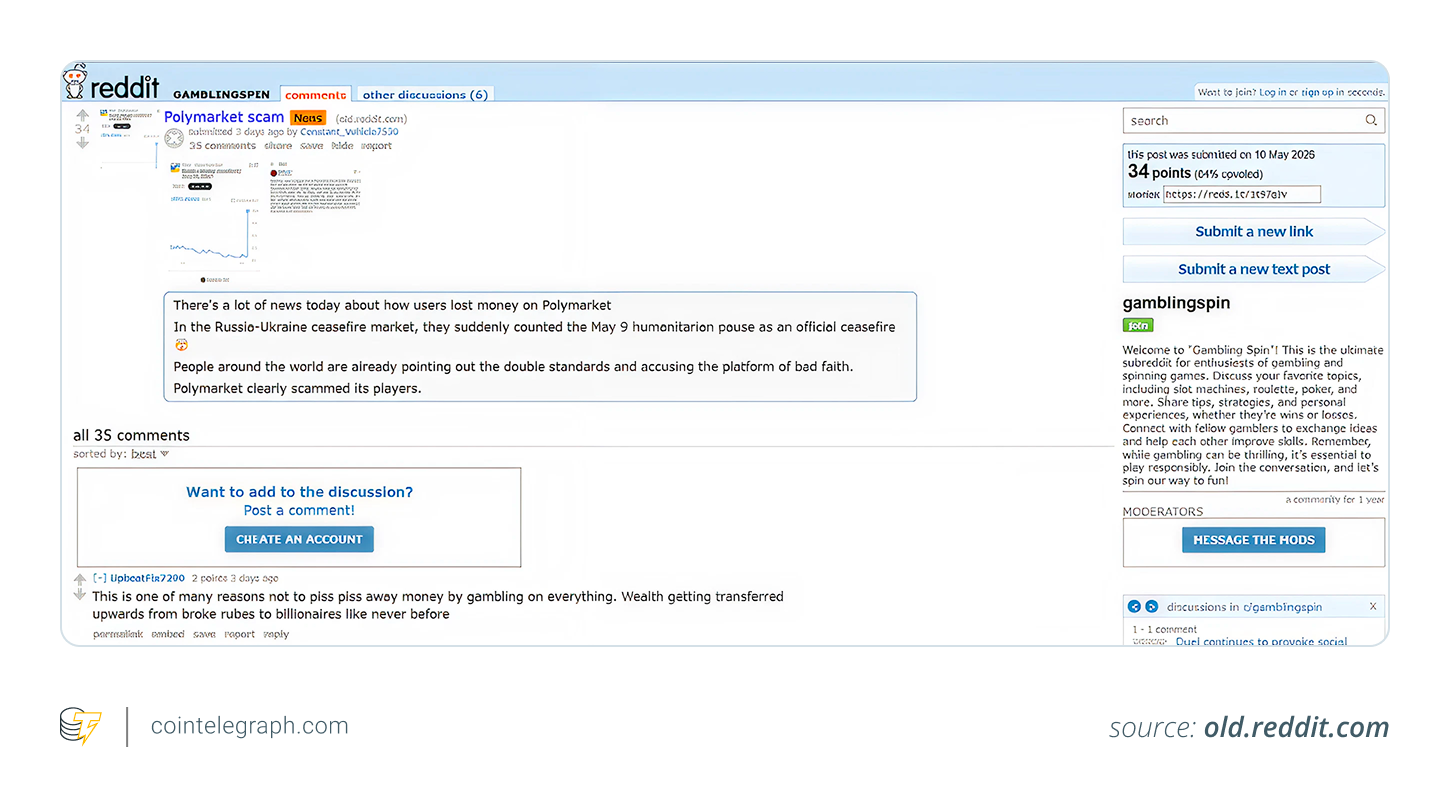
Yet a recent discussion on Reddit about a Polymarket contract tied to a ceasefire illustrates how these tools can quickly become entangled in far more than straightforward outcome prediction. The dispute was not just about whether one market closed the way some users expected. It raised a bigger question: When real-world events are unclear and people interpret them differently, who decides the final answer?
This episode underscores an important pitfall for ordinary users using cryptocurrency-driven prediction platforms. Many assume they are wagering directly on objective facts. In reality, they are often taking positions based on how a specific platform interprets those facts. That interpretation is shaped by fine-print resolution criteria, internal decision-making processes and procedures for handling challenges.
Prediction markets gaining mainstream traction
These platforms have grown dramatically, enabling positions on a wide range of topics, from election winners and central bank policy moves to entertainment developments and international crises.
Advocates highlight several strengths:
- Instant reflection of public opinion shifts
- Strong financial incentives for careful analysis
- Open access for users across locations
- Faster updates compared to conventional surveys or expert reports
Blockchain-powered versions stand out because they support broader global participation and automated settlement after markets close. This has increased the visibility of platforms like Polymarket during high-stakes news cycles. At the same time, as adoption spreads, disagreements about how markets should close are surfacing more often.
Did you know? Prediction markets are not new. Historians trace early forms of political forecasting markets back to the 1500s, long before stock exchanges or modern cryptocurrencies existed. Some election-focused markets in the United States were once considered more accurate than traditional opinion polls.
The ceasefire market dispute explained
The Reddit backlash over one particular ceasefire contract highlighted how quickly confusion can arise. Some participants felt the final ruling clashed with observable events on the ground, while defenders maintained that the platform had simply applied its published guidelines.
Such friction is common in markets involving complex international affairs, where developments tend to be fluid, incomplete and subject to differing interpretations. Key questions often include:
- Was a formal announcement actually made?
- Was the pause short term or intended to last?
- Did every involved side fully endorse it?
- Which reports or outlets count as reliable evidence?
- Do subsequent breaches override the original understanding?
Different observers can examine the same developments and arrive at sincere but opposing interpretations. Prediction markets require a clear yes-or-no settlement, no matter how murky the underlying situation remains.
This creates a gap between what users think should happen and what the platform’s rules actually allow. As prediction markets grow, participants should look beyond the displayed odds and carefully read the rules that decide whether a market closes as “yes” or “no.”
Resolution criteria often hold the real power
Most people participating in prediction markets pay closest attention to the market’s headline question. A question like “Will Nation A and Nation B reach a ceasefire by Date X?” can look straightforward at first glance.
The final outcome depends on the platform’s detailed resolution guidelines. These specifications usually cover:
- Which information sources will be used
- Exact time cutoffs
- What specific language or phrasing is required
- Which statements or actions qualify as binding
- How challenges and disagreements will be settled
This setup creates a clear knowledge gap. Experienced participants study the fine print because they know the short title rarely tells the full story. Casual users, on the other hand, often take part based on news flashes, online chatter or personal gut feelings about ongoing events.
As a result, many believe they are simply taking positions on real-world developments when they are actually exposed to how a particular set of rules will interpret those developments.
Did you know? In many prediction markets, participants are not simply taking positions on whether something happens. They are taking positions on whether a platform’s official resolution process decides that the event qualifies under a specific set of written rules.
Regular users often miss how rules are interpreted
A common myth about prediction markets is that resolutions are purely objective and factual. In reality, many contracts require careful judgment rather than simple black-and-white answers.
This issue stands out clearly in international conflicts and political crises, where events move fast, official statements can be deliberately vague and new information keeps arriving.
There is often a meaningful gap between concepts such as:
- A short term humanitarian pause
- A formal negotiated ceasefire
- A limited local truce
- A fully signed treaty
- Off-the-record statements from officials
Platforms must compress these nuanced realities into a binary yes or no result. That process almost always involves human judgment.
Even when operators strictly follow their own published rules, participants can still feel the outcome is unfair if it clashes with their personal view of events.
“Decentralized” platforms still depend on human decisions
Many crypto prediction markets describe themselves as fully decentralized. However, removing central authority does not remove the need for human interpretation.
These systems ultimately rely on:
- External data oracles
- Community governance structures
- Formal dispute procedures
- Voter participation
- Chosen reference sources
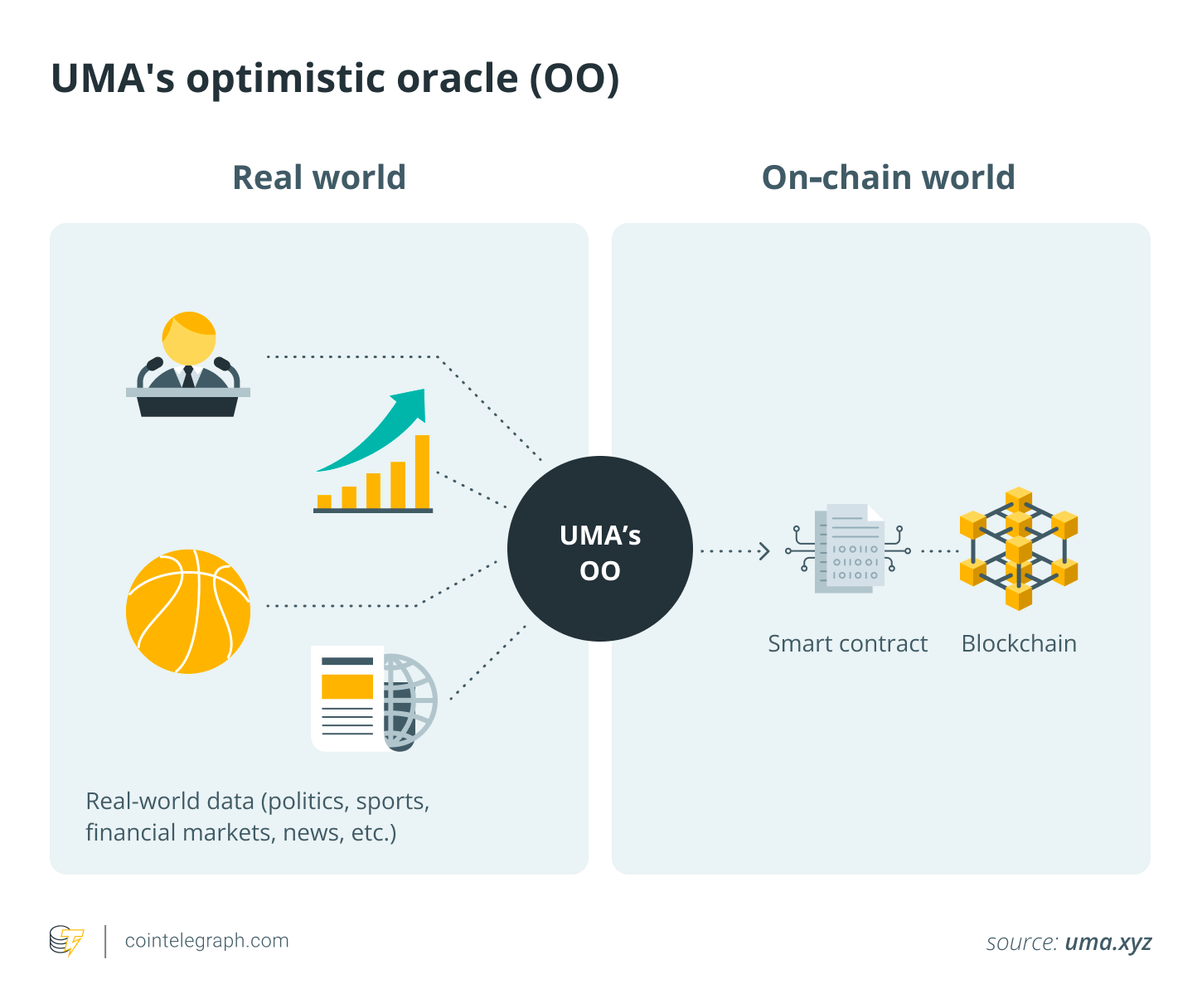
For instance, Polymarket uses the UMA Optimistic Oracle framework. In disputed cases, these systems may rely on tokenholder voting or governance-like participation.
While such designs aim to limit single-point control, they still place real people in the position of deciding what ambiguous real-world situations actually mean.
Blockchain is useful for securely recording transactions and enforcing settlements, but it cannot interpret messy geopolitical realities on its own. In the end, decentralization does not solve the deeper challenge of defining truth in uncertain situations.
Geopolitical contracts carry higher risks
Prediction markets focused on wars, diplomatic deals and global tensions are especially prone to uncertainty and differing interpretations.
Such situations frequently involve:
- Contradictory information from multiple sides
- Deliberate misinformation or spin
- Slow or incomplete official verification
- Informal remarks by officials
- Fast-changing ground realities
Governments themselves may offer conflicting public accounts of whether any deal was even reached. A truce announced today can fall apart tomorrow, with one side declaring victory while the other insists nothing was agreed. News outlets often frame the same developments in sharply different ways.
As a result, these markets can be especially risky for everyday participants. The final settlement often depends less on what actually happened and more on how the platform’s internal procedures interpret the situation.
Did you know? The term “oracle” in crypto does not mean magical prediction. Oracles are systems that bring outside information onto blockchains. They work like digital referees, helping smart contracts decide which real-world data they can rely on.
Skilled participants can hold a clear advantage
Experienced participants often use their deeper understanding of market mechanics to gain an advantage over casual users. They tend to:
- Carefully analyze the exact resolution language
- Spot potential ambiguities or gaps
- Predict how disputes are likely to be settled
- Spread positions across linked contracts
- Base their decisions on expected rule interpretations rather than pure event forecasts
On the other hand, newer or retail participants often buy or sell impulsively in response to breaking news, social media buzz or personal hunches. They may not fully understand how the platform’s fine print will be applied.
This dynamic means that a strong understanding of the rules can be just as valuable as accurate forecasting of real-world events.
Trust can break even without wrongdoing
Disputed outcomes do not necessarily indicate deliberate manipulation by the platform. A market can be resolved strictly according to its stated rules and still weaken user confidence.
Common complaints include:
- Market wording that feels vague or misleading
- Resolution procedures that seem unclear or hard to follow
- The perception that “insiders” had better insight into the system
- Results that clash with most people’s basic understanding of events
Even clear, transparent rules may fall short if the typical participant lacks the time or expertise to understand dense, legal-style criteria before taking part.
These persistent challenges help explain why prediction markets continue to draw attention and criticism from regulators and industry observers.


Subscribe to daily byte-sized crypto news from Cointelegraph
Cointelegraph publishes long-form journalism, analysis and narrative reporting produced by Cointelegraph’s in-house editorial team with subject-matter expertise. All articles are edited and reviewed by Cointelegraph editors in line with our editorial standards. Some articles contain affiliate links, from which Cointelegraph may earn a commission. These relationships do not influence which products we review or our editorial conclusions. Content published in here does not constitute financial, legal or investment advice. Readers should conduct their own research and consult qualified professionals where appropriate. Cointelegraph maintains full editorial independence.
More on the subject