


 Written by Vince Quillstaff writerEdited by Sam Bourgistaff writer
Quantum computer breaks 15-bit elliptic curve cryptographic key
Latest NewsPublishedApr 24, 2026
The Bitcoin community continues to debate whether cryptographically relevant quantum computers are imminent or decades away.

Project Eleven, a quantum security research company, awarded a prize to researcher Giancarlo Lelli for using a quantum computer to break a 15-bit elliptic-curve key — a small-scale version of the same cryptography used in Bitcoin, which relies on far larger 256-bit keys.
Lelli was able to derive a private key from the public key paired to it, using a “variant” of Shor’s algorithm, an integer factorization algorithm for quantum computers, according to Project 11’s announcement on Friday.
Bitcoin’s keys are 256 bits long, representing a “large” gap from the 15-bit key Lelli was able to crack, Project 11 said. However, the gap between Bitcoin’s 256-bit keys and the number of bits a quantum computer can factor has “fallen sharply” since 2025. Project 11 added.
“The resource requirements for this type of attack keep dropping, and the barrier to running it in practice is dropping with them,” Alex Pruden, CEO of Project Eleven, said.
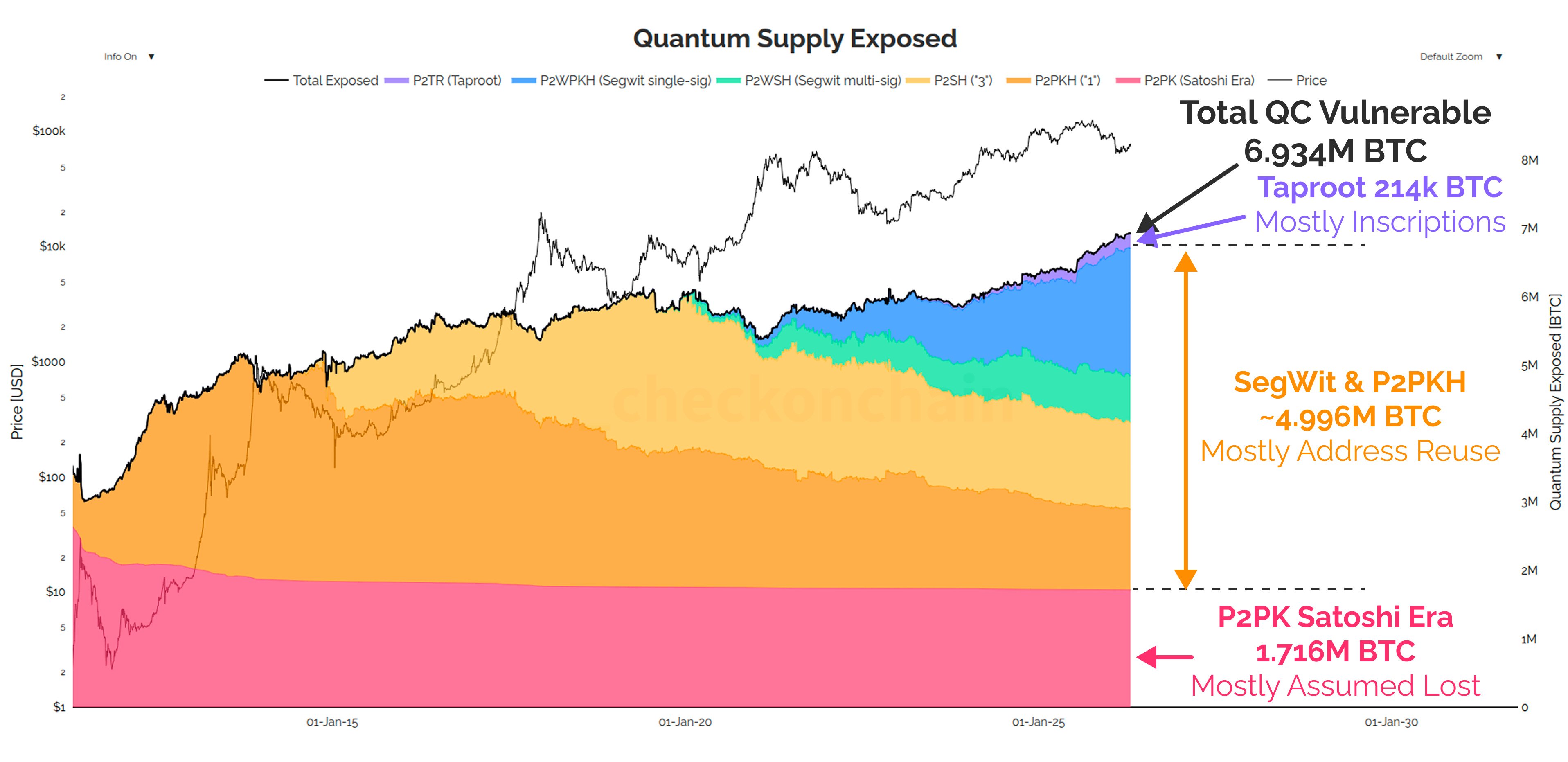
The supply of BTC exposed to quantum attacks. Source: Rand Group
The attack is the “largest public demonstration” of a quantum computer breaking an ECDSA key, and it threatens about $2.5 trillion in value secured by elliptic-curve cryptography algorithms, according to Project 11.
Related: Bernstein says Bitcoin market already priced in quantum risk
Bitcoin community debates the timeline of the quantum threat
Quantum computers threaten about $450 billion in BTC held in older wallet addresses whose public keys are exposed, according to crypto industry executives and computer scientists.
The Bitcoin community has about three to five years to prepare for the quantum threat, according to analysts at Bernstein.
Speaking at a Cointelegraph panel at Paris Blockchain Week in April, Blockstream CEO Adam Back said that the Bitcoin industry should start preparing post-quantum solutions now, even though the threat is decades away.

Source: Adam Back
“Quantum computing still has a lot to prove. Current systems are essentially lab experiments. I’ve followed the field for over 25 years, and progress has been incremental,” Back said.
In March, Google published a report showing that quantum computers may require far fewer qubits, the basic computational unit of a quantum computer, than previously thought to break modern cryptography standards.
Magazine: How AI just dramatically sped up the quantum risk for Bitcoin


Subscribe to daily byte-sized crypto news from Cointelegraph
Cointelegraph is committed to independent, transparent journalism. This news article is produced in accordance with Cointelegraph’s Editorial Policy and aims to provide accurate and timely information. Readers are encouraged to verify information independently.
More on the subject