

Written by Nihatcan YanikCommissioned Content
Written by Nihatcan YanikCommissioned Content
Shielded transactions bring native privacy to a Bitcoin-secured blockchain
CommissionedPublishedDec 4, 2025
The upcoming Shielded Transactions upgrade will add protocol-level privacy to a blockchain secured through Bitcoin’s SHA-256 merged mining.

Commissioned byHathor Network
Disclaimer. This content is part of a paid partnership. The text below is a sponsored article that is not part of Cointelegraph.com editorial content. The material is written by our advertorial team and has undergone editorial review to ensure clarity and relevance, it may not reflect the views and opinions of Cointelegraph.com. Readers are encouraged to conduct their own research before taking any actions related to the company. Disclosure.

Public blockchains were built on the idea that transparency would create trust. But over time, this principle evolved into radical transparency, a design where every balance, transaction and movement of value is permanently visible to everyone. What once felt like a breakthrough now restricts how individuals and institutions can safely operate onchain.
When every transfer exposes sensitive information, users lose basic financial confidentiality, while companies struggle to protect treasury activity, strategic movements or commercial logic. Product teams hesitate to test new features on public ledgers, knowing that every experimental step becomes part of an immutable record.
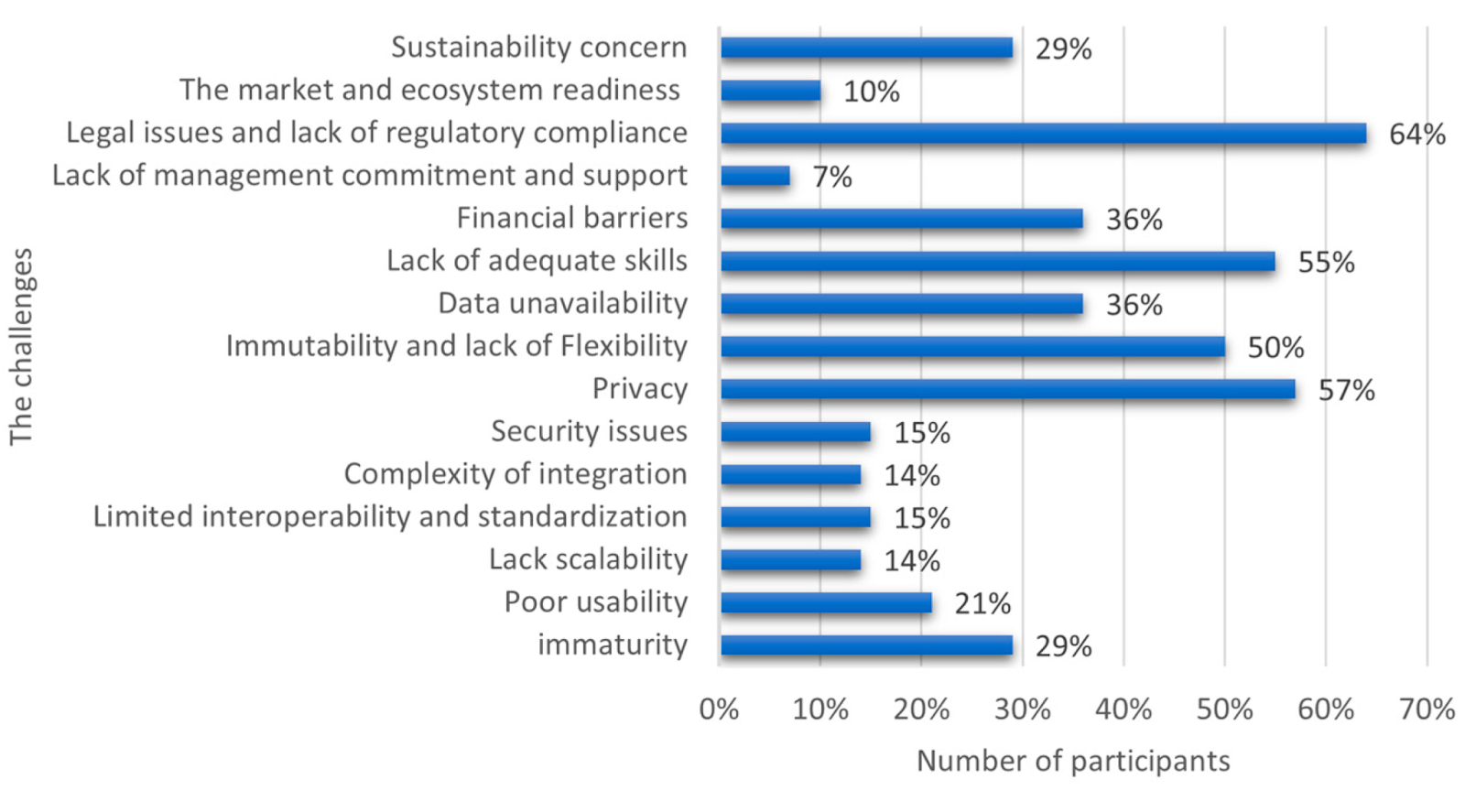
Privacy, regulatory compliance and immutable transparency rank among the top barriers preventing enterprises from adopting blockchain. Source: MDPI
International bodies have reached similar conclusions. The IMF notes that privacy is essential for both institutional adoption and individual protection, yet fully opaque “black box” systems are incompatible with regulatory oversight. The tension between transparency and confidentiality has become a structural bottleneck across key growth areas such as enterprise payments and digital asset markets.
For years, the industry attempted to bridge this divide through external tools, such as mixers, add-on privacy layers or specialized smart-contract systems. Most introduced new risks, fragmented liquidity or added friction instead of reducing it.
As blockchain usage expands, the sector is shifting toward architectures that treat privacy not as an add-on, but as a native and compliant shield built directly into the base layer.
User-first design with effortless token creation
Hathor Network, a general-purpose layer-1 blockchain infrastructure, approaches the privacy problem from a different angle. Instead of requiring complex smart contracts or specialized environments, the platform enables anyone to create a native token in minutes. And soon, those tokens will be transferable confidentially from the moment they launch.
The ease of token creation has always been one of the chain’s core strengths. A business, community or developer can issue a digital asset, choose whether transactions should be fee-less or fee-controlled, and deploy it instantly without coding knowledge or external dependencies. With privacy becoming a native capability on the network, the same plug-and-play experience soon extends to confidential transfers as well.
Nano Contracts in Hathor Playground execute your contract the moment you write it.
❌ No setup.
❌ No dependencies.
❌ No environment headaches.
Edit → test → deploy.
All from your browser 🤯
📹 https://t.co/LYKDfqNeCg
🤖 https://t.co/PSswbsiPD4$aHTR $HTR pic.twitter.com/laWYAj5HkW— Hathor Network (@HathorNetwork) November 24, 2025
The flexibility sits atop an architecture secured through SHA-256 merged mining with Bitcoin. In merged mining, BTC miners validate a second blockchain simultaneously, using the same hash power without additional cost. This structure allows Hathor to inherit Bitcoin’s proof-of-work (PoW) resilience while remaining fully decentralized. The same mechanism that protects Bitcoin’s settlement layer now anchors Hathor’s consensus, giving private transfers and user-issued tokens a comparable level of foundational security.
The same user-first mindset shaped Hathor’s approach to programmability. Many teams want onchain logic without the complexity of traditional smart contracts. Hathor’s Nano Contracts provide a streamlined Python-based alternative to meet this demand. Developers can use a familiar language when coding with Nano Contracts, deploy DApps fast and face few security risks. Upcoming privacy features integrate directly, letting teams combine programmability and confidentiality in the same workflow.
Shielded Transactions: Native privacy built for real users
The next step in Hathor’s user-first vision is Shielded Transactions, a protocol-native upgrade that brings confidential transfers directly into the network. The feature hides the amount and token ID while keeping the sender and receiver public.
The platform draws inspiration from UTXO-based privacy systems, such as Monero and Zcash. These models use a transaction structure where outputs function as spendable tokens, allowing amounts to be hidden while preserving verifiable integrity.
Hathor adapts this model for a transparent and compliance-ready environment that revives one of the original ideals of cryptocurrency: privacy by design.
For users, it solves the long-standing privacy paradox by providing confidentiality without compromising regulatory clarity. For businesses, it creates a way to move stablecoins or tokenized assets without exposing balance sheets, treasury activity or sensitive trade flows.
The intent behind the upgrade is clear in the words of its own leadership. As Hathor’s chief technology officer, Marcelo Brogliato, explains, “We’re giving builders and businesses the freedom to move value discreetly, without breaking compliance.”
🔐 LOCKED IN: Nano Contracts Launching!
Nano Contracts mark a historical moment for Hathor.
Next week, the network takes a major step forward as Python-native smart contracts go live, breaking down the barriers that have held the space back for years.
After building steadily… pic.twitter.com/U75TPSTDjs— Hathor Network (@HathorNetwork) November 13, 2025
Hathor’s approach to privacy is designed to fit into the user experience. Because Shielded Transactions are built into the protocol, there is no reliance on mixers, sidechains or heavy zero-knowledge systems that slow performance or fragment liquidity. Transfers remain fast and unified across the network, maintaining high throughput without added latency, and confidentiality becomes part of the architecture rather than an external tool that adds friction.
The native design gives the feature immediate real-world impact. Tokenization teams can issue and move assets without exposing competitive information. DeFi users can execute large or strategic transactions without broadcasting their intentions to adversarial actors, enabling early forms of private DeFi on a fully auditable base layer.
Stablecoin issuers and payment providers gain a way to offer discreet yet auditable transfers, reducing operational risk for corporate clients. Treasury and finance teams can manage positions privately while still maintaining a transparent record of activity when oversight is required.
AI and Web3 are entering a new phase.
With Hathor’s Nano Contracts, Python now runs natively on-chain, letting developers build smart contracts and AI agents using the tools they already know.
No niche languages, just real software engineering for decentralized systems.
Read… pic.twitter.com/7zo8yQVE3H— Hathor Network (@HathorNetwork) November 17, 2025
Developers also stand to benefit. They can build confidential applications and financial instruments on top of Nano Contracts without having to navigate fragmented privacy layers or redesign their architecture. The combination of neutral execution, protocol-level privacy and accessible programmability creates an environment where discretion and accountability can coexist, giving users practical advantages that directly improve how they interact with digital assets.
Privacy becomes part of the blockchain infrastructure
Shielded Transactions mark the beginning of a broader shift in Hathor’s roadmap. While this first phase focuses on enabling confidential token transfers at the base layer, the team is exploring how future upgrades could extend these privacy primitives more broadly across the network. The long-term direction is clear: privacy should become a core infrastructure component rather than an external add-on. Simplicity and confidentiality remain central design principles as the system evolves.
STAND WITH THE ONES WHO BUILD.
❌ No VC puppets.
❌ No middlemen.
❌ No false promises.
Just real systems, real impact, and Python you can actually ship with.
🟧 Secure like Bitcoin.
🟦 Scalable by design.
✅ Built to be used.
Read the manifesto: https://t.co/8nYqNoDwiU… pic.twitter.com/67EugENCDm— Hathor Network (@HathorNetwork) November 18, 2025
Hathor is moving toward a model where users no longer need to compromise. Execution remains neutral, sensitive information gains a compliant shield, and builders can create without navigating unnecessary trade-offs. Institutions can adopt blockchain systems that support discretion while maintaining regulatory clarity.
In a sector where trust is often strained, and complexity is treated as inevitable, Hathor aims to show that a blockchain can align security, privacy and transparency rather than forcing users to choose among them.


Subscribe to daily byte-sized crypto news from Cointelegraph
This content is part of a paid partnership. The text below is a commissioned article that is not part of Cointelegraph editorial content. The material is written by our advertorial team and has undergone editorial review to ensure clarity and relevance, it may not reflect the views and opinions of Cointelegraph.com. Readers are encouraged to conduct their own research before taking any actions related to the company. Disclosure.
More on the subject