

Written by Nihatcan YanikSponsored Content
Written by Nihatcan YanikSponsored Content
Decentralized network builds blockchain-based constellation to improve communication
SponsoredPublishedMar 13, 2026
The satellite constellation bypasses traditional cell towers to provide interoperable internet access without centralized providers.
Sponsored bySpacecoin
Disclaimer. This content is part of a paid partnership. The text below is a sponsored article that is not part of Cointelegraph.com editorial content. The material is written by our advertorial team and has undergone editorial review to ensure clarity and relevance, it may not reflect the views and opinions of Cointelegraph.com. Readers are encouraged to conduct their own research before taking any actions related to the company. Disclosure.

Decentralized internet network Spacecoin aims to provide a communication layer for space-based data centers and underconnected terrestrial regions by deploying a blockchain-enabled satellite constellation in low-Earth orbit.
As artificial intelligence develops, so does its insatiable appetite for computing power and energy. To escape Earth’s physical and environmental constraints, the technology sector is increasingly looking upward. Once confined to science fiction, space-based data centers are emerging as a practical alternative that can harness abundant solar energy and natural cooling.
Yet, moving server farms into orbit introduces a critical bottleneck: it cannot function efficiently without a reliable, open communications network tying it together. If orbital data centers must route every process through terrestrial cell towers and fiber-optic cables, latency quickly erases any operational advantages.
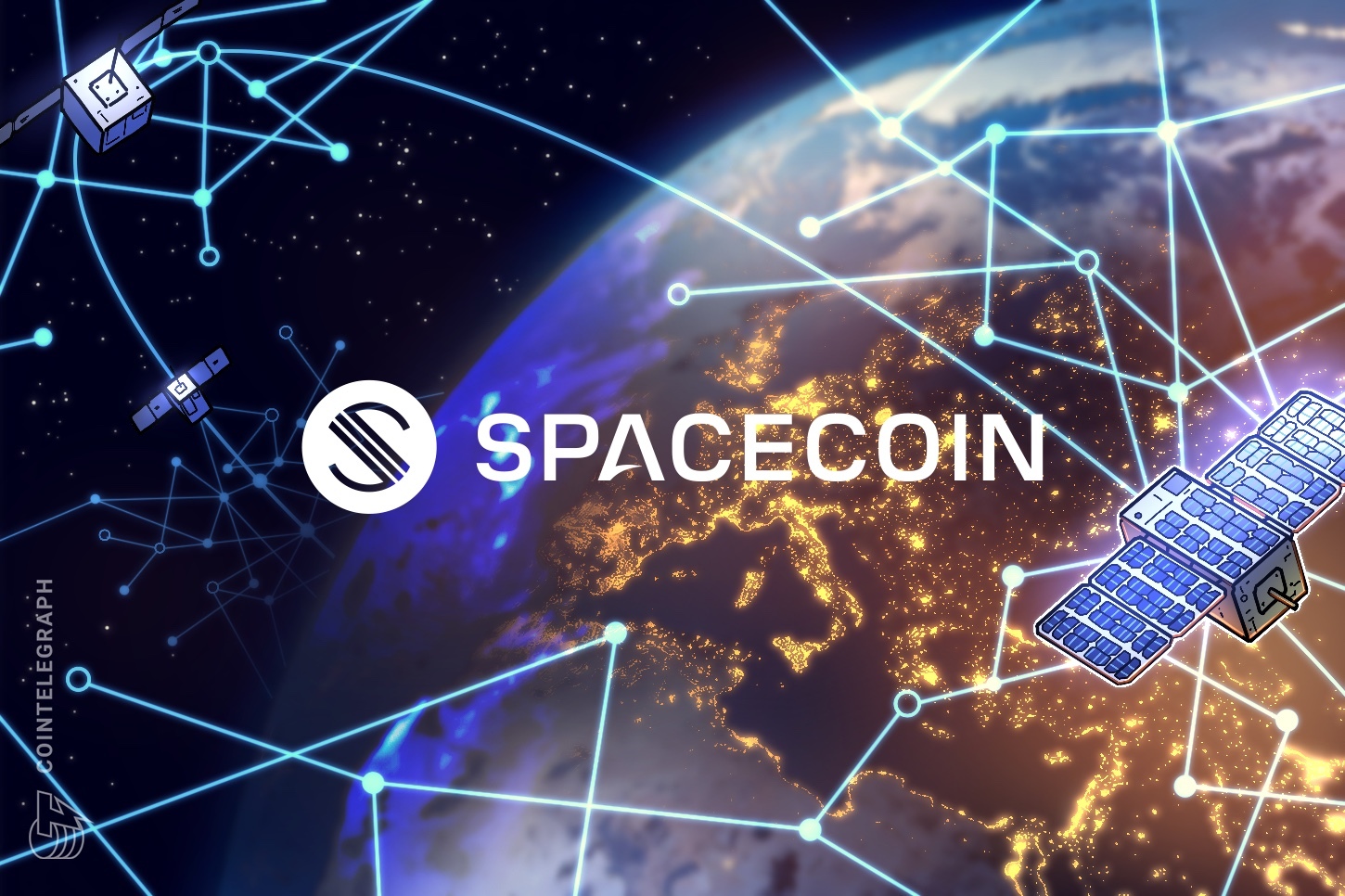
This is the structural challenge that Spacecoin, a satellite-based decentralized internet network, aims to solve. By building a constellation of blockchain-enabled small satellites in low-Earth orbit, the project seeks to establish a shared, interoperable layer for the orbital economy.
Escaping terrestrial choke points
The same decentralized infrastructure required to support orbital data centers could also solve a much more immediate crisis on Earth. Today, traditional terrestrial connectivity leaves approximately 2.6 billion people offline, while simultaneously creating centralized choke points for connected users.
Spacecoin addresses these issues by decentralizing the network. From routing to payments, the system ensures no single service provider or government exclusively controls access.
In addition to this, the network will serve as a connective tissue for machines. As compute nodes transition to orbit to circumvent Earth’s constraints, they will require a neutral protocol to route data and securely execute transactions.
Spacecoin aims to be the foundational protocol for space-based communication by allowing disparate orbital assets to efficiently exchange information and potentially laying the groundwork for an interconnected space economy.
Deployment of the physical layer
To move this concept toward reality, Spacecoin has deployed physical infrastructure. In December 2024, the project launched its first satellite, CTC-0, establishing ground-to-satellite connectivity. In October 2025, the team announced that it facilitated “the world’s first end-to-end blockchain transaction through space.”

Source: SpaceX
The network expanded in November 2025 with three additional CTC-1 satellites. This deployment enabled testing of intersatellite links, a technology allowing satellites to exchange data directly. For future orbital data centers, these direct links are essential, enabling direct satellite-to-satellite communication without routing every byte back through Earth.
Tokenizing the satellite industry
Powering this network is Spacecoin’s recently launched digital currency, SPACE, which enables satellite operators to monetize unused capacity. By contributing excess bandwidth to the network, operators can open up a new monetization pathway for themselves.
As a governance token, SPACE also grants voting power to holders in protocol-related decisions while also powering payments in the ecosystem.
You know those rare crypto tokens where value comes from actual network usage, not speculation? $SPACE is one.
Here’s how our economic layer works:
-Every satellite operator who joins the network must stake $SPACE to participate.
-Every user who transmits data must acquire… pic.twitter.com/TWnTTkvH7a— Spacecoin™ 🛰️ (@spacecoin) February 25, 2026
This model broadens participation in a sector historically reserved for massive corporations, allowing retail investors to engage in the space economy. Strategic agreements to connect communities across Nigeria, Kenya, Indonesia and Cambodia are also in place.
In the near term, the team is focused on testing network stability and intersatellite performance. The stated goal is to move toward full commercial deployment by 2027 as additional orbital infrastructure comes online.
“The space economy is growing toward $1 trillion, and for the first time, it is open to everyone via SPACE,” says Tae-Oh, founder of Spacecoin, continuing:
“For the billions on the other side of the digital divide, that means access to global markets, education and financial services they have never had. Spacecoin is the open, neutral layer that connects it all. The future of Web3 is not just onchain. It is in orbit.”
As the orbital economy expands, the development of space-based decentralized communication layers can potentially reshape global telecommunications. By reducing reliance on terrestrial infrastructure and opening up satellite monetization to a broader market, platforms like Spacecoin could alter how data is transmitted, paving the way for a more accessible digital future.


Subscribe to daily byte-sized crypto news from Cointelegraph
This content is part of a paid partnership. The text below is a sponsored article that is not part of Cointelegraph editorial content. The material is written by our advertorial team and has undergone editorial review to ensure clarity and relevance, it may not reflect the views and opinions of Cointelegraph.com. Readers are encouraged to conduct their own research before taking any actions related to the company. Disclosure.
More on the subject