


 Written by Ayse Karamanstaff writerReviewed by Erhan Kahramanstaff editor
One account, many markets: A new crypto exchange model — Interview with MEXC
SponsoredPublishedJun 24, 2026
Vugar Usi from MEXC explains why crypto exchanges are becoming multi-market platforms as users look for fewer barriers between crypto and TradFi assets.
Sponsored byMEXC
Crypto markets and TradFi are increasingly becoming part of the same trading routine. Users expect the same account to give them more ways to follow markets and act swiftly when conditions change.
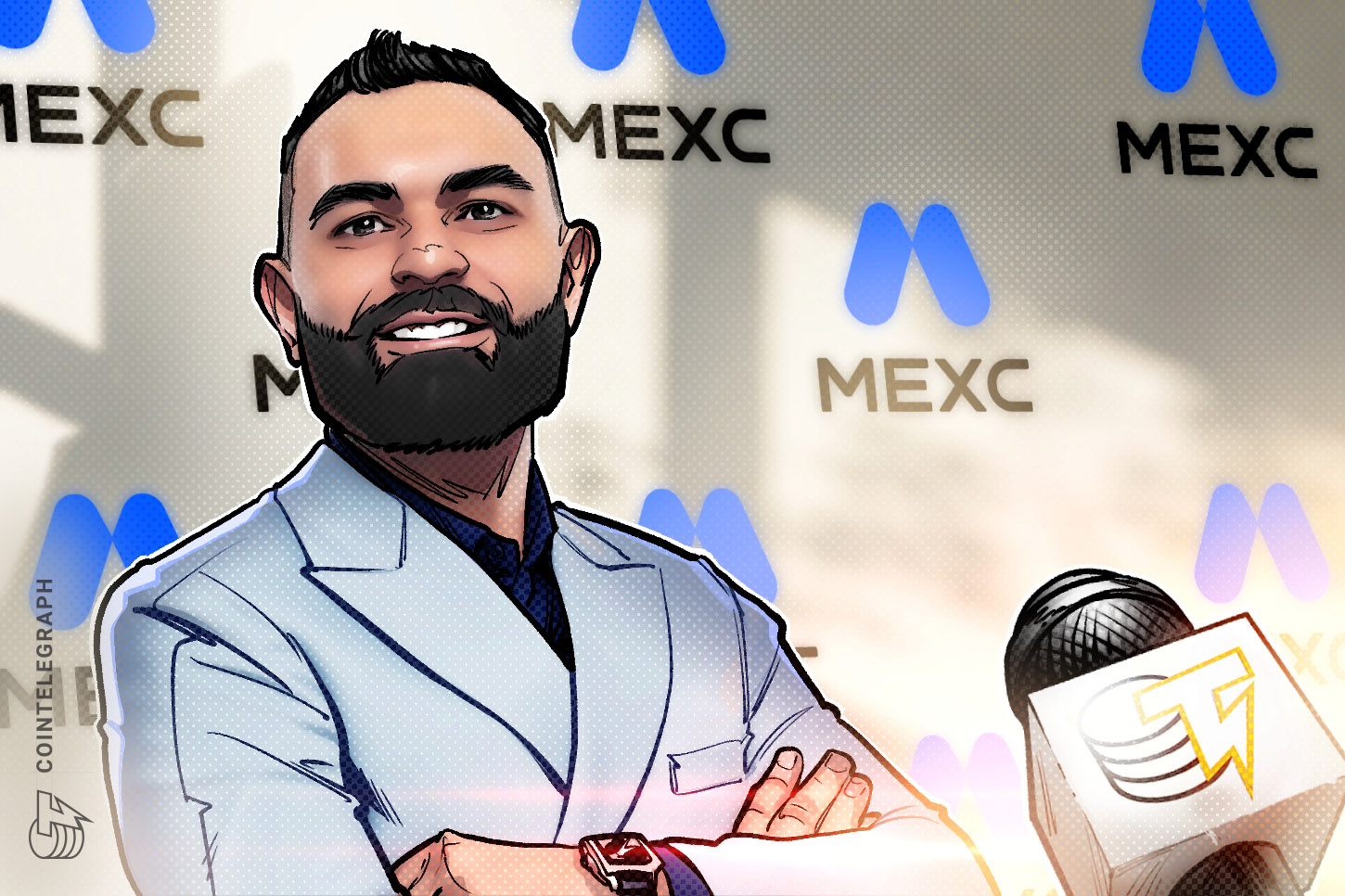
MEXC CEO Vugar Usi joins Cointelegraph to discuss how exchanges are adapting to changing user expectations, the rise of multi-asset access and the role of liquidity, AI tools and trust as crypto and traditional finance continue to converge.
Cointelegraph: How is the merging of crypto and traditional finance changing what users expect from an exchange?
Vugar Usi: Users now don’t see an exchange as a place for crypto trades only. They may start with Bitcoin, Ethereum or stablecoins, but they now expect access to gold, stock exposure, commodities, ETFs, AI tools, portfolio insights and reliable execution from the same account.
Traditional finance is coming onchain through tokenized assets, and crypto users are becoming more comfortable with familiar markets inside digital platforms.
For MEXC, this changes the role of an exchange. It has to feel simple on the surface, but strong underneath.
CT: Are crypto-native users becoming more multi-asset oriented, especially as CEX crypto trading volumes soften and interest grows in TradFi assets? How is MEXC responding to this shift?
VU: Yes. Crypto-native users are becoming more multi-asset oriented, but we would not describe this simply as users moving away from crypto. They increasingly want to access a wider range of opportunities through one familiar trading environment.
This shift is driven by two factors. First, crypto users’ investment behavior is evolving, with growing demand for access to U.S. equities, commodities and selected pre-IPO-related opportunities. Second, macro themes such as geopolitical tensions, gold and oil volatility, and the AI investment wave have made TradFi-linked assets more relevant to crypto users.
We see this in MEXC’s data. Over the past month, AI-related spot trading volume grew by approximately 53% in May compared with April, while futures volume increased by 75%. MEXC’s SPACEX(PRE) Launchpad has also attracted more than $173 million in cumulative subscriptions across two rounds, reaching a peak oversubscription of 30x. Following SpaceX's official public listing, SPCX futures recorded a peak single-day trading volume of more than 800 million USDT on June 16.
MEXC is responding by expanding access to global assets through the ongoing Wall Street Month campaign, which includes products such as RealStocks, US Stock futures and selected pre-IPO-related products, helping users capture crypto, equity, commodity and technology-linked opportunities within a crypto-native trading experience.
CT: What does “Infinite Opportunities” ultimately mean from a user perspective, and how has it changed the way MEXC thinks about building for users?
VU: For users, Infinite Opportunities means more access with fewer steps. A person should not have one platform for crypto, another for gold, another for stock exposure and another for market tools.
U.S. stocks are a good example of how we think about this. User interest in U.S. market opportunities is growing, especially around AI, technology stocks, pre-IPO companies and broader equity exposure. Instead of offering only one product format, MEXC aims to provide different ways for users to explore these opportunities in a familiar trading environment, including pre-IPO access, U.S. stock futures and spot trading.
Cost is also central to this vision. Infinite Opportunities should not come with unnecessary fees or complex access barriers. At MEXC, the exchange focuses on fees, fragmented access, complex interfaces, limited liquidity and slow execution. Those issues slow users down, so the platform builds around reducing them.
The 0-Fee Festival, for example, helped users save $232 million in trading fees and generated $453 billion in volume across spot and futures pairs, including crypto, commodities and tokenized US stocks.
CT: Why do you believe zero-fee trading and deep liquidity need to work together to create meaningful accessibility for users?
VU: Zero-fee trading gives users an immediate benefit because fees can quietly eat into returns, especially for active traders. But the full cost of a trade is bigger than the fee line.
Execution matters just as much. If liquidity is thin, users can still lose value through slippage, wider spreads or unstable pricing. That is why zero fees need deep liquidity beside them.
During MEXC’s 0-Fee Festival, users saved hundreds of millions in trading fees, with the most active futures trader saving around $1.1 million. The platform ranked first among seven major platforms for gold order book depth, second in gold futures volume and third in silver and crude oil futures volume.
Zero fees help users enter the market. Liquidity helps them trade at fairer prices once they are there.
CT: AI tools have become inseparable from digital platforms. Could you share how MEXC is utilizing AI for a better user experience?
VU: AI should make trading feel clearer, not heavier. At MEXC, the exchange uses AI to help users cut through noise and move closer to a decision.
Smart Charts bring AI-supported market signals into charts. AI Consultant gives users portfolio-based recommendations. Meanwhile, AI Strategy lets users describe a market idea in natural language and turn it into an executable strategy.
CT: How does offering crypto, stocks and commodities in one account change the way people manage their portfolios?
VU: It makes portfolio management feel more connected. Users can hold stablecoins, trade Bitcoin, follow gold, gain stock exposure and manage commodity positions without jumping between platforms.
Markets don’t move in neat boxes. A US inflation print can affect gold, rates, equities and crypto risk appetite, while geopolitical events can move oil, safe-haven assets and dollar liquidity.
A single-account model gives users more context. They can compare opportunities faster, rebalance with less friction and respond to global events from the same place.
CT: What are the key milestones in your roadmap of becoming an infrastructure layer for the converging worlds of Web3 and traditional finance?
VU: The first milestone is asset coverage. Users need access to the markets they actually follow, not only the assets crypto exchanges have historically listed. MEXC has expanded into TradFi futures, commodities and tokenized equities. In March 2026, the platform announced it would add 17 spot tokenized stock pairs and seven new tokens tied to defense and energy firms through its Ondo Finance collaboration.
The second milestone is liquidity. Ranking second for gold futures and third for both silver and crude oil futures may say something.
The third milestone is protection. As Web3 and traditional finance converge, users will choose platforms that combine market access and security with transparent reserves and mature risk controls.
CT: How is MEXC rethinking trust and user protection as security risks, fraud threats and user expectations continue to evolve?
VU: Trust has to work before there is a problem. It starts when a user joins the platform and becomes even more important during market stress.
MEXC has partnered with Sumsub to strengthen KYC, biometric liveness checks, address verification, database validation and source-of-funds checks. The partnership is also looking at deepfake impersonation and remote onboarding fraud.
From January 2025 through Q1 2026, the platform intercepted threats targeting $191 million in user assets and helped protect 1.92 million users from fraud, phishing and social engineering attacks.
Asset transparency is another layer. MEXC’s Hacken-audited report displays reserve ratios of 293% for BTC, 123% for ETH, 117% for USDT and 120% for USDC. MEXC also plans to expand its Guardian Fund to $500 million and add 1,000 BTC reserves.
CT: What are your long-term priorities in balancing innovation, user access, and trust as the industry matures?
VU: The priority is to make opportunities easier to access without leaving users feeling overwhelmed. Innovation helps when people can understand it, use it and trust the platform behind it.
Lower costs, deeper liquidity, broader asset coverage, better AI tools and stronger protection are all in MEXC’s focus. The exchange of the future won’t be judged only by how many assets it lists, but by how useful the full experience feels.
Users will ask pretty practical questions. Can they access the markets they care about? Can they trade at a fair cost? Can they understand the tools in front of them? Are their assets protected?
The job is to keep answering yes. That is how an exchange moves from a trading screen to a long-term financial partner.
Subscribe to daily byte-sized crypto news from Cointelegraph
This content is part of a paid partnership. The text below is a sponsored article that is not part of Cointelegraph.com editorial content. The material is written by our advertorial team and has undergone editorial review to ensure clarity and relevance, it may not reflect the views and opinions of Cointelegraph.com. Readers are encouraged to conduct their own research before taking any actions related to the company. Disclosure.
More on the subject