

 Written by Ayse Karamanstaff writerReviewed by Erhan Kahramanstaff editor
RWA tokenization starts with a legal exercise — Here’s why
Sponsored articlePublishedApr 10, 2026
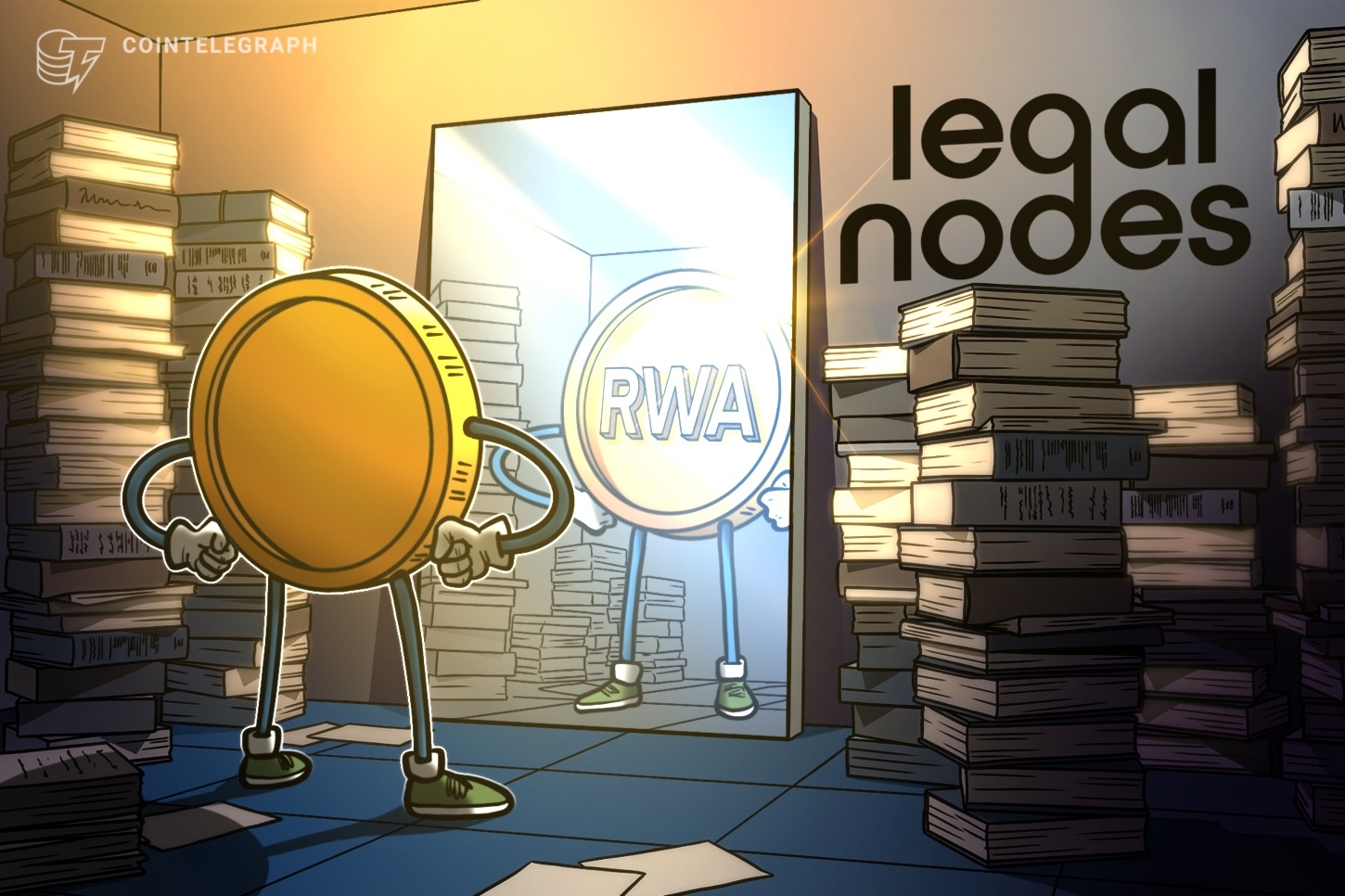
An RWA reaches the market only after its legal basis is worked out. That is where a legaltech firm enters the picture and helps translate the asset into a compliant token model.
Sponsored byLegal Nodes
Disclaimer. This content is part of a paid partnership. The text below is a sponsored article that is not part of Cointelegraph.com editorial content. The material is written by our advertorial team and has undergone editorial review to ensure clarity and relevance, it may not reflect the views and opinions of Cointelegraph.com. Readers are encouraged to conduct their own research before taking any actions related to the company. Disclosure.

Whether a token is a security or not has been a hot debate in the crypto space for years. Many tokens and cryptocurrencies were treated as securities in the past due to inaccurate classification, structuring and misalignment between regulators and projects.
A security is traditionally defined as capital invested with the expectation of profit, which is derived from the effort of others. Jurisdictions across the world reach a similar conclusion through different analysis. For example, in the EU, securities are defined under the MiFID framework, while in the United States, assets are assessed under the Howey test.
Though the form of analysis varies, triggers are common:
- profit participation
- dividends or yield
- interest payments
- pooled investment structures
- expectation of capital appreciation
- active management by an issuer or manager
An asset that does not meet these criteria may fall outside securities regulation.
Not all RWAs are securities
Real-world asset (RWA) tokenization is often associated with securities. The categorization is valid for many RWAs, as they usually represent equity, debt or investment interests.
However, not all RWAs meet the aforementioned criteria, and they may potentially avoid securities classification.
For example, commodity tokens — tokens that represent ownership or claim to physical commodities like gold, silver and oil — are not investment instruments; they rather function as a digital warehouse receipt. As the RWA holder only owns the asset and does not rely on an issuer to generate profits, these tokens may be considered as non-securities by regulators.
Similarly, asset-backed payment tokens backed by gold reserves, or even government bonds, may escape security classification. These tokens are primarily used for settlements, and they do not provide profit participation, dividends or interest. Such RWAs can be treated under payment, e-money or commodity frameworks instead.
Real estate RWAs are usually associated with securities. However, RWAs that represent direct ownership of a real asset recorded in an official registry rather than shares in a company that owns the asset may fall outside of security categorization. Such a model is explored and recognized in several jurisdictions, like Dubai. The model offers fractional property ownership that is actually linked to the official land registry, placing it outside the scope of securities laws.
RWAs that represent mere ownership of certain assets may also be considered non-securities, such as collectibles, art and carbon credits. The crucial condition is the absence of capital pooling or promise of financial returns.
Yet, understanding the regulations is just the first step for RWA projects. Determining whether an RWA token is a security and structuring the legal foundation accordingly is hugely important for compliance with regulations.
A compliant way to deal with RWAs
Legal Nodes, a legaltech company, helps RWA projects stay on a compliant track. The company assists projects in turning a real-world asset into a legally workable token structure.
The work starts with deciding what sits behind the token. The same asset can be structured through different legal instruments, and that choice can change the nature of the product altogether. A token may represent equity, debt, a commodity claim or a hybrid arrangement. Each route affects what the holder actually receives, what obligations attach to the issuer and how regulators are likely to view the offering. Legal Nodes helps projects make that choice deliberately, with the regulatory outcome in mind.
The company then structures the legal wrapper around the tokenized asset. This is the framework that links the offchain asset to the digital token and defines how the arrangement works in legal terms. It sets out where the asset sits, what kind of claim or ownership the token conveys, which entity issues or holds the relevant rights and how those rights are passed to the tokenholder.
Legal Nodes also helps establish SPVs and other legal vehicles suited to the asset class, giving the token a legal foundation that matches the nature of the underlying asset.
That structure then has to be tested against the rules of the markets the project wants to serve. Legal Nodes maps the project across jurisdictions and evaluates how regulators are likely to classify the token, as that classification determines which compliance route the issuer may face. A structure intended to sit outside securities laws in one market may be treated differently in another. This makes jurisdictional analysis a necessary part of the setup.
Once the structure is defined, the company helps shape the rest of the compliance framework around it. That includes licensing and authorization analysis, offering and distribution design, cross-border considerations and investor-facing documentation. It also works on identifying legal risks before launch and addressing them through the setup itself.
The process carries into implementation as well. Legal Nodes works with product and development teams so that the rights described in legal documents are reflected in smart contract logic and platform design. After issuance, it also supports ongoing compliance and corporate governance.
Shaping the legal foundation
RWA issuance raises legal questions that go beyond the token itself. Legal Nodes’ work focuses on the legal structure that supports the issuance, as that structure can shape both the regulatory treatment of the token and how the project functions after launch. That can make the difference between a token that holds up and one that breaks under regulatory scrutiny.
This content is part of a paid partnership. The text below is a sponsored article that is not part of Cointelegraph.com editorial content. The material is written by our advertorial team and has undergone editorial review to ensure clarity and relevance, it may not reflect the views and opinions of Cointelegraph.com. Readers are encouraged to conduct their own research before taking any actions related to the company. Disclosure.
More on the subject