
Written by Erhan KahramanCommissioned Content
Written by Erhan KahramanCommissioned Content
Testing token economies before the market does: AMA recap with Kenomic
CommissionedPublishedOct 27, 2026
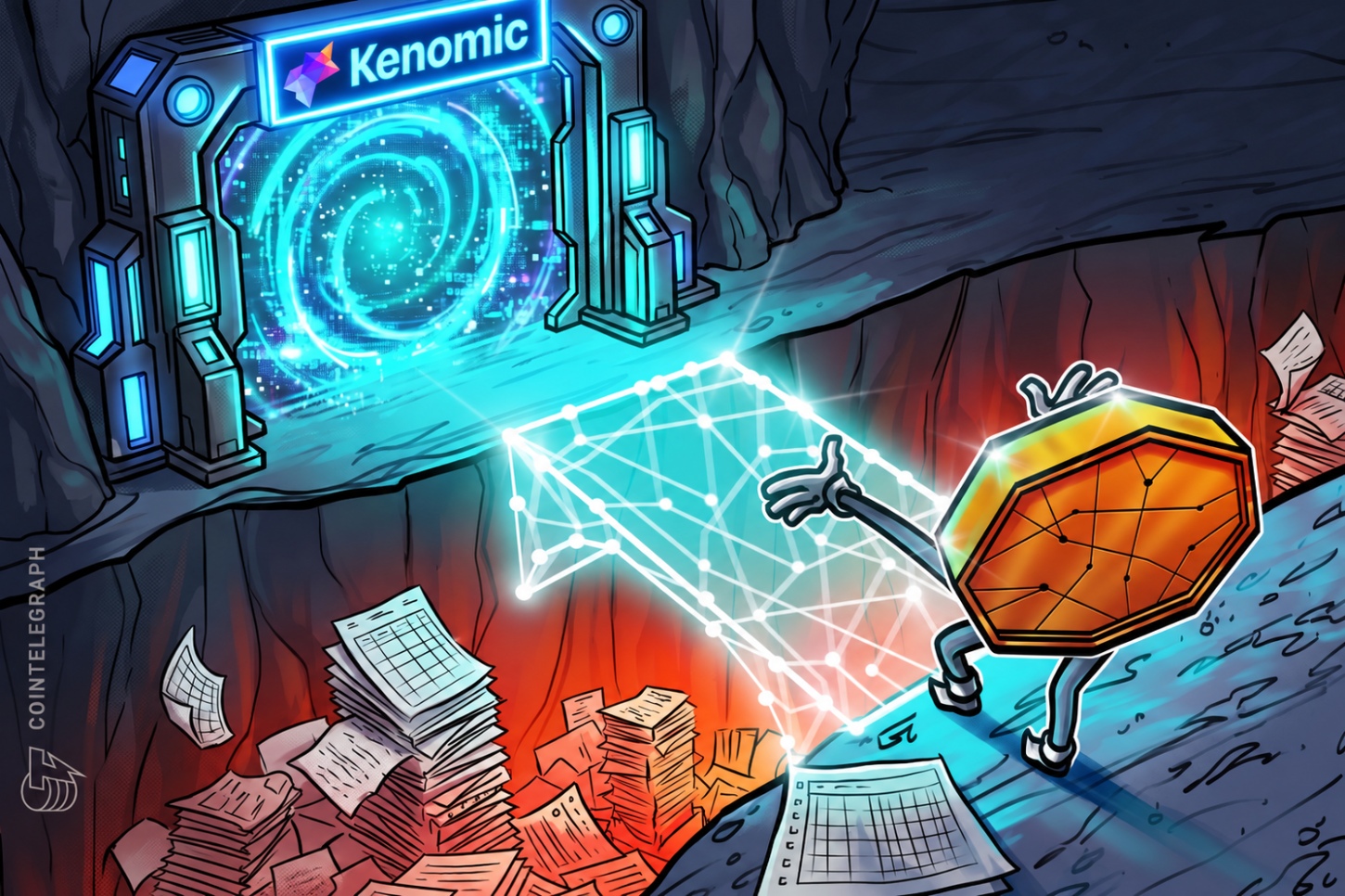
During a Cointelegraph AMA, Kenomic co-founder Rayco Tarrida explained the flaws of spreadsheet token design and how digital twin simulations can stress-test economies.
Commissioned byKenomic
When a new token crashes immediately after launch, founders almost always blame brutal market conditions, ignoring the fact that basic mathematical oversights could kill the project before trading even started. In a recent Cointelegraph AMA session, Kenomic co-founder and CEO Rayco Tarrida discussed why static planning tools set Web3 projects up to fail and explained how automated simulation tools can fix token design.
Kenomic is an end-to-end infrastructure platform that helps founders build and launch digital assets across multiple blockchains. Rayco likened the setup to software builders like Lovable, noting that Kenomic offers a conversational system that lets users create customized tokens in a few minutes.
Breaking out of static spreadsheets
Rayco observed that most token failures trace back to predictable imbalances that teams simply overlook during initial planning. The Kenomic CEO pointed out that founders routinely build their economic models in an Excel spreadsheet, plug in arbitrary vesting schedules and cross their fingers.
“The unlock at token generation event (TGE) tends to be higher than the initial liquidity they’re adding, so the moment half of them sell, you’re already going to crash 50, 60, 90% on that first day,” Rayco said.
“You cannot just blame it on the market when you didn’t look at the numbers,” Rayco added, noting that even during a sharp market drawdown, a sound token structure should not collapse completely on day one.
Spreadsheet formulas also miss hidden long-term traps. Rayco noted that a token charging a 10% transfer fee might seem harmless at first, but over three years of steady trading, that mechanism gradually siphons circulating supply directly into the project treasury until trading halts completely.
Fragmented coordination makes these mistakes worse. Over four years running tokenomics consultancy at Calea Digital, Rayco watched teams spend up to eight months juggling separate developer studios and auditing firms, only to miss their target launch window entirely. Kenomic aims to bring that entire pipeline into one interface to cut out the operational lag.
Stress-testing through digital twins
To replace guesswork with concrete testing, Kenomic adapts digital twin technology from industrial engineering and Internet of Things (IoT) systems. The platform generates a virtual copy of the project’s entire token ecosystem, giving developers a safe sandbox where they can test unpredictable user behavior. The engine runs thousands of Monte Carlo simulations focused on drastic price drops and unexpected sell-offs.
“A small change in liquidity at the beginning can have a drastic impact two years down the line,” Rayco explained, pointing out that simulations help uncover these ripple effects. These tests reveal secondary reactions that static sheets cannot track, such as aggressive vesting cliffs that push early backers to cash out all at once.
“We use this twin to run those simulations to proactively try and break it,” Rayco said. If a token survives 80% of 10,000 harsh test scenarios, the design is robust enough to handle real trading conditions, according to the Kenomic co-founder.
Managing token operations with an AI assistant
Setting up a token manually means sorting through more than 800,000 possible parameter combinations across governance rights and utility models. To save founders from drowning in options, Kenomic built an AI agent named Keni. Users can talk to Keni to define their economic rules, while external teams can connect their own AI agents through the Model Context Protocol (MCP).
The platform continues supporting teams throughout the full life cycle of a token. A team planning an airdrop on day 90 can paste a recipient spreadsheet into Keni, simulate whether market liquidity can absorb an immediate sell-off before spinning up smart contracts to distribute the funds.
Kenomic is active on EVM testnets and preparing to launch across ten networks, including Solana, Cardano, Stellar and Sui. Becoming fully licensed and compliant in the US, Europe, and Asia is also on the platform’s roadmap.
Rayco closed by reminding founders that token mechanics must serve real business utility: “The true reason to have a utility token is to incentivize or disincentivize desired or undesired user behavior. It’s the carrot and the stick simultaneously. [...] Launching a token first and then trying to figure out what you’re going to do is one of the best mixtures for failure that there is.”


Subscribe to daily byte-sized crypto news from Cointelegraph
This content is part of a paid partnership. The text below is a commissioned article that is not part of Cointelegraph editorial content. The material is written by our advertorial team and has undergone editorial review to ensure clarity and relevance, it may not reflect the views and opinions of Cointelegraph.com. Readers are encouraged to conduct their own research before taking any actions related to the company. Disclosure.
More on the subject