

Here’s what happened in crypto today
53 minutes ago

 Written by Sam Bourgistaff editorEdited by Ana Paula Pereiraformer editor
AI data center expansion is facing increasing local opposition over power, infrastructure and costs, echoing the resistance that once slowed Bitcoin mining.

For years, Bitcoin miners expanding across the United States learned that access to cheap power and industrial land did not guarantee community acceptance. Now, as AI hyperscalers and developers race to build power-dense data centers, they are encountering similar local resistance over electricity demand, infrastructure costs and long-term environmental impact, according to the latest Miner Mag newsletter.
The parallels are becoming increasingly difficult to ignore. Bitcoin mining projects often promised job creation and a stronger local tax base, but those benefits did not always materialize, fueling opposition in several regions.
AI data centers are now drawing many of the same concerns, particularly in states such as Texas, Georgia, Illinois and Mississippi, where residents and local officials are questioning the long-term costs of hosting energy-intensive infrastructure.
“Across the country, local governments and residents are no longer waiting passively for assurances that AI infrastructure will be different,” Miner Mag wrote.
In response, some communities are moving to temporarily halt new AI data center developments while officials review zoning rules, backup generation plans and the strain on local infrastructure.
Industry data cited by Miner Mag shows that about $64 billion in US data center projects have already been delayed or blocked due to local opposition.
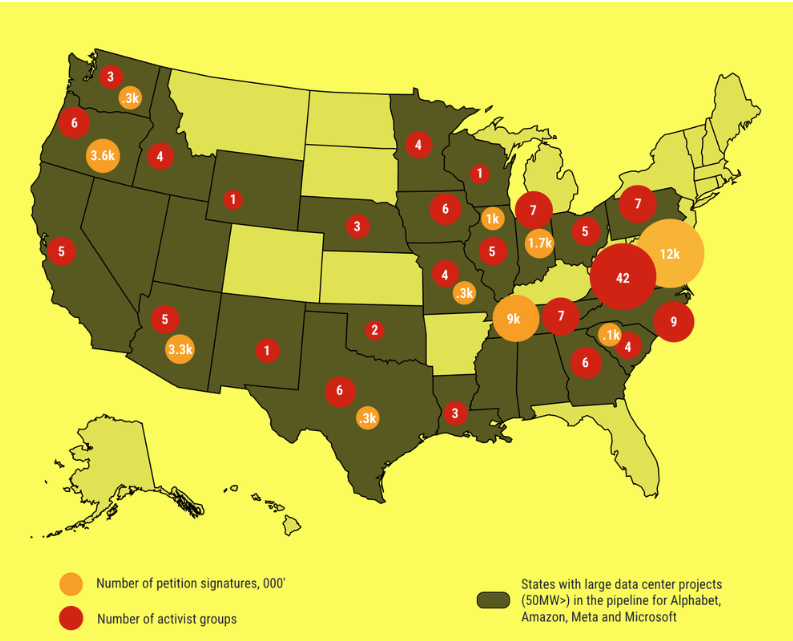
A map showcasing data center backlash against proposed expansion plans by companies such as Amazon, Meta, Microsoft and Google-parent Alphabet. Source: Data Center Watchdog
Related: Rural Texas community fails plan to become a city to curb BTC miner noise
Facing growing local resistance, companies including Microsoft and OpenAI are adopting more community-oriented infrastructure strategies to address the rising costs of power generation and grid upgrades associated with their data center projects.
OpenAI has said it will “pay its own way” for energy costs associated with its expanding AI footprint, signaling a shift toward greater cost accountability as communities and regulators scrutinize AI-driven electricity demand.
As Miner Mag noted, the approach sounds familiar to the Bitcoin mining industry. Mining companies that faced local pushback were often forced to renegotiate power contracts and invest in mitigation measures to demonstrate clearer community benefits tied to their operations.
At the same time, Bitcoin miners have been moving toward AI and high-performance computing workloads for several years. Companies including Hut 8, MARA Holdings, Riot Platforms, TeraWulf and HIVE Digital Technologies have pursued this shift amid intensifying competition in the mining sector and tighter margins following the 2024 Bitcoin halving.
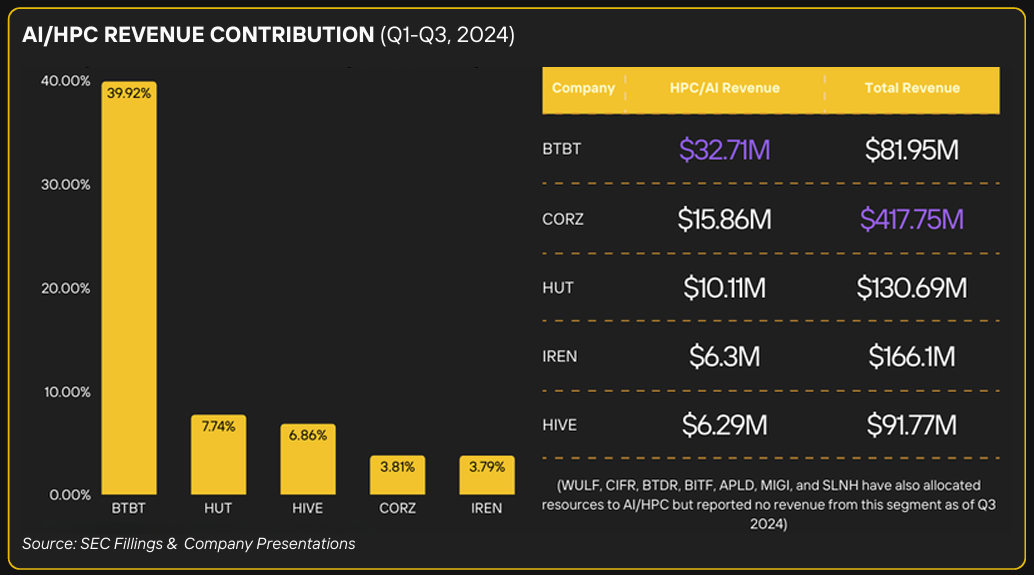
Pressure in the bitcoin mining industry has pushed more companies to pivot toward AI and high-performance computing. Source: Digital Mining Solutions
Related: Bitcoin mining’s 2026 reckoning: AI pivots, margin pressure and a fight to survive