


 Written by Vince Quillformer writerEdited by Robert Lakinstaff editor
Changing Basel rules could unlock ‘huge’ liquidity for BTC: Analyst
Latest NewsPublishedMar 14, 2026
Banks seek to deploy capital in the most efficient way possible, but capital rules under the Basel III framework make crypto holdings costly.

The Basel III rules, which govern bank capital requirements, are set to be updated in 2026, and if Bitcoin (BTC) receives a lower risk rating in the revised rules, it could trigger a “huge” influx of liquidity into BTC, according to market analyst Nic Puckrin.
Under the current Basel rules, BTC and similar digital assets are given a 1,250% risk weight, meaning banks must hold reserve assets at a 1:1 ratio to back any Bitcoin held on their balance sheets, Puckrin said.
These restrictive capital requirements make it “almost impossible” for banks to hold BTC or offer BTC-related services, he added. He said:
“The Fed just announced a proposal on how these rules will be implemented in the US, with a 90-day public comment window. If BTC’s treatment improves even slightly, it could open the door for banks to finally integrate BTC into the financial system.”
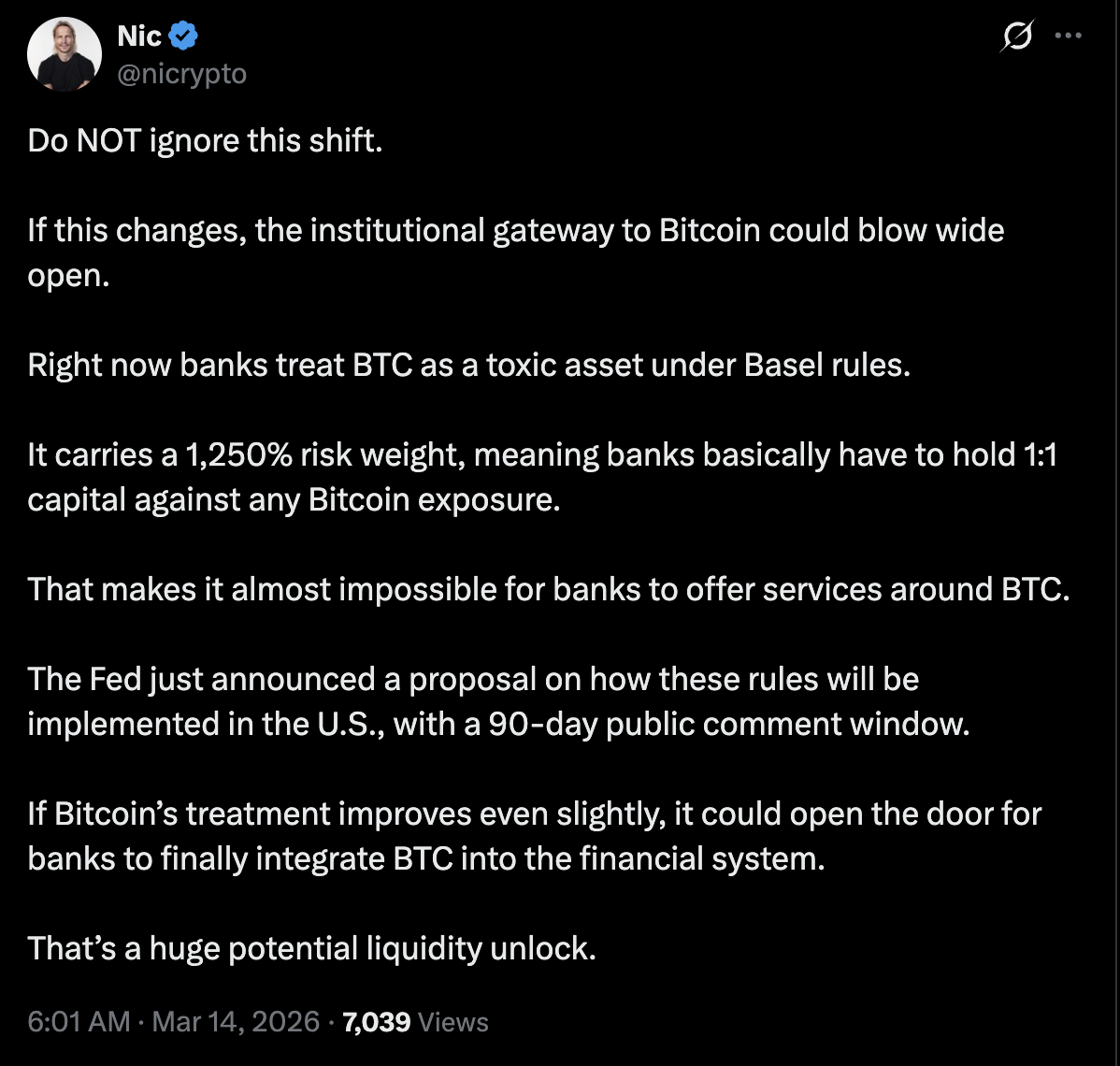
Source: Nic Puckrin
In February, several crypto treasury company executives called for reforms to the Basel rules to implement more accommodating risk weights for digital assets that would allow banks to participate in the blockchain economy.
Related: Bitcoin advocate group to fight Basel’s ‘toxic’ treatment of cryptocurrency
Basel rules create a different kind of chokepoint
The Basel Committee on Banking Supervision (BCBS) proposed the current capital requirements for cryptocurrencies in 2021, which placed crypto in the highest risk category.
While BTC and crypto carry a 1,250% risk weight under the current rules, investment-grade corporate bonds carry a risk weight of up to 75%, according to Jeff Walton, chief risk officer at Bitcoin treasury company Strive.
Gold, government bonds and physical cash have a 0% risk weight, Walton said, adding that “risk is mispriced.”
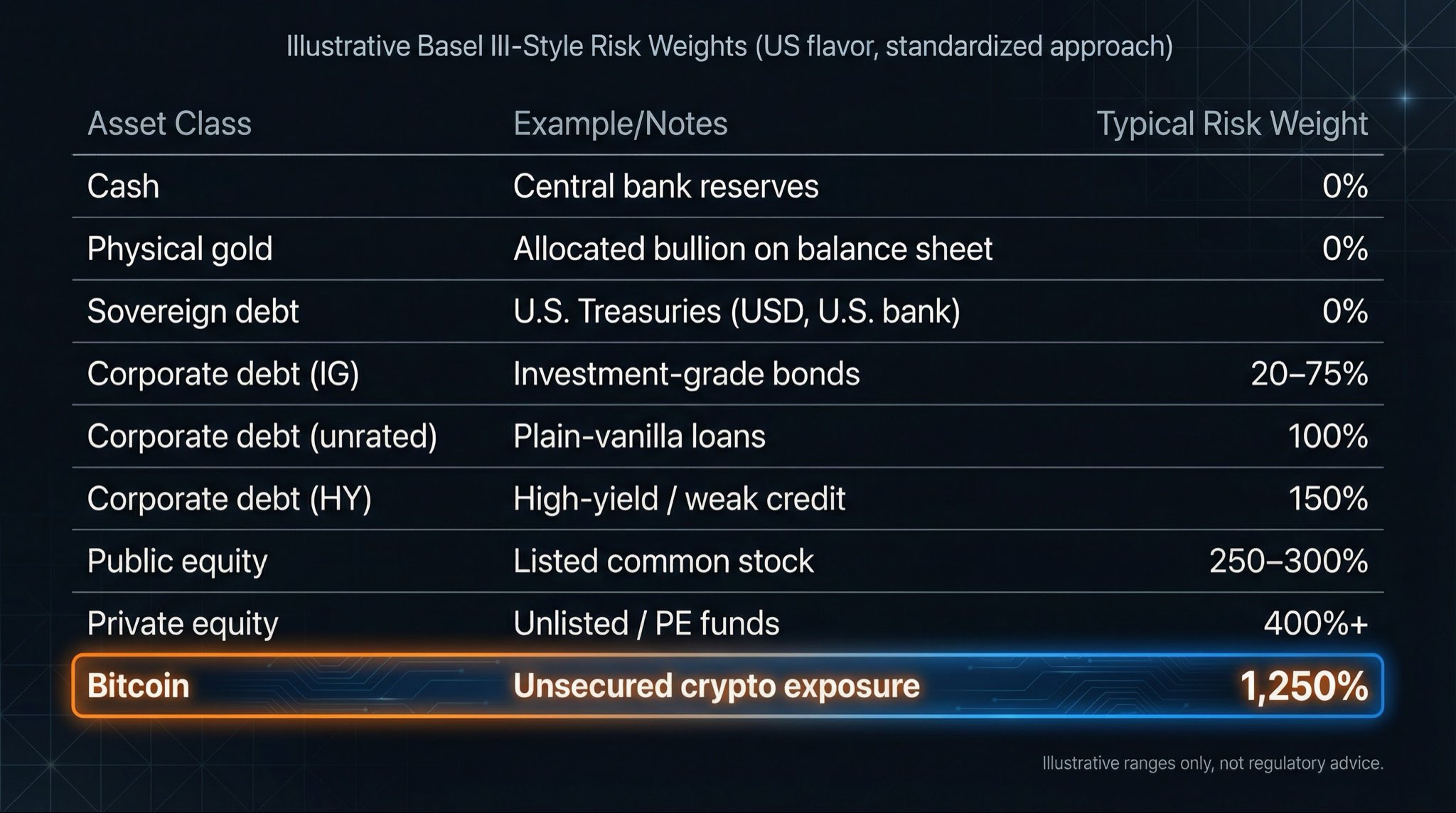
Risk weights for different asset classes under the Basel III framework. Source: Jeff Walton
The Basel capital requirements are a covert form of choking off the crypto industry, and are more subtle than efforts to debank crypto companies under Operation Chokepoint 2.0, Chris Perkins, president of investment company CoinFund, told Cointelegraph.
“It’s a very nuanced way of suppressing activity by making it so expensive for the bank to do those activities,” Perkins said.
Magazine: Danger signs for Bitcoin as retail abandons it to institutions: Sky Wee


Subscribe to daily byte-sized crypto news from Cointelegraph
Cointelegraph is committed to independent, transparent journalism. This news article is produced in accordance with Cointelegraph’s Editorial Policy and aims to provide accurate and timely information. Readers are encouraged to verify information independently.
More on the subject