


 Written by Vince Quillformer writerEdited by Ana Paula Pereiraformer editor
Hua Xia state-linked Chinese bank tokenizes $600M in yuan bonds
Latest NewsPublishedDec 4, 2025
The bond was auctioned off to holders of the digital yuan, a central bank digital currency (CBDC) developed by the Chinese government.

Hua Xia Bank, a publicly traded financial institution linked to China’s government, issued 4.5 billion yuan ($600 million) in tokenized bonds on Wednesday, aiming to reduce clearing friction by removing intermediaries from the auction process.
According to Sina, the onchain government bonds were issued by Hua Xia Financial Leasing, a subsidiary of Hua Xia Bank, a state-controlled commercial bank in China. The bonds offered a three-year fixed yield of 1.84% to holders.
The $600 million bond tranche was auctioned off exclusively to holders of China’s digital renminbi, also known as the digital yuan.
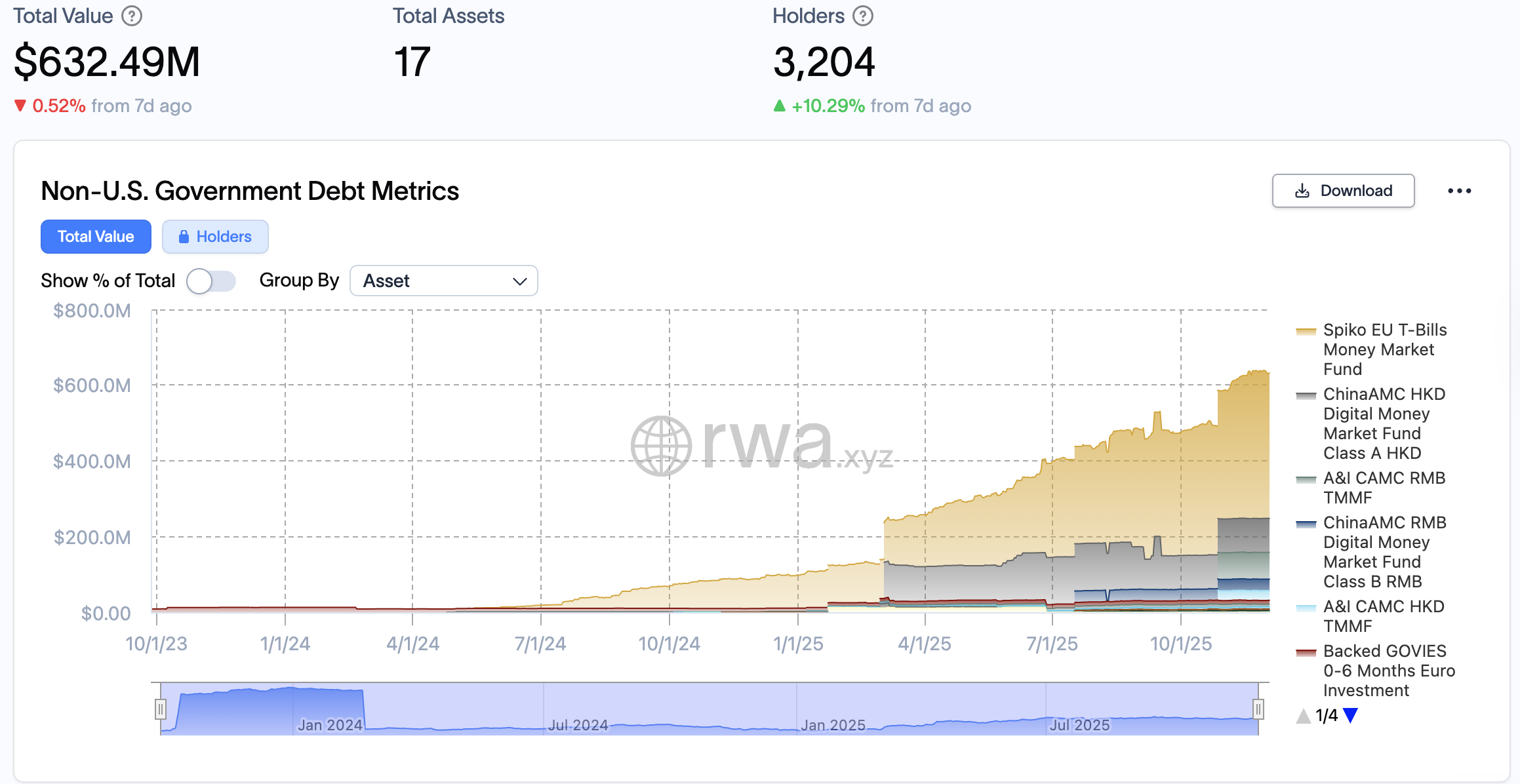
Overview of tokenized government securities market, excluding US government assets. Source: RWA.XYZ
Tokenized bonds may reduce the number of intermediaries needed for transaction clearing, shortening settlement times and lowering transaction costs.
China has flip-flopped on the issue of stablecoins and cryptocurrencies in 2025, choosing instead to develop a central bank digital currency (CBDC) and state-sanctioned uses of permissioned blockchain technology, as digital assets become geostrategically important.
Related: China reaffirms crypto ban after noticing ‘speculation has resurfaced’
Mixed signals coming from China as crypto becomes more relevant
China’s government continues to change course on stablecoins and cryptocurrencies, alternating between attempted bans and relaxing regulations to allow private companies to operate in the space.
In early August, China cracked down on local brokers and financial companies holding stablecoin seminars in the country and instructed these businesses to cancel any slated events and to stop publishing research on the subject.
At the time, Chinese regulators were concerned that stablecoins could be a vector for fraudulent activity in the country, according to Bloomberg.
Less than two weeks later, reports emerged that China’s government was considering legalizing privately-issued yuan stablecoins to boost the fiat currency’s presence in foreign exchange markets.
Chinese technology companies, including Alibaba, Ant Group and JD.com, saw this as a green light to begin developing yuan-pegged tokens, but a warning from Beijing in October about private stablecoins put those plans on pause.
The People’s Bank of China, the country’s central bank, established an operations center for the digital yuan in September. The hub, based in Shanghai, will oversee cross-border settlement and development of other blockchain-related initiatives.
Magazine: China officially hates stablecoins, DBS trades Bitcoin options: Asia Express


Subscribe to daily byte-sized crypto news from Cointelegraph
Cointelegraph is committed to independent, transparent journalism. This news article is produced in accordance with Cointelegraph’s Editorial Policy and aims to provide accurate and timely information. Readers are encouraged to verify information independently.
More on the subject