


 Written by Sam Bourgistaff editorEdited by Ana Paula Pereiraformer editor
In wake of crypto’s leverage wipeout, SEC approves ‘SUI-on-steroids’ ETF
Latest NewsPublishedDec 4, 2025
The SEC approved a 2x leveraged ETF tied to SUI as regulators warn that excessive leverage continues to amplify volatility across crypto markets.

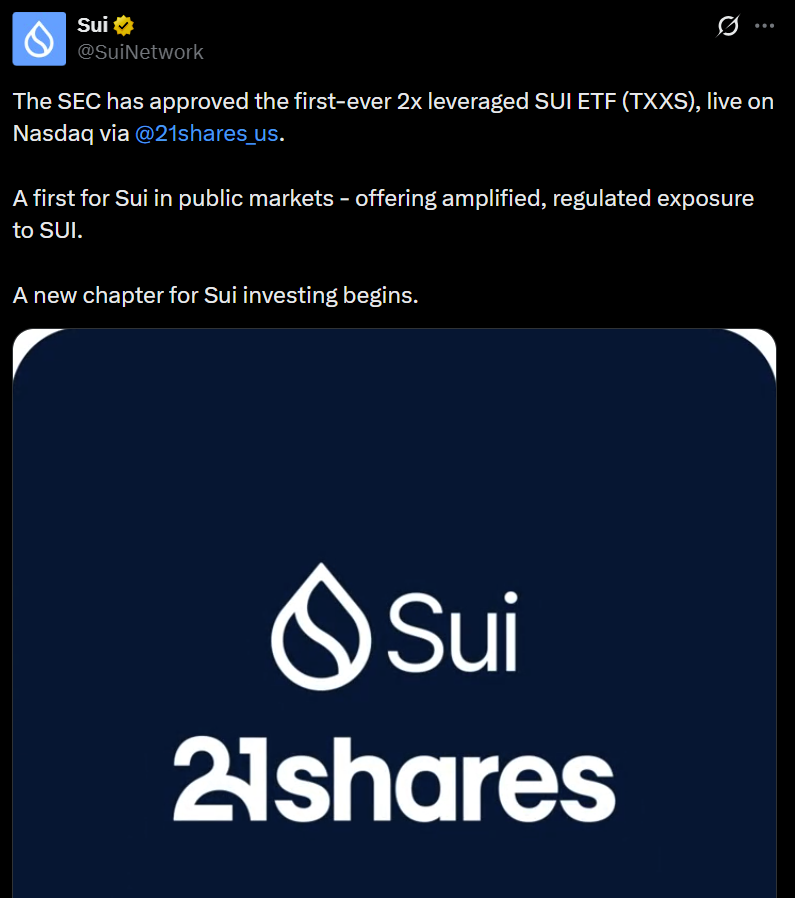
The US Securities and Exchange Commission (SEC) has approved a leveraged exchange-traded fund tied to the SUI token from 21Shares, allowing investors to gain amplified exposure to the Sui ecosystem as questions persist about the risks of leverage in crypto markets.
On Thursday, the Sui Foundation announced that 21Shares has launched its 2x leveraged SUI (SUI) ETF, trading under the ticker TXXS on the Nasdaq. The fund is designed to deliver twice the daily return of SUI, giving investors a way to gain leveraged exposure without directly holding the cryptocurrency.
In practical terms, if SUI rises 10% in a single day, the ETF aims to rise by about 20%. Losses are similarly magnified on the downside.
Rather than holding SUI tokens, the fund utilizes derivatives, including swaps and other financial contracts, to track the price movements of the token.
Source: Sui Network
Until now, the SEC has been reluctant to approve higher-leverage crypto investment products. In October, the regulator said it was “unclear” whether the proposed three-times and five-times leveraged ETFs would meet regulatory standards.
Earlier this week, the agency also issued a series of warning letters to fund issuers, cautioning against products that offer such elevated levels of leverage across stocks, commodities or digital assets.
Related: Atkins says SEC has ‘enough authority’ to drive crypto rules forward in 2026
The ongoing debate over crypto leverage
The debate over curbing excessive leverage is particularly relevant in the cryptocurrency market, where heavy use of borrowed money continues to amplify price swings and, at times, trigger sharp losses for traders.
On Oct. 10, the crypto market saw its largest leverage-driven sell-off on record, with roughly $19 billion worth of positions liquidated as prices fell rapidly and forced highly leveraged traders out of their positions.
The fallout extended beyond leveraged traders to spot investors as well, who saw the value of their holdings decline in the weeks that followed. Bitcoin (BTC), for example, fell from a record high near $126,000 in October to below $80,000 in November.
Source: The Kobeissi Letter
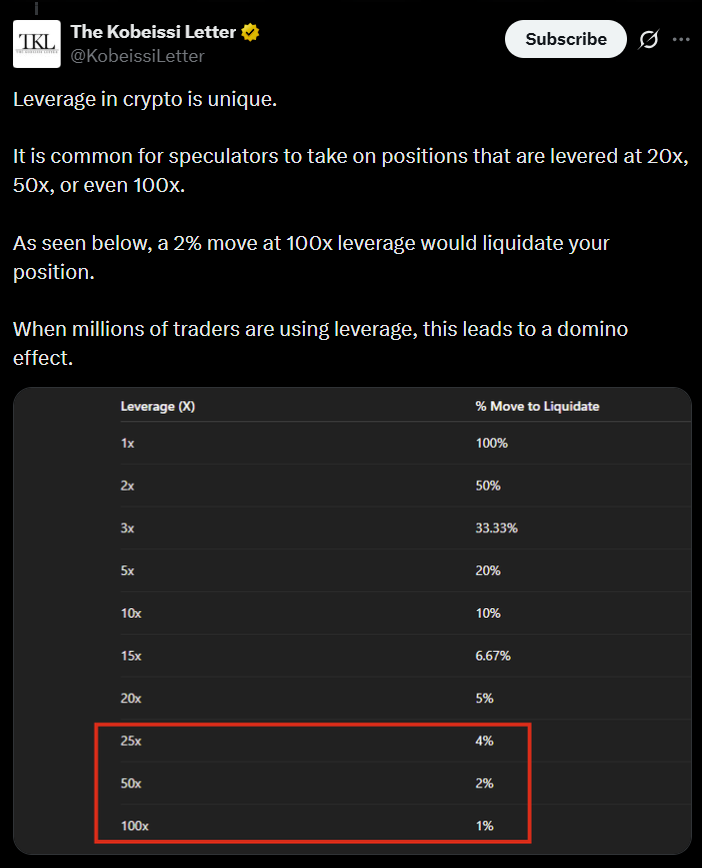
Leverage plays a significantly larger role in crypto markets compared to traditional markets, largely due to the widespread use of derivatives exchanges and perpetual futures contracts.
Platforms such as Binance and Bybit allow traders to take highly leveraged positions — often 10x, 50x or more — on so-called perpetual futures, which are contracts that track an asset’s price without an expiration date.
Magazine: 2026 is the year of pragmatic privacy in crypto — Canton, Zcash and more


Subscribe to daily byte-sized crypto news from Cointelegraph
Cointelegraph is committed to independent, transparent journalism. This news article is produced in accordance with Cointelegraph’s Editorial Policy and aims to provide accurate and timely information. Readers are encouraged to verify information independently.
More on the subject