


 Written by Turner Wrightstaff writerEdited by Ana Paula Pereiraformer editor
Tennessee city clears path for crypto mining, data centers with new zoning rules
Latest NewsPublishedJan 22, 2026
An ordinance to amend the city’s zoning laws laid out guidelines for where a crypto miner could operate in the area and how loud the operation could be.

The Board of Mayor and Aldermen in Kingsport, Tennessee approved changes to the city’s zoning rules that could pave the way for cryptocurrency mining companies and data centers to operate locally.
In a Tuesday meeting, the board unanimously approved on first reading an ordinance to amend the land zoning related to data centers and cryptocurrency mining sites, according to local reports.
The ordinance sets guidelines on where those facilities could be located within the city. Its approval followed a recommendation from Kingsport’s planning division in December and requires a second vote before the amendment is formally adopted.
“The City’s industrial district zoning code text was created without the anticipation of mass digitization,” said the planning commission’s report to the board. “Staff expects to see new digital data-based industries looking for locations to develop. This text amendment allows for the City to appropriately locate and permit these uses.”
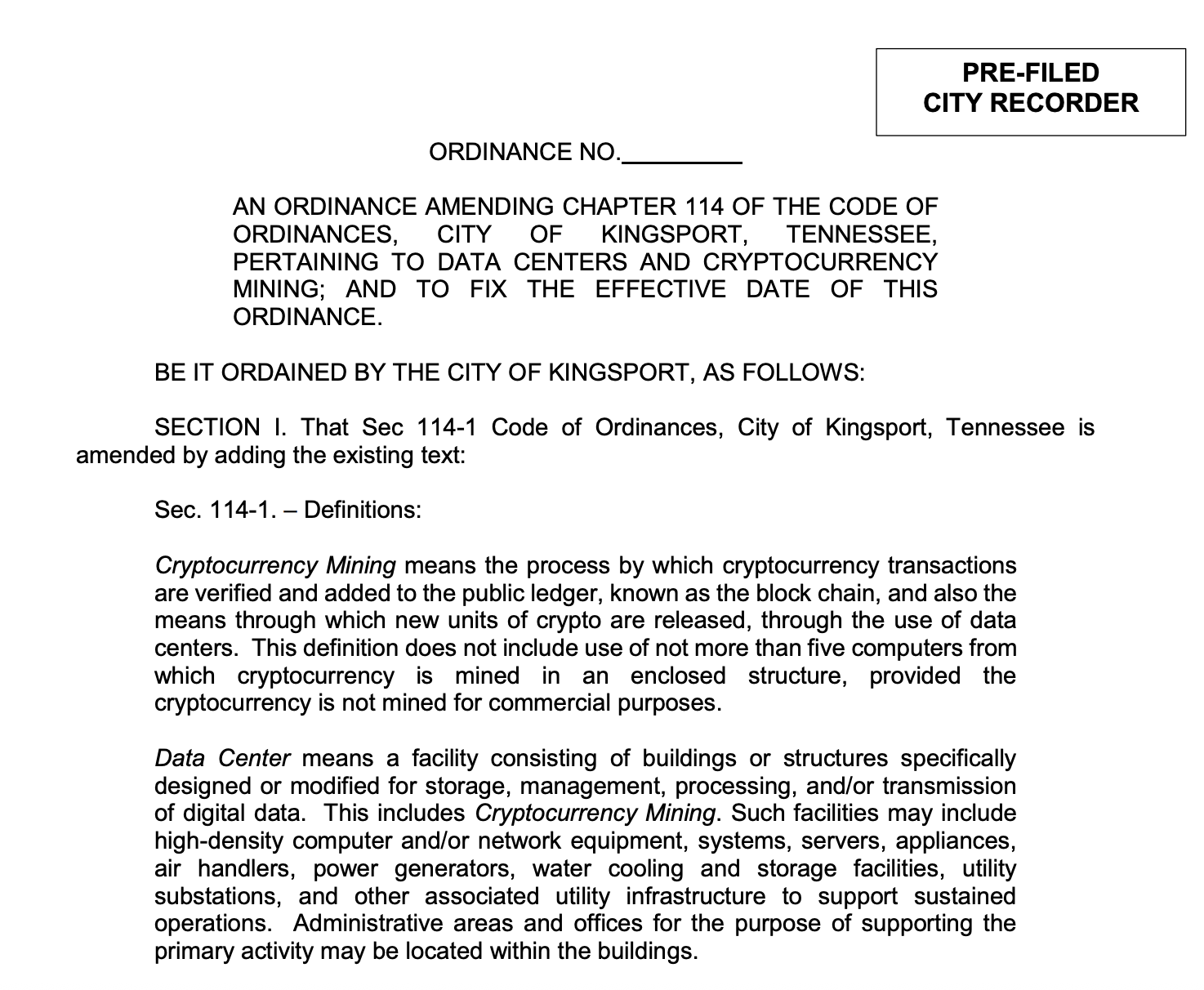
Ordinance proposing changes to the city’s zoning laws. Source: City of Kingsport
According to the amendment, crypto mining companies would be permitted to operate in Kingsport provided they were in a “completely enclosed building” not located within 500 feet (152 meters) of a residential building or district.
The proposal noted that any crypto mining operation would be subject to approval based on a sound study, with a maximum sound level of 60 dBA (A-weighted decibel) from the property line. Residents in other areas of the US, including Hood County in Texas, have filed lawsuits over the noise from crypto miners.
Related: Federal judge blocks Tennessee action against Kalshi pending injunction hearing
With an estimated 57,000 people, Kingsport sits in the top 20 of Tennessee cities by population, making crypto-related legislation significant for a US state already considered by many companies to be friendly to miners. CleanSpark reached an agreement in 2024 to purchase seven mining facilities around Knoxville.
Tennessee lawmaker moves for state to adopt Bitcoin reserve
On Wednesday, Tennessee House of Representatives member Jody Barrett introduced the Tennessee Strategic Bitcoin Reserve Act. The proposed bill would amend the state’s code to allow the treasurer to invest up to 10% of Tennessee’s general fund in Bitcoin (BTC).
It’s unclear at the time of publication if the bill will have enough political support to pass Tennessee’s general assembly. If signed into law, Barrett proposed it take effect by July 1.
Magazine: How crypto laws changed in 2025 — and how they’ll change in 2026


Subscribe to daily byte-sized crypto news from Cointelegraph
Cointelegraph is committed to independent, transparent journalism. This news article is produced in accordance with Cointelegraph’s Editorial Policy and aims to provide accurate and timely information. Readers are encouraged to verify information independently.
More on the subject