


 Written by Sam Bourgistaff editorEdited by Ana Paula Pereiraformer editor
Twenty One Capital eyes Tuesday debut following Cantor Equity Partners merger
Latest NewsPublishedDec 4, 2025
Bitcoin-focused Twenty One Capital is set to go public on the NYSE after winning shareholder approval for its merger with Cantor Equity Partners.

Twenty One Capital, a Bitcoin-focused financial company led by Jack Mallers, expects its shares to begin trading on the New York Stock Exchange next week following the completion of its merger with Cantor Equity Partners, a special purpose acquisition company.
The announcement on Thursday followed shareholder approval of the deal at Cantor Equity Partners’ meeting, clearing the way for Twenty One Capital to list on Tuesday under the ticker symbol “XXI.”
Final voting results from the meeting are expected to be disclosed in a forthcoming Form 8-K filing with the US Securities and Exchange Commission.
Twenty One Capital launched in April with the goal of building one of the largest corporate Bitcoin (BTC) treasuries. Early backers include Cantor Fitzgerald, Tether, Bitfinex and venture capital firm SoftBank.
Upon listing, the company is expected to become the third-largest corporate holder of Bitcoin, trailing only Michael Saylor’s company, Strategy, and MARA Holdings, a major cryptocurrency miner.

Source: Jack Mallers
With 43,514 BTC on its books, Twenty One Capital’s Bitcoin stash is currently worth about $4 billion, according to industry data.
Related: Bitcoin miners enter ‘harshest margin environment of all time’
Bitcoin treasury firms under pressure after volatile crypto crash
Companies holding large Bitcoin reserves are feeling the strain after a massive liquidation wave on Oct. 10 triggered the largest single-day wipeout in crypto history, with over $19 billion in leveraged positions liquidated.
The ripple effects have dragged down the value of Bitcoin. After reaching a peak above $126,000 in early October, Bitcoin dropped sharply in November, bottoming out below $80,000 as sell-offs intensified.
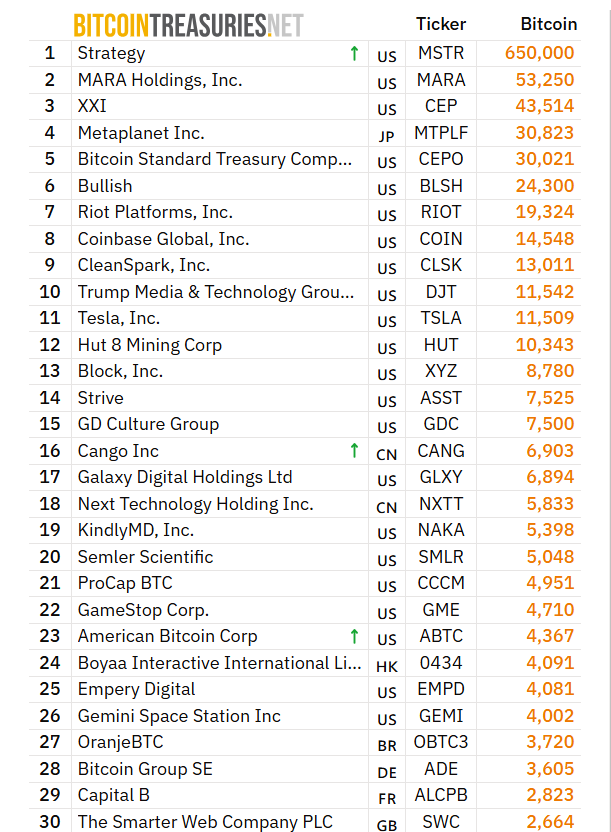
The 30 largest public Bitcoin holders by treasury size. Source: BitcoinTreasuries.NET
The slump has hit companies with large Bitcoin holdings particularly hard. Strategy saw its stock plunge, eroding much of the premium it once enjoyed over the value of its Bitcoin stash.
In this environment, the viability of corporate Bitcoin treasury strategies is being questioned, particularly in a market where continued volatility and thin liquidity increase the risk that further downturns could wipe out unrealized gains.
Magazine: Crypto carnage — Is Bitcoin’s 4-year cycle over? Trade Secrets


Subscribe to daily byte-sized crypto news from Cointelegraph
Cointelegraph is committed to independent, transparent journalism. This news article is produced in accordance with Cointelegraph’s Editorial Policy and aims to provide accurate and timely information. Readers are encouraged to verify information independently.
More on the subject