


 Written by Nihatcan Yanikstaff writerReviewed by Erhan Kahramanstaff editor
After losing money to fraud, enterpreneur builds an infrastructure for a $600M problem
SponsoredPublishedMay 15, 2026
Utilizing WhatsApp’s interface, the payment platform aims to deliver fast and tamperproof escrow for everyday consumers.
Sponsored byKustodia

Addressing the high rates of peer-to-peer transaction fraud in Mexico, payment platform Kustodia leverages blockchain and WhatsApp to provide escrow services for high-value exchanges like used vehicles and real estate.
In 2021, Rodrigo Jimenez lost money in a peer-to-peer (P2P) transaction, which happens between individuals without oversight. The other party disappeared. The funds were gone. There was no escrow mechanism to secure the payment, no protection, no way to recover what was lost. Most people file a complaint and move on. Jimenez spent the next three years building a platform that could have prevented it. “The problem wasn’t new,” Jimenez says.
Global payment fraud stripped $44.3 billion from the economy during 2024. Fraud in Latin America reached $600 million, consuming 20% of merchant revenue. Every dollar of fraud in Mexico generates $4.08 in total economic damage. Such systemic insecurity imposes a functional tax on every individual who attempts to exchange value with a stranger.
A market hiding in plain sight
Mexico’s used vehicle market processes approximately $60 billion in transactions per year. Most of them happen in ways that would be unrecognizable to a buyer or seller in the United States: through Facebook Marketplace, WhatsApp groups, classified sites and word of mouth.
Strangers meet in parking lots. Money changes hands. Paperwork follows if anyone is lucky. The fraud risk in these transactions is real. People lose cars, deposits and in some cases much more.
“It’s the most dangerous transaction for a regular consumer in Mexico,” says Jimenez. “The risk isn’t just losing money. It’s robbery. It’s the disappearance of everything someone saved for years. And the mechanism to prevent it — escrow — just didn’t exist for this market.”
Making escrow invisible
The central insight behind Jimenez’s payment platform Kustodia is that the escrow mechanism and the user interface are two entirely separate problems. The technology to hold funds safely in a neutral account until both parties confirm a deal has existed for decades.
Source: Kustodia
Blockchain made it faster, cheaper and tamperproof. The remaining problem was: how does a used car seller in Guadalajara actually use it? The answer Kustodia arrived at is WhatsApp.
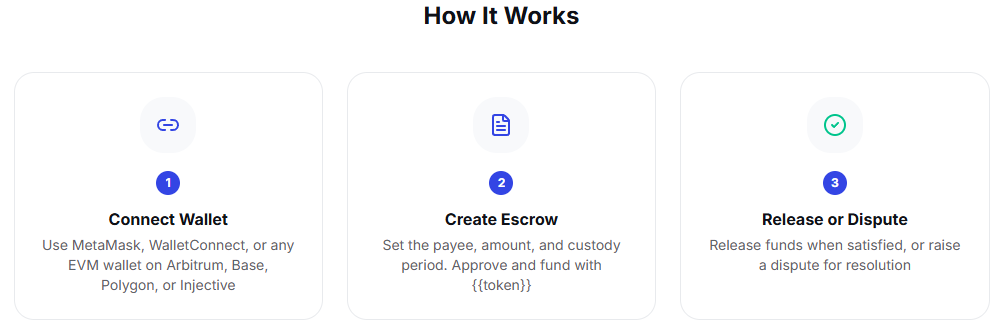
The buyer deposits pesos via their bank app to a unique bank reference Kustodia generates. Those pesos are locked in a smart contract on the Arbitrum blockchain and held as MXNB, a Mexican Peso-backed digital currency audited by “a Big Four firm.”
This method removes exposure to cryptocurrency price swings. The seller delivers. Both parties confirm through a WhatsApp conversation or via the platform itself. The pesos arrive in the seller’s bank account in seconds.
The blockchain is completely invisible. The user sees pesos going in and pesos coming out. The smart contract handles everything in between automatically at “a cost of 3% or less” and without delays or a human intermediary. Traditional escrow agents charge between 3% and 6% and take up to a week according to Kustodia.
Kustodia’s model also changes the economics for marketplace operators. Listing fees have limited upside in a classifieds market flooded with free alternatives. Embedding Kustodia lets platforms participate in transaction value instead of charging a flat fee for exposure. Jimenez says that shift converts a classified ads business into a fintech:
“These platforms know the transaction value is flowing through their product every day. They just can’t touch it. We give them the infrastructure to capture it with better protection for their users than they could ever build themselves.”
Beyond used cars
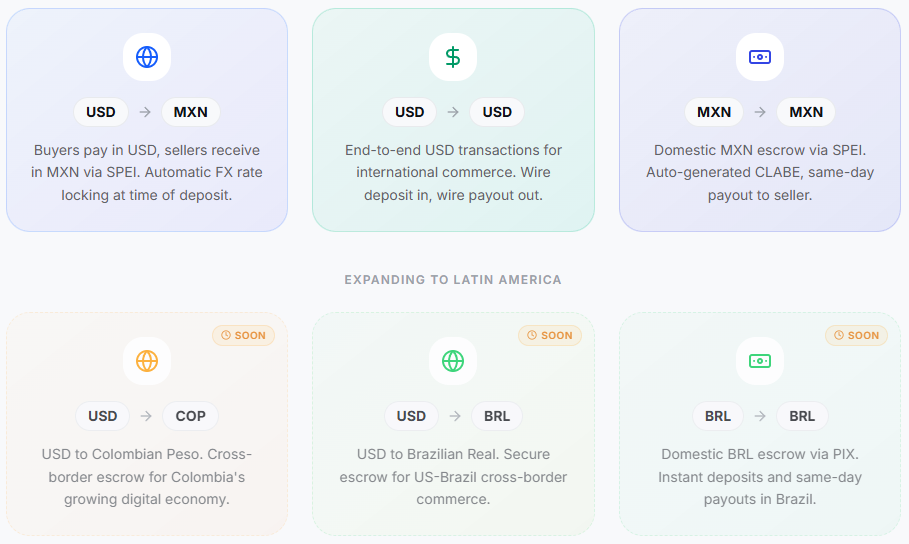
Real estate rental deposits, business-to-business (B2B) freelance contracts, marketplace payments and crowdfunding are live verticals on the platform. USD wire is supported for cross-border transactions from the United States to Mexico. Brazilian real via Pix is in development for a 2027 Brazil launch.
Source: Kustodia
The platform also powers AI agent transactions, enabling autonomous software systems to commit funds to contracts, hold them until delivery is confirmed and release them automatically.
The number that compounds in public
Kustodia publishes its total escrow volume monthly, and every transaction is permanently recorded on Arbitrum’s public blockchain. For Jimenez, this is the core marketing asset — a growing, public, unfakeable record of transactions protected.
“Trust is the only product that matters in a high-value P2P transaction,” he says. “And we just made it an API. Every deal that completes on Kustodia makes the next one more credible. That’s the only growth mechanism that actually compounds.”
The marketplace is available as a demo. Platforms like Kustodia replace high-risk informal agreements with automated financial infrastructure to secure the global P2P economy. Such platforms can accelerate the transition toward a friction-free digital economy by embedding immutable trust layers into the foundation of P2P commerce.


Subscribe to daily byte-sized crypto news from Cointelegraph
This content is part of a paid partnership. The text below is a sponsored article that is not part of Cointelegraph.com editorial content. The material is written by our advertorial team and has undergone editorial review to ensure clarity and relevance, it may not reflect the views and opinions of Cointelegraph.com. Readers are encouraged to conduct their own research before taking any actions related to the company. Disclosure.
More on the subject