

Written by Nihatcan YanikCommissioned Content
Written by Nihatcan YanikCommissioned Content
Why standard security measures fail to protect digital privacy online
CommissionedPublishedJul 1, 2026
Traditional online safeguards act as a fragmented patchwork rather than a permanent cure for data tracking.

Commissioned byAleo
Modern privacy management feels like a second job. Consumers rotate passwords, approve multifactor authentication (MFA) prompts, accept biometric logins, reject cookies, run virtual private networks (VPNs), split wallets and hope that these measures are enough to close security exposure points.
Most of those protections secure a user's access to a platform. But they rarely protect the information generated after that access begins. MFA can keep a criminal out of an account and Face ID can unlock a device.
Platforms themselves still collect metadata, track behavior across user sessions and route activity into analytics or corporate data-sharing systems. Privacy starts leaking as soon as a user engages with digital systems, long before any added tooling can clean up the trail.
The limits of a retrofitted data patchwork
Two-factor authentication (2FA) and MFA remain effective safeguards against unauthorized account access. Account security, by itself, only determines who can enter a system. Privacy concerns begin once a user is inside, where platforms can still collect metadata, track behavior and share activity across commercial data systems.
Account protection remains a narrower goal than data secrecy. Web2 platforms were built around collection. Login systems reduce unauthorized entry; advertising stacks, product analytics and data brokers thrive on behavioral exhaust.
The General Data Protection Regulation (GDPR) raised expectations for consent, data access and user rights across Europe, yet enforcement gaps, dark patterns and corporate workarounds continue to support large-scale tracking. The data economy keeps moving.
The same burden follows users into Web3. Non-custodial wallets can increase asset security dramatically when compared to traditional financial options. However, when assets are stored on a public blockchain, this practice can actually make financial privacy worse by exposing all transaction details to the world. Public ledgers add another layer: transfers, balances and application interactions can remain traceable forever.
Temporary defenses help in narrow situations. Cookie blockers reduce browser surveillance. Wallet segmentation separates a token mint from a primary financial identity. Stealth addresses limit the visibility of a receiver.
But each method demands care, timing and technical awareness. Similarly to Web2, privacy becomes a maintenance routine for specialists, which leaves ordinary users exposed by default.
Zero-knowledge architecture changes default digital expectations
Zero-knowledge proofs (ZKPs) move secrecy closer to the source. The proof limits disclosure at the moment of verification, before platforms or ledgers receive the underlying data. A prover demonstrates that a statement is true. A verifier checks the claim. The underlying information stays private.
When used in the real world, the applications become obvious. Someone can prove they are old enough to access a service without handing over a full birth date. Users can confirm eligibility without publishing a name or home address.
Payment can be verified without exposing the sender, recipient or amount to every observer on the network. Public verification and private data can coexist because the proof carries the validity; raw information stays out of view.
Aleo is a blockchain that leverages ZKPs to make programmable privacy accesible for onchain applications.
The network uses a zero-knowledge virtual machine (zkVM) to execute general-purpose computations off-chain and records succinct proofs on-chain. The ledger receives evidence that the computation was valid rather than revealing the sensitive inputs behind it.
That architecture changes what decentralized applications (DApps) can ask from users. Retail participants can interact with payments, identity checks and decentralized finance (DeFi) flows without broadcasting every sensitive detail. Corporate users can prove authorization, compliance conditions or transaction validity without exposing internal records.
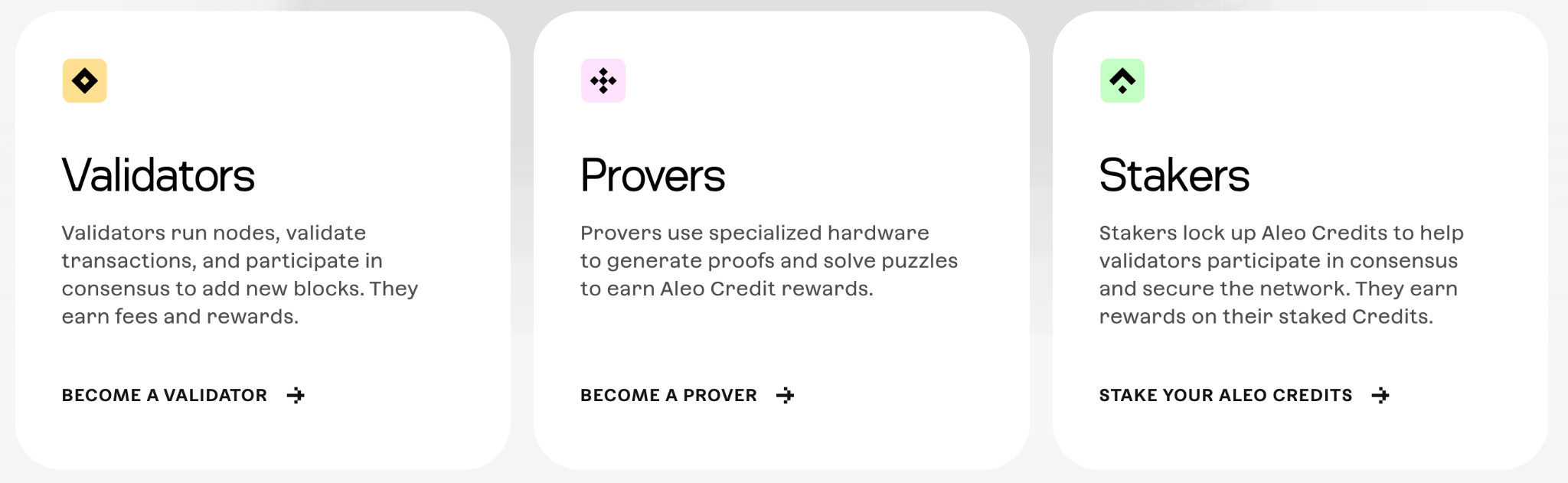
Source: Aleo
In DeFi, private execution can reduce the open display of liquidation thresholds, treasury moves and trading intent, which public wallets often reveal to competitors or automated strategies.
For developers, the bigger shift is practical. At the protocol level, Aleo is designed to make it easy for developers of all skill levels to build private applications.
Builders can include both private and public logic in their designs, compile it into zero-knowledge circuits and deploy applications where confidentiality is built into the workflow.
Building a foundation for programmable data compliance
Web3 privacy is moving beyond blunt obfuscation. Crypto mixers and one-off shielding tools can hide activity. However, they often introduce usability friction, liquidity risk, policy scrutiny, fragmented user flows and can still leak metadata.
Programmable privacy takes a more durable route: selective disclosure, verifiable rules and confidentiality are baked directly into application logic.
Mainstream adoption will depend on technical privacy innovation, not just marketing hype. Systems need low fees, credible decentralization, developer tooling, audit paths and user interfaces that do not punish ordinary behavior.
This is also important from a policy standpoint. In order to mitigate risk, institutions are often required to maintain a record of transactions. Programmable privacy allows them to achieve this without exposing customer details to anyone with access to a block explorer.
Digital privacy belongs deeper than a browser extension, a burner wallet or a checklist. It has to be integrated into the systems where data is created, processed and validated. Protocols that treat privacy as infrastructure give users a better bargain: less exposure by default, fewer rituals to manage privacy and fewer trails left behind for platforms to monetize.


Subscribe to daily byte-sized crypto news from Cointelegraph
This content is part of a paid partnership. The text below is a commissioned article that is not part of Cointelegraph editorial content. The material is written by our advertorial team and has undergone editorial review to ensure clarity and relevance, it may not reflect the views and opinions of Cointelegraph.com. Readers are encouraged to conduct their own research before taking any actions related to the company. Disclosure.
More on the subject