

 Written by Dilip Kumar Patairyastaff writerEdited by Rahul Nambiampurathstaff editor
Why ‘spot the typo’ is no longer enough for crypto security
MagazinePublishedJun 6, 2026
Spotting bad grammar is no longer enough for crypto security. Here’s what to check before signing wallet transactions or approvals.

AI scams are changing the old phishing playbook
For years, online users received simple guidance on how to recognize scams: Watch for spelling errors, clumsy grammar and odd formatting. This approach worked reasonably well in the early wave of phishing attempts. Fraudulent emails often looked rushed, awkwardly translated or clearly fake. Over time, many people came to see poor writing as a red flag for possible threats.
Artificial intelligence is now changing that.
Advanced AI systems can quickly create polished emails, realistic support chats, credible websites and persuasive social media content. Scammers no longer need strong writing skills to create convincing scams. In cryptocurrency, where approving a single transaction can put funds at risk immediately, this shift creates new security concerns.
The main threat no longer comes from obviously fake messages. It now comes from well-written scams that seem trustworthy enough to lower a user’s guard.
As these tools improve, crypto users may need to shift their focus. Instead of asking whether a message looks suspicious, they should verify every requested action through independent sources.
Why typo-based scam detection worked in the past
Earlier phishing campaigns often prioritized volume over quality. Scammers sent large numbers of messages and hoped a small share of recipients would respond.
Since many operators worked across borders or relied on basic translation software, these messages often included grammar mistakes, unnatural phrasing or layout issues. Users gradually learned to spot these flaws as warning signs.
Cybersecurity awareness campaigns promoted several habits:
- Checking text for spelling errors
- Avoiding messages with poor grammar
- Staying alert to unnatural language
- Looking for unusual formatting
These cues worked as practical shortcuts for flagging lower-quality scam attempts.
Still, they were never foolproof defenses. They were only signs that called for more caution. Over time, many users came to treat smooth, professional writing as a sign of authenticity. AI is now weakening that assumption.
Did you know? AI tools can help scammers produce polished phishing messages at scale, making typo-based detection less reliable.
How AI is improving scam quality
Large language models (LLMs) can create smooth, natural messages in many languages. Scammers use these tools to create:
- Fake customer support chats
- Polished phishing emails
- Believable exchange alerts
- Convincing investment proposals
- Realistic Telegram announcements
- Customized wallet recovery requests
AI can also support more targeted attacks. Details taken from data breaches and platforms such as LinkedIn, X, Discord and Telegram can help scammers create messages that feel personal to recipients.
Instead of broad, generic lures, users may see references to:
- A recent token purchase
- Details from a specific exchange account
- Their actual wallet service provider
- A decentralized finance (DeFi) platform they used
- A real support question they shared publicly
This level of personalization can make a scam feel more credible.
AI-powered image creation and voice cloning can also make impersonation easier. Fake executive videos, simulated support voices and copied brand elements are becoming easier to create.
Why crypto users face unique risks
Crypto has security risks that are different from traditional banking. In standard financial services, mistaken or fraudulent transfers can often be reversed with help from banks, payment processors or fraud teams. In contrast, crypto transactions are generally final once they are confirmed on the blockchain.
Self-custody also creates more points of attack. Scammers do not always need direct access to passwords or private keys. In many cases, they only need users to approve a malicious transaction or grant risky wallet permissions.
As a result, a polished scam interface can pose serious risks even if the user never reveals their seed phrase.
Common crypto scam methods include:
- Fake airdrop claim websites
- Fraudulent non-fungible token (NFT) minting schemes
- Fake exchange login portals
- Deceptive wallet connection requests
- Malicious token approval prompts
- Fake staking interfaces
- Impersonated support representatives
- Fake accounts on Telegram and Discord
AI makes it easier to create these scams at scale while keeping them polished and credible.
What users should check instead of grammar
As scams become more polished, crypto users should move beyond surface-level checks and focus on verification.
Verify domain names carefully
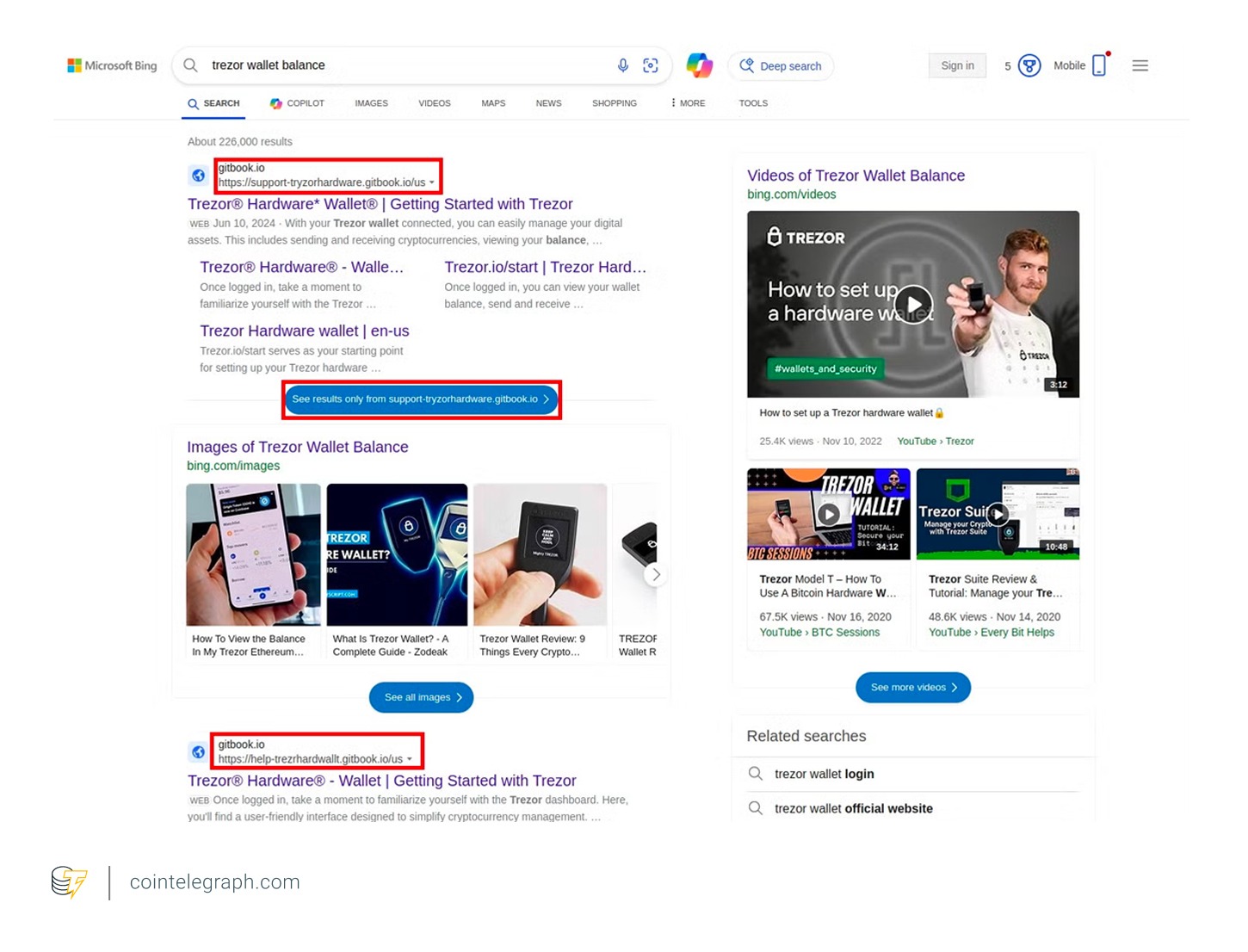
A website may look like a legitimate service but use a slightly modified address. Scammers commonly use:
- Extra characters
- Hyphens in unusual places
- Visually similar symbols
- Deceptive subdomains
- Uncommon domain endings
For example, a malicious website may closely resemble a major exchange but change one small part of the web address. Users should not rely only on logos or overall design. Better practices include:
- Entering important addresses manually
- Using saved bookmarks for wallets and exchanges
- Checking domains before connecting a wallet
- Avoiding unsolicited links from messages or promotions
A polished appearance alone does not confirm that a website is authentic.
Use official links whenever possible
Deceptive announcements, impersonated influencer posts and fake accounts are increasingly used to spread crypto scams. One common tactic sends users to fake destinations through:
- Telegram communities
- Discord channels
- Replies on X
- Paid search ads
- Fake support messages
Users should check that links come from the project’s verified website or official communication channels. Cross-checking updates across multiple official channels can reduce risk.
Unsolicited private messages warning of urgent account problems should be treated with caution.
Understand wallet permissions before approving
A common misunderstanding in crypto security is assuming all wallet prompts are safe. Many users approve requests quickly without checking them closely, especially on websites that look professional.
Wallet interactions can request very different actions, such as:
- Connecting the wallet
- Signing specific messages
- Approving token spending
- Granting broad permissions
- Starting contract interactions
Unlimited approvals are especially risky because they may allow malicious contracts to withdraw funds later. Users should check:
- The specific token involved
- The amount of spending permission requested
- The contract asking for permission
- Whether the request matches the intended action
Even convincing websites can trigger risky wallet actions.
Review transaction details before signing
AI-enhanced scams often use urgency to push users into quick approvals. Before confirming any transaction, users should check:
- The destination address
- The token amounts
- The selected network
- Any contract interactions
- Gas fee patterns
- The full scope of permissions
A transaction labeled “claim rewards” should not ask for unrestricted token access. A “wallet verification” step should not involve asset transfers.
When the details do not match what the user expected, it is safer to stop and review the situation carefully.
Did you know? Fake crypto support scams often begin after users publicly complain about wallet or exchange problems. Scammers may monitor social platforms and quickly impersonate customer support representatives through direct messages.
Verify contract addresses, not token names
Crypto scammers often create fake tokens with names and visuals that look almost identical to real ones. A token labeled “USDT” or “ETH Rewards” may have no connection to the genuine issuer.
Users should verify contract addresses using:
- The project’s official website
- Reputable block explorers
- Verified project materials
- Established exchange records
Relying only on token symbols or images is becoming riskier as AI-assisted fraud becomes more polished.
Be skeptical of unsolicited support messages
Impersonated customer support remains one of the more effective tactics in crypto scams. Scammers often track public complaints on social platforms and then pose as support staff through private messages.
They may try to:
- Push wallet “verification”
- Ask for recovery phrases
- Share deceptive support links
- Suggest remote access tools
- Guide users toward harmful approvals
Genuine support rarely starts through an unexpected private message. Official platforms also do not ask for private keys or seed phrases. Users should contact support only through official channels instead of replying to unexpected messages.
Urgency remains one of the strongest scam signals
Even when scams look professional, they often use emotional pressure. Scammers may create urgency through claims such as:
- “Wallet compromised”
- “Redeem tokens before expiry”
- “Account suspension pending”
- “Know your customer (KYC) process failed”
- “Immediate security update required”
This pressure discourages careful thinking. The more a message pushes for a quick response, the more carefully users should verify the request.
A simple rule for crypto security is to slow down when immediate wallet action is requested.
Why appearance is no longer enough
Modern scam platforms can copy branding, color palettes, page layouts and writing style with precision. AI tools can help create:
- Polished frequently asked questions (FAQ) sections
- Fake support replies
- Credible articles
- Smooth user onboarding flows
- Polished promotional text
Visual appeal is no longer a reliable sign of trust. In some cases, attackers only need a brief moment of lowered caution to trigger irreversible theft.
A safer approach puts verification first:
- Confirm the domain
- Verify the contract
- Check the wallet prompt
- Confirm the support source
- Review the transaction intent
Not every well-designed website deserves trust.
Crypto security is becoming a verification problem
AI does not create entirely new scam methods. Instead, it improves the execution and appearance of old tactics. This matters because many users were taught to identify threats through visual cues instead of deeper verification. They focused on spotting obvious flaws rather than checking the actual action being requested.
In crypto, this habit carries growing risk. A flawless message may still hide a risky link. A well-written support response can guide users toward asset-draining approvals. A realistic website may still ask for dangerous permissions.
The main lesson is simple: good writing, clean design and familiar branding do not prove safety. Crypto users should treat every wallet prompt, link and support message as something to verify before acting.


Subscribe to daily byte-sized crypto news from Cointelegraph
Cointelegraph publishes long-form journalism, analysis and narrative reporting produced by Cointelegraph’s in-house editorial team with subject-matter expertise. All articles are edited and reviewed by Cointelegraph editors in line with our editorial standards. Some articles contain affiliate links, from which Cointelegraph may earn a commission. These relationships do not influence which products we review or our editorial conclusions. Content published in here does not constitute financial, legal or investment advice. Readers should conduct their own research and consult qualified professionals where appropriate. Cointelegraph maintains full editorial independence.
More on the subject