

 Written by Dilip Kumar Patairyastaff writerEdited by Rahul Nambiampurathstaff editor
A fake crypto job interview nearly installed malware on my computer
MagazinePublishedJun 2, 2026
Fake Web3 job interviews are becoming malware traps. One suspicious MSI file nearly compromised my computer.

The interview seemed normal until the download request
It began as a typical LinkedIn job posting. I found an opening from an organization named “Blockchain Learning,” which looked credible. The firm had a website, the posting looked professional and the position matched my work background.
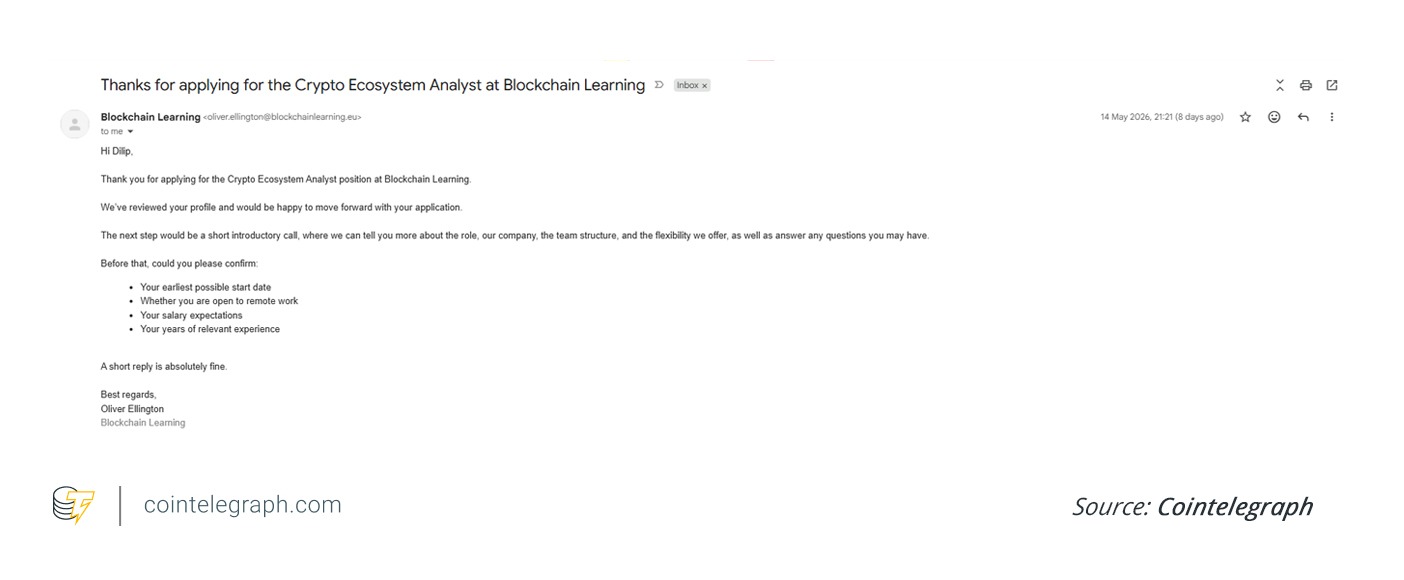
Roughly 30 minutes after I submitted my application, I received an email.
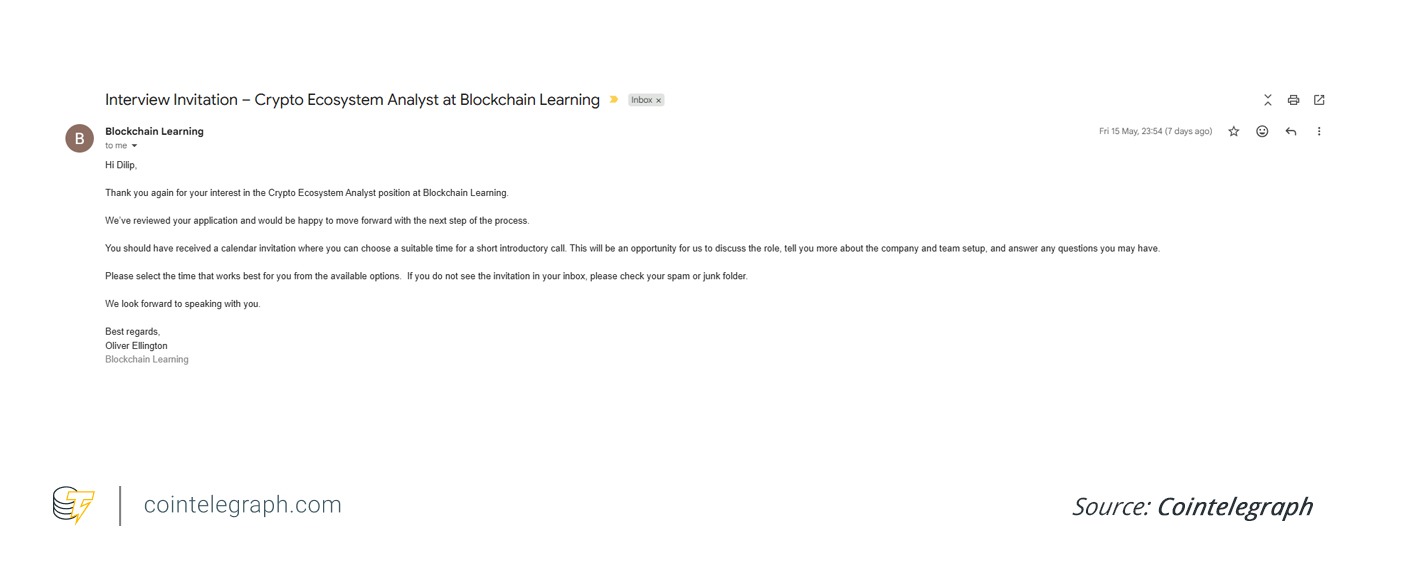
After I responded positively, another email came through.
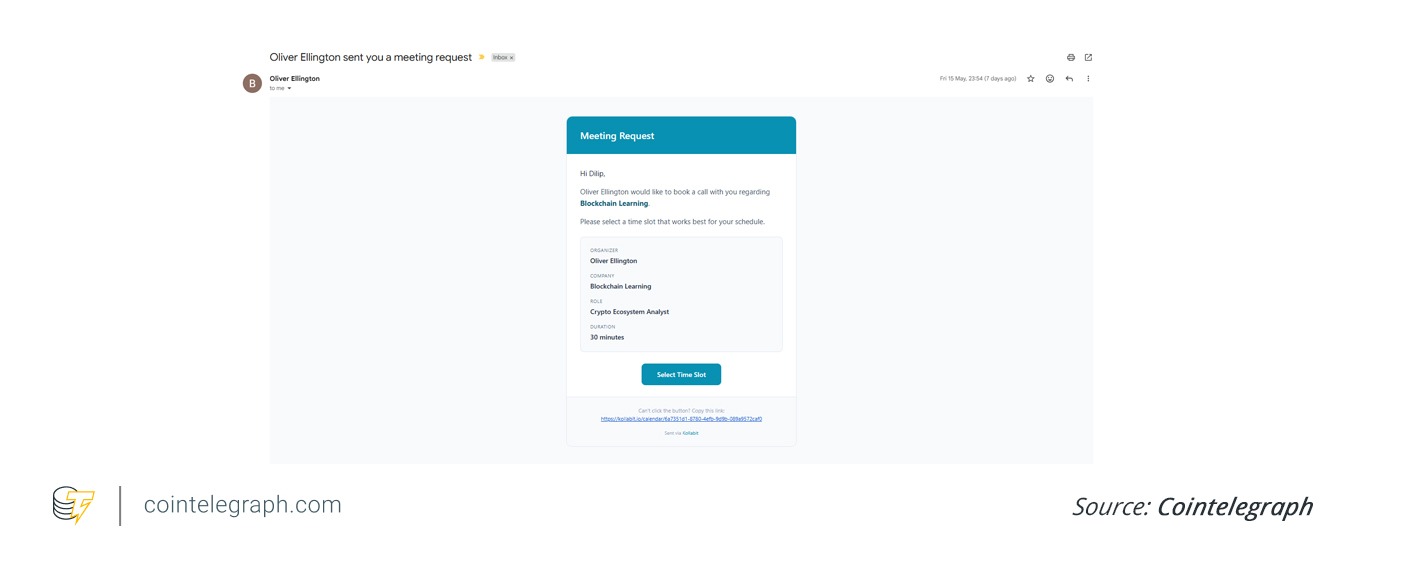
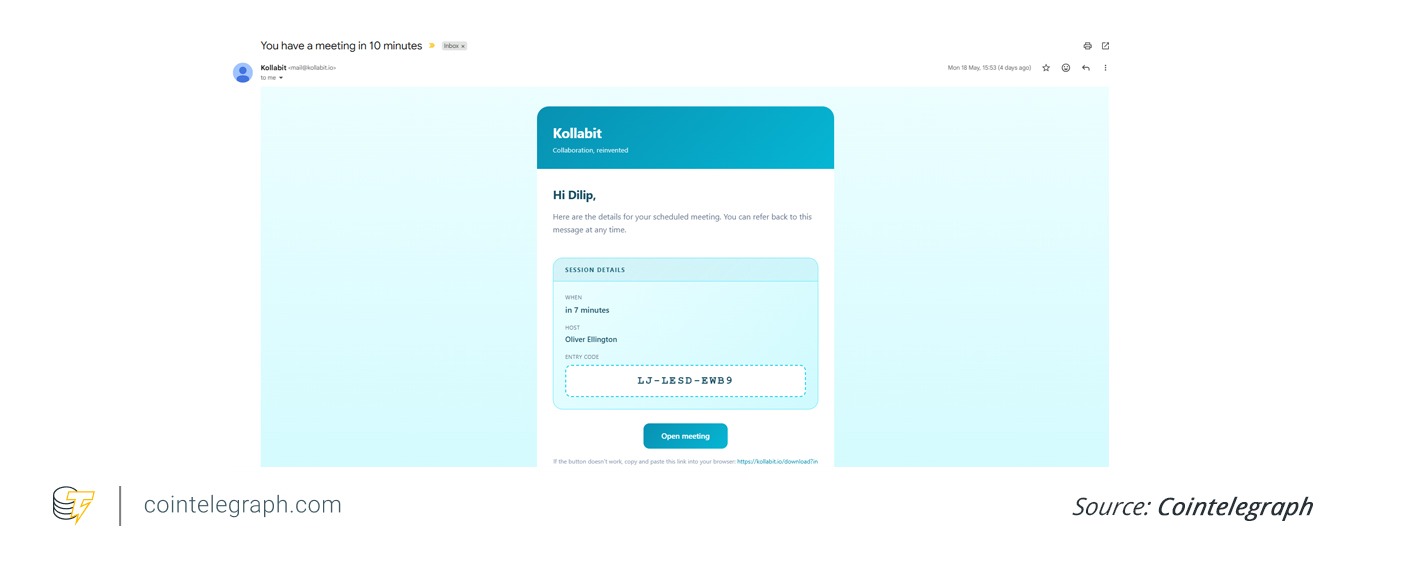
Not long after, I received a scheduling link for the discussion and an invitation to join through a platform called Kollabit.io.
Everything appeared routine.
“Blockchain Learning” looked like a presentation tool. While the hiring steps moved quickly, fast recruitment is common in crypto. That is when the red flags started to appear.
The scheduling link took me to Kollabit.io, a platform that appeared to support meeting scheduling and video discussions through its own app.
Since it was not a common meeting tool, I had to download the app to join the discussion. When I clicked the download option, a Microsoft Software Installer (MSI) installer file was downloaded to my computer.
At that point, the situation shifted from a standard job interview to a possible malware incident.
Unfortunately, I had already run the MSI file before I fully understood the risks. The file appeared to install successfully, but no new app showed up on my computer. That was when I began to suspect that the download was a trap.
I did not suffer any financial loss because my desktop computer held no cryptocurrency assets. Still, as a safety measure, I performed a full reinstall of Windows 11.
The incident showed how fake crypto hiring tactics can move beyond basic scams and become a way to deliver malware.
Fake crypto interviews are getting more convincing
People working in crypto have become attractive targets for cybercriminals. Engineers, researchers, traders, promoters and Web3 content creators often manage browser-based wallets, trading platform logins, API credentials, confidential work accounts and recovery phrases.
Scammers can use this type of malware to collect browser cache data, saved login details, cloud service connections, SSH access keys, social media access and email account information. Even users with no local crypto assets can face serious harm.
A breached email account alone can open the door to trading platforms, account recovery processes and professional correspondence.
Rather than attacking blockchains directly, threat actors are now focusing on the people who work in the ecosystem.
Security analysts have noted a rise in fake interview schemes targeting crypto and tech professionals. According to a SentinelOne and Validin report, at least 230 people were targeted by North Korean hackers in fake cryptocurrency job interview attacks in early 2025. Threat detection and response firm Sekoia separately found 184 different interview invitations linked to the campaign.
In March 2026, Microsoft described a malware campaign called “Contagious Interview,” in which attackers used fake developer interviews to trick victims into installing malicious software.
The idea behind these scams is simple:
Candidates tend to lower their guard during the hiring process because interviews often involve file downloads, video calls and unfamiliar tools.
Did you know? Modern credential-stealing malware often targets browser cookies and session tokens, not just passwords. This means attackers may be able to hijack logged-in accounts even when two-factor authentication is enabled, especially if sessions remain active in the browser.
The job post looked real
The original LinkedIn ad has since been taken down, but it looked legitimate enough to apply for at the time.
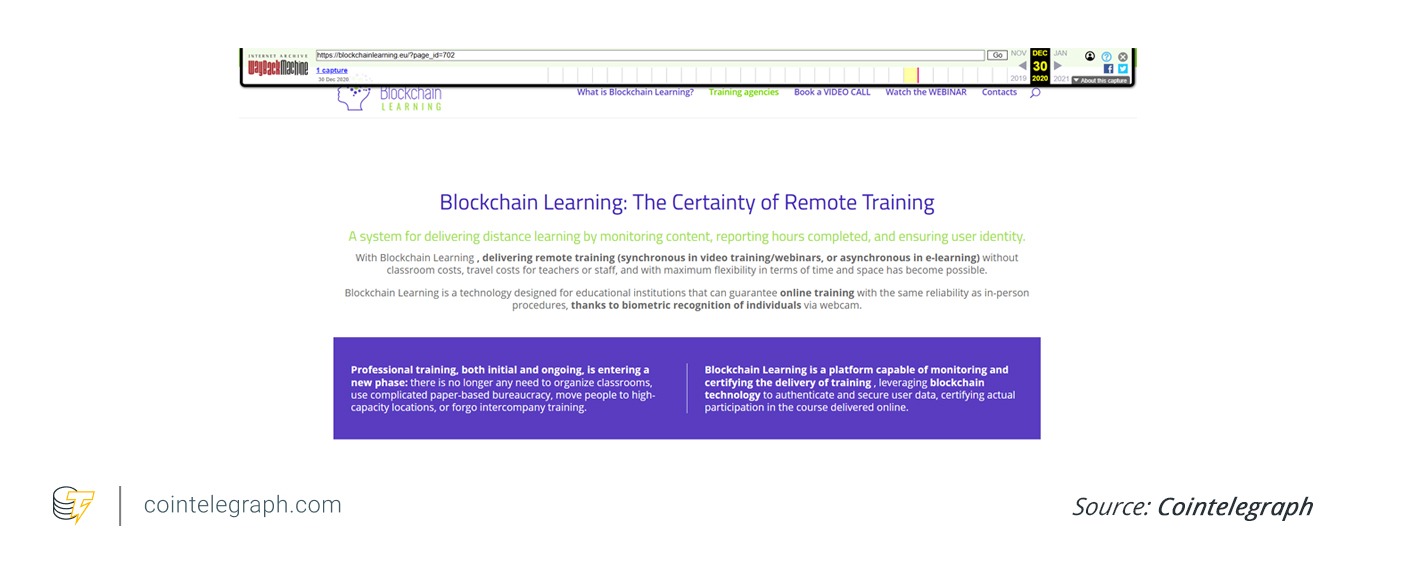
The associated company page made it look even more legitimate. After reviewing it more closely, I found archived records showing that the domain had previously been linked to an Italian blockchain training service.
The records point to a 2020 version of BlockchainLearning S.r.l., which stands for “Società a responsabilità limitata” in Italian. At the time, the site described virtual blockchain training services based in Milan.
This added to the uncertainty.
The platform may have started as a genuine service before being taken over, reused or copied. It is also possible that the scammers built the hiring process around an authentic-looking platform to create trust.
That uncertainty is one of the biggest challenges with these scams.
Scammers have moved beyond fake pages filled with poor grammar and flashy ads. Now, the setup can look convincing enough to pass an initial check.
How the scam process unfolded
In hindsight, the entire process followed a familiar pattern for gaining the victim’s trust.
The scam started with the lure of a crypto job ad on LinkedIn. Then came a quick exchange: a fast reply from the recruiter, polished messages and a confirmed meeting slot.
After that, the process moved to a controlled setting. Instead of using common tools such as Zoom, Google Meet or Teams, the scammers directed me to a lesser-known platform called Kollabit.
Finally, came the delivery of an MSI setup file.
The file was presented as something needed for the interview, but it appeared to serve a different purpose.
This shows a shift in how some crypto scams work. Scammers do not always seek direct payments from targets. In some cases, the goal is system access instead.
Did you know? Some cybersecurity experts recommend using a separate laptop or virtual machine to test unknown software, handle freelance assignments or attend crypto-related interviews. This kind of isolation can reduce the damage if suspicious files or malicious applications are accidentally run.
Why the file download was a warning sign
The clearest warning sign was the need to install an unfamiliar file before the meeting.
Genuine companies usually hold interviews through widely used video tools such as Google Meet, Zoom or Teams. Being directed to download an unfamiliar executable file should raise immediate suspicion, especially during crypto-related hiring.
After the incident, I reviewed independent security-checking platforms. Gridinsoft flagged Kollabit.io as risky and indicated that several security providers had placed the domain on blocklists. Scam Detector also gave the website a poor credibility score.
These tools do not prove wrongdoing on their own, as mistakes can happen. Still, they can serve as useful warning signs, especially when combined with unusual recruiter behavior and requests to download files.
Why I chose a full Windows reinstall
As soon as I suspected that I may have run malware, the safest approach was to treat the entire system as potentially compromised.
This may sound excessive, but credential-stealing programs often try to stay active, collect session data or quietly transfer information without notice.
Once such a file runs, it becomes difficult to know the full scope of its activity. A fresh Windows installation was disruptive, but it helped reduce the unknowns.
It is easy to underestimate the risk of skipping a full system reinstall after a suspected malware incident.
Malicious code does not always need to empty accounts right away. It can stay inactive and wait for a later opportunity.
Did you know? A website can look professional and still be risky. Attackers often use polished branding and real-looking company histories to lower suspicion. This can make fake recruitment campaigns seem authentic to job seekers.
The warning signs I noticed too late
Looking back, several red flags now seem far more obvious. At the time, each one appeared small enough to explain away.
- The hiring process moved at an unusually fast pace.
- The discussion required proprietary software rather than standard video tools.
- The job ad was later taken down.
- Security-checking platforms flagged potential risks for the website.
- The organization’s background and online footprint did not fully match the hiring approach.
On their own, some of these details might seem minor. However, when viewed together, they create a far more concerning picture.
This is typically how social engineering scams work. No single part seems alarming by itself, and the real threat comes from the full sequence.
Why fake interviews work so well
Job applicants are often in a vulnerable position. People looking for opportunities are usually prepared for:
- Fast responses
- Unfamiliar communication methods
- Schedule changes
- Document downloads
- Skill tests
Scammers take advantage of these expectations.
This is especially true in crypto, where remote work and startup culture can make unusual processes seem normal. Applicants may avoid questioning odd requests because they do not want to seem difficult or uncooperative.
Scammers understand that eagerness, ambition and the desire to appear professional can make people ignore their doubts.
How to protect yourself from fake crypto job interviews
Treat every unfamiliar recruitment process as something that needs verification. Before installing any file or software connected to an interview:
- Research the organization through independent sources.
- Carefully verify staff profiles.
- Review the domain’s history and registration details.
- Search the platform name with keywords such as “malware,” “virus” or “scam.”
- Scan files with VirusTotal or similar services before running them.
- Choose web-only meeting options when possible.
- Ask if Zoom, Google Meet or Teams can be used instead.
- Avoid running unknown setup files on your computer.
These steps may seem overly cautious, but caution is better than becoming a victim of a fake interview scam.
What to do after running a suspicious file
If you suspect you have run malicious code, act quickly. Every minute can matter.
The first goal is to stop further exposure, then secure your most important accounts.
- Immediately isolate the device by disconnecting it from the internet.
- Avoid accessing any financial or crypto services.
- Update passwords using a different secure device.
- End active sessions across email, trading platforms and chat apps.
- Move crypto holdings if there is any chance of wallet or device exposure.
- Run thorough scans with trusted security software.
- Consider a full operating system reinstall.
- Watch all accounts closely for unusual activity.
Acting quickly is important because credential-stealing malware can move fast.


Subscribe to daily byte-sized crypto news from Cointelegraph
Cointelegraph publishes long-form journalism, analysis and narrative reporting produced by Cointelegraph’s in-house editorial team with subject-matter expertise. All articles are edited and reviewed by Cointelegraph editors in line with our editorial standards. Some articles contain affiliate links, from which Cointelegraph may earn a commission. These relationships do not influence which products we review or our editorial conclusions. Content published in here does not constitute financial, legal or investment advice. Readers should conduct their own research and consult qualified professionals where appropriate. Cointelegraph maintains full editorial independence.
More on the subject