

 Written by Dilip Kumar Patairyastaff writerEdited by Rahul Nambiampurathstaff editor
Can locked liquidity still put DeFi users at risk?
MagazinePublishedJun 9, 2026
DxSale’s $7.3 million exploit shows why locked liquidity can reduce rug-pull risk but cannot remove smart contract vulnerabilities.

What the DxSale exploit shows about smart contract risk when liquidity is locked
For years, “locked liquidity” has been one of the most reassuring signals in decentralized finance (DeFi). Token projects often promote locked liquidity as proof that developers cannot suddenly pull funds and leave users behind.
Platforms that help projects launch new tokens often present liquidity locks as signs of trust. Investors check for these locks before buying newly launched tokens. The practice has become so common that many retail users now see it as a quick sign of reliability.
Yet the recent breach at DxSale, a token launchpad and liquidity-locking service, shows why these assurances can sometimes be limited.
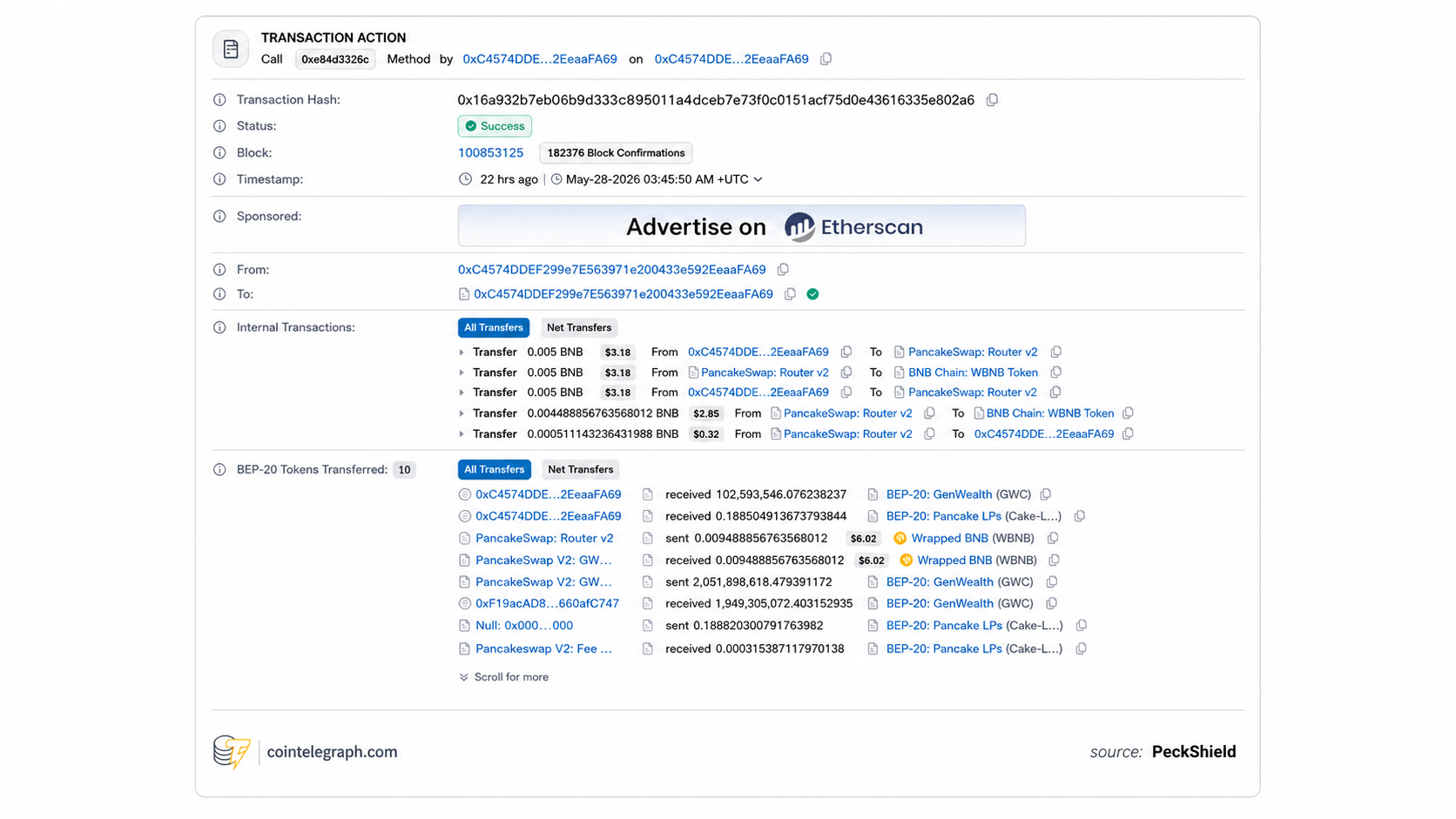
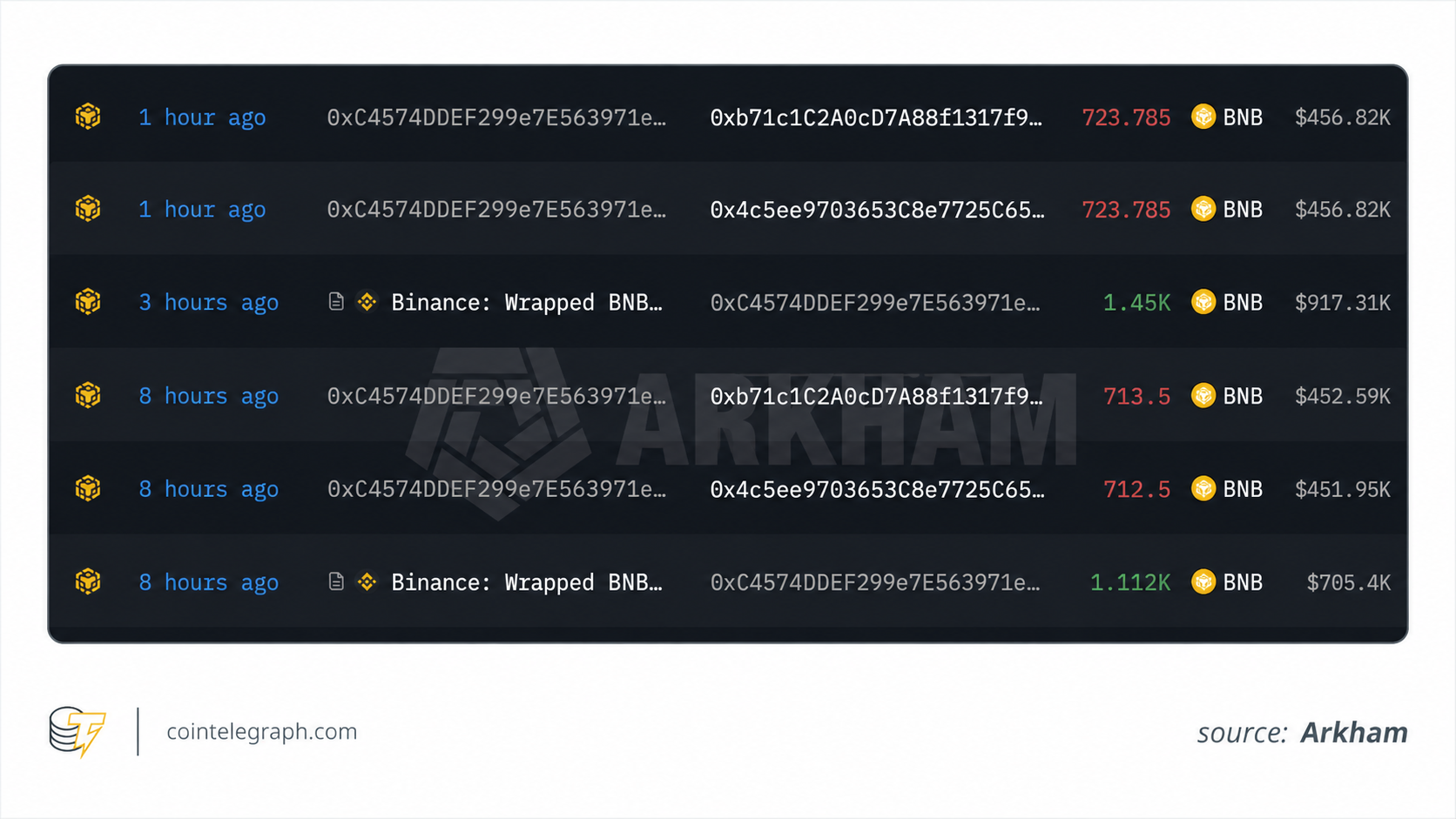
The service reportedly lost around $7.3 million from liquidity providers on BNB Chain, affecting nearly 1,400 liquidity provider positions. The case stood out because the losses came from a system designed to protect liquidity.
The incident highlights a key point about DeFi security: Locked liquidity can reduce some risks, but it does not remove them entirely.
What happened during the DxSale breach
The breach affected liquidity providers who used DxSale’s systems on BNB Chain. The attacker appears to have exploited an ownership override vulnerability that gave them improper control over assets linked to liquidity pools.
The exact technical details are still being reviewed. However, early assessments suggest this was not a typical rug pull in which project founders intentionally removed liquidity.
Instead, the issue appears to have come from a flaw in the platform’s smart contract system.
For affected users, that distinction offers little comfort. Funds that were widely seen as protected by liquidity locks were still compromised.
The incident is a reminder that protective tools can also become targets.
Did you know? As decentralized exchanges (DEXs) grew in popularity, rug pulls became one of the biggest concerns for investors. Liquidity-locking services became a way to show that project teams could not immediately remove trading liquidity and disappear.
Why liquidity locking became popular
The DxSale incident is important because liquidity locking has long been seen as a safety measure in DeFi.
In the early days of DeFi, rug pulls were among the most common forms of fraud.
A project team would launch a token, attract funding and create liquidity in a DEX pool. After enough capital had built up, the team could remove the liquidity and disappear. This left token holders with assets that were hard to trade.
Liquidity locking was created as a safeguard.
Instead of giving project developers direct control over liquidity pool tokens, those tokens could be deposited into a smart contract. The contract would block access until a set future date.
This method helped reassure participants that liquidity would remain in place for an agreed period.
Over time, liquidity locks became a common sign of trust across DeFi.
What locked liquidity really means
Many market participants do not fully understand what liquidity locking does. When assets are added to a DEX pool, liquidity providers receive LP tokens that represent their share of that pool.
Locking liquidity usually means placing those LP tokens into a smart contract for a set period. As long as the LP tokens remain locked, the owner cannot withdraw the underlying assets from the pool. This is meant to stop project teams from intentionally draining liquidity.
However, locked liquidity does not guarantee that the smart contracts managing the lock are safe. It also does not protect against every type of attack. Understanding this difference is important.
Did you know? Several major exploits have involved bridges, multisig wallets and security systems rather than user wallets directly. Attackers often target systems designed to protect funds because they can give access to large amounts of capital.
What liquidity locking protects
Liquidity locks remain useful risk-reduction tools. They offer several clear benefits:
- They lower the risk of quick rug pulls.
- They make project commitments more transparent.
- They make sudden liquidity withdrawals by developers harder.
- They give investors a clearer view of available liquidity.
In some cases, liquidity locks have stopped bad actors from removing funds before token holders could exit. As a result, locked liquidity still has practical value in DeFi.
Problems arise when users assume it solves every security issue.
What liquidity locking does not protect against
A liquidity lock targets one specific risk: the unauthorized removal of liquidity by whoever holds the LP tokens.
It does not automatically protect against:
- Smart contract vulnerabilities
- Coding mistakes
- Misuse of administrative rights
- Governance attacks
- Oracle issues
- Breaches in supporting systems
If the contract that manages the lock has a flaw, attackers may be able to bypass the safeguard entirely.
Put simply, a lock is only as strong as the system enforcing it.
The DxSale incident appears to show this exact problem.
What the DxSale case shows
The main lesson from the breach is that locked liquidity and secure liquidity are not always the same.
Many investors see locked liquidity as proof that assets are out of reach. However, the level of protection depends on the strength of the platform managing the lock.
If attackers find flaws in the locking process, they may still be able to access the funds, even when the lock is in place.
This creates a gap between signs of trust and real security.
Hidden risks for liquidity providers
The DxSale breach also points to a wider concern: Liquidity providers face several risks at the same time. Security vulnerabilities are only one of them.
Liquidity providers also face:
- Impermanent loss: Changes in asset prices may reduce returns compared with simply holding the original tokens.
- Market volatility: Sudden price moves can affect both the pool’s overall value and the fees it generates.
- Smart contract risk: Any flaw in a protocol’s code can put deposited funds at risk.
- Platform dependency risk: Users often rely on external systems that may have their own vulnerabilities.
Even when liquidity is locked, these risks remain.
Did you know? Unlike traditional software, blockchain contracts often manage real money from day one. A vulnerability can remain unnoticed for months or even years before an attacker finds and exploits it, sometimes affecting thousands of users at the same time.
How liquidity locking became a quick trust signal
The DeFi sector has developed several common signals to build trust. These signals help users make quick judgments about a project’s credibility.
These often include:
- Locked liquidity
- Audited contracts
- Renounced ownership
- Verified source code
- Public team identities
Although these signals can be useful, they can also lead to overly simple judgments.
A project with locked liquidity may seem safer than one without it. However, this does not guarantee the protocol’s overall safety.
Security does not depend on one factor alone. It comes from a mix of technical, operational and governance controls.
The DxSale breach shows why relying on a single measure can be misleading.
When security tools become single points of failure
One often overlooked part of DeFi security is infrastructure concentration. This happens when many projects depend on the same tools or service providers.
Many projects rely on the same token launchpads, liquidity-locking services and external tools. This setup improves efficiency, but it also creates shared risk.
If a vulnerability appears in a widely used system, one breach can affect hundreds or even thousands of users at the same time.
This is why the DxSale incident matters. The breach went beyond a single project, reportedly affecting nearly 1,400 liquidity providers linked to the same service.
The incident shows how convenience can sometimes create concentration risk.
Why audits and locks show only part of the picture
Many DeFi users believe that audited contracts and liquidity locks provide complete protection. Past incidents show otherwise.
Several DeFi protocols that passed audits later suffered breaches.
The reason is simple: Audits improve security, but they cannot guarantee that a protocol is free of flaws.
Real protection usually requires multiple layers, such as:
- Independent code reviews
- Ongoing monitoring
- Bug bounty programs
- Careful management of privileges
- Open governance structures
- Regular security reviews
Security should be treated as an ongoing process, not a simple checklist item.
What DeFi users should check beyond locked liquidity
When evaluating a DeFi project, liquidity locks should be only one factor among many. They can reduce some risks, but they do not show the full security picture.
Users should ask:
- Who holds administrative privileges?
- Can contracts be upgraded?
- Has the protocol received several independent audits?
- Does the project run a bug bounty program?
- How long has the infrastructure worked without major disruptions?
- Has the liquidity-locking system itself been audited?
- Are security reports available to the public?
These questions give users a clearer view of the risks involved. They also help users avoid relying on a single trust signal.


Subscribe to daily byte-sized crypto news from Cointelegraph
Cointelegraph publishes long-form journalism, analysis and narrative reporting produced by Cointelegraph’s in-house editorial team with subject-matter expertise. All articles are edited and reviewed by Cointelegraph editors in line with our editorial standards. Some articles contain affiliate links, from which Cointelegraph may earn a commission. These relationships do not influence which products we review or our editorial conclusions. Content published in here does not constitute financial, legal or investment advice. Readers should conduct their own research and consult qualified professionals where appropriate. Cointelegraph maintains full editorial independence.
More on the subject