


 Written by Yashu Golaformer writerEdited by Allen Scottformer editor
Bitcoin crashed 30% after the last Yen intervention, but there’s a catch
MarketsPublishedJan 26, 2026
Past yen shocks were followed by BTC dropping 30% before rebounding more than 100%, a pattern traders are watching as talk of Japan’s intervention returns.

Bitcoin (BTC) may face another sharp sell-off if growing talk of a Japanese yen (JPY) intervention turns into action, with past intervention episodes coinciding with 30% drawdowns in BTC price.
Key takeaways:
- Past Japanese yen shocks saw BTC drop about 30%, and then recover by over 100%.
- Onchain data says the Bitcoin bottom is not yet confirmed.
Bitcoin’s yen fractal shows 30% drawdowns before rebounds
A yen intervention is when Japan’s authorities step into the forex market to influence the currency, most commonly by selling dollars and buying yen to slow a rapid yen slide.
Over the weekend, markets were on alert after reports that the New York Fed conducted “rate checks” in USD/JPY, often treated by FX traders as a prelude to coordinated action.
That followed official comments emphasizing close US-Japan coordination on currencies.
In the two prior intervention windows, BTC sold off by about 30% from local highs before forming a base, due to the unwinding of the “yen carry trades.”
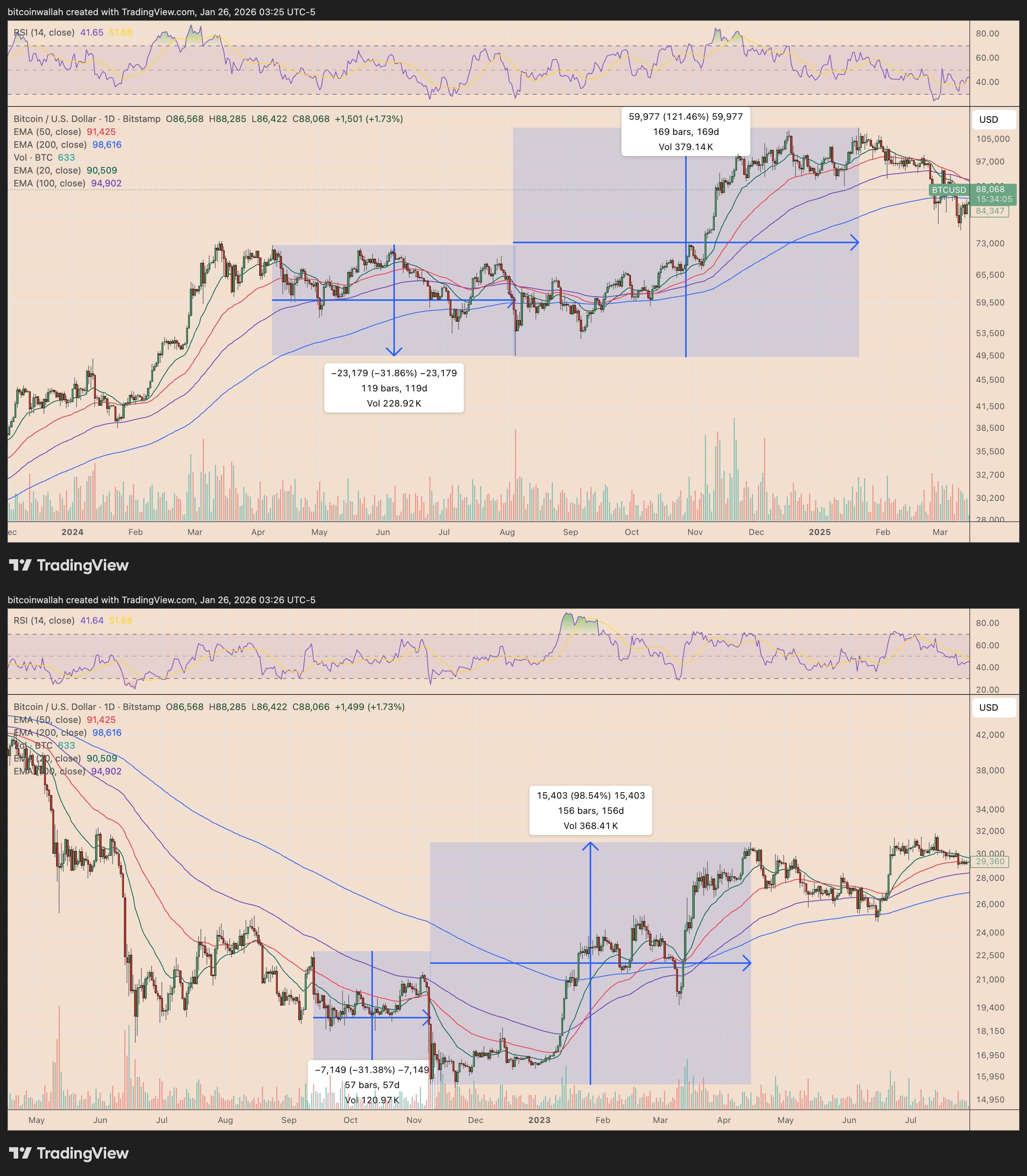
BTC/USD daily price chart. Source: TradingView
In both cases, the post-shakeout recovery eventually extended into a rally of 100% or more.
“The same scenario is about to occur now,” said analyst Mikybull Crypto, adding that the BTC price “will first dump and rally afterward.”
Bitcoin risks declining toward the $65,000–$70,000 range if the yen fractal plays out as intended.
Bitcoin onchain metrics reinforce bearish outlook
Bitcoin has not reached full capitulation and is yet to form a “true bottom,” according to data resource Alphractal.
One of the indicators behind that view is net unrealized profit/loss (NUPL), which tracks whether Bitcoin holders are sitting on paper gains or paper losses.
As of Monday, NUPL was falling but still above zero, meaning the market remains net “in profit,” even after the recent drawdown.
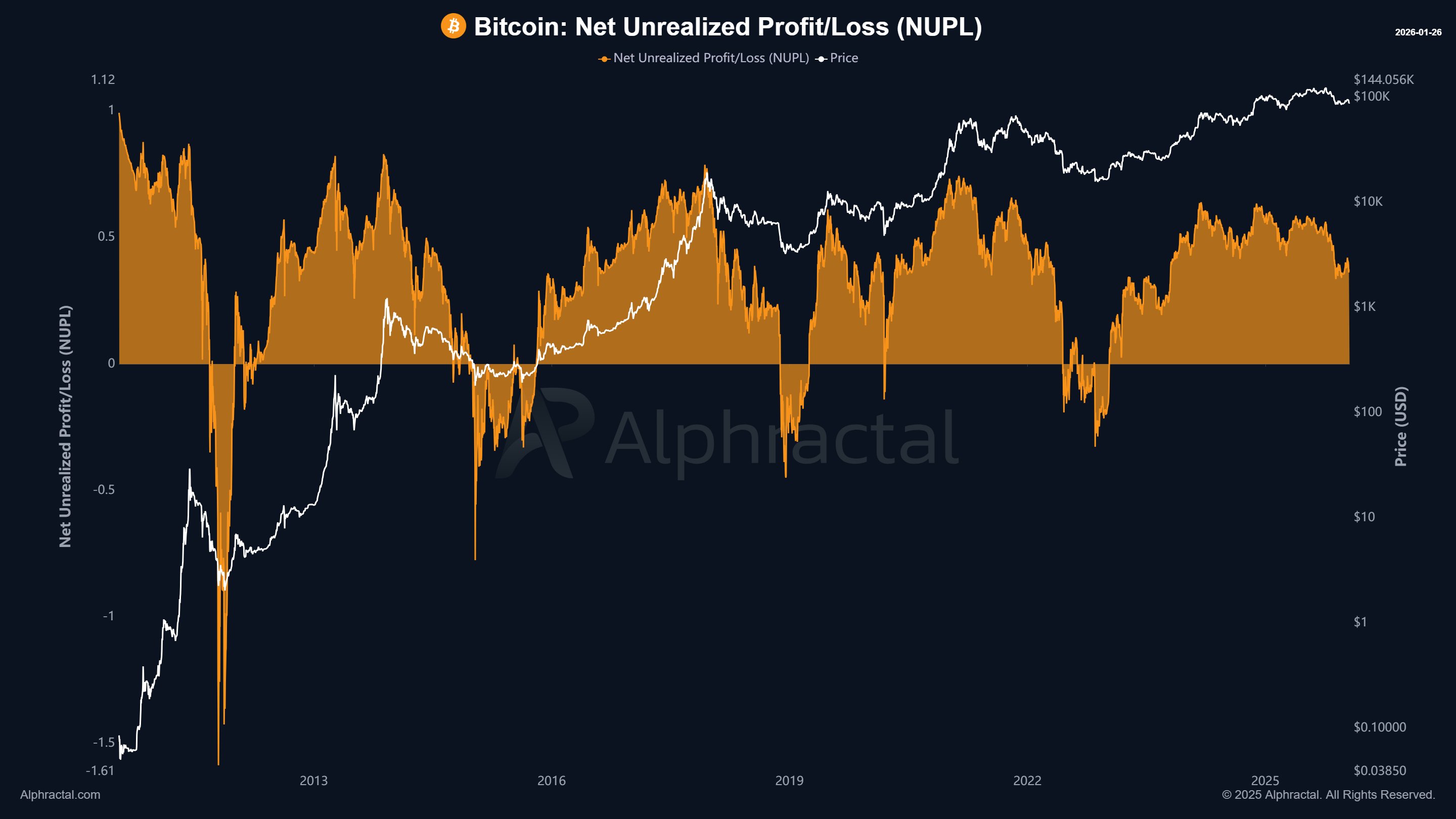
Bitcoin NUPL vs. price chart. Source: Alphractal
In past cycles, Bitcoin’s bottoms tended to form only after NUPL turned negative. The flip signaled that most holders were underwater, and selling pressure was largely washed out.
As Cointelegraph reported, the supply in profit is currently 62% — the lowest level since September 2024, when Bitcoin traded at around $30,000.
At the same time, Bitcoin’s delta growth rate turned negative.
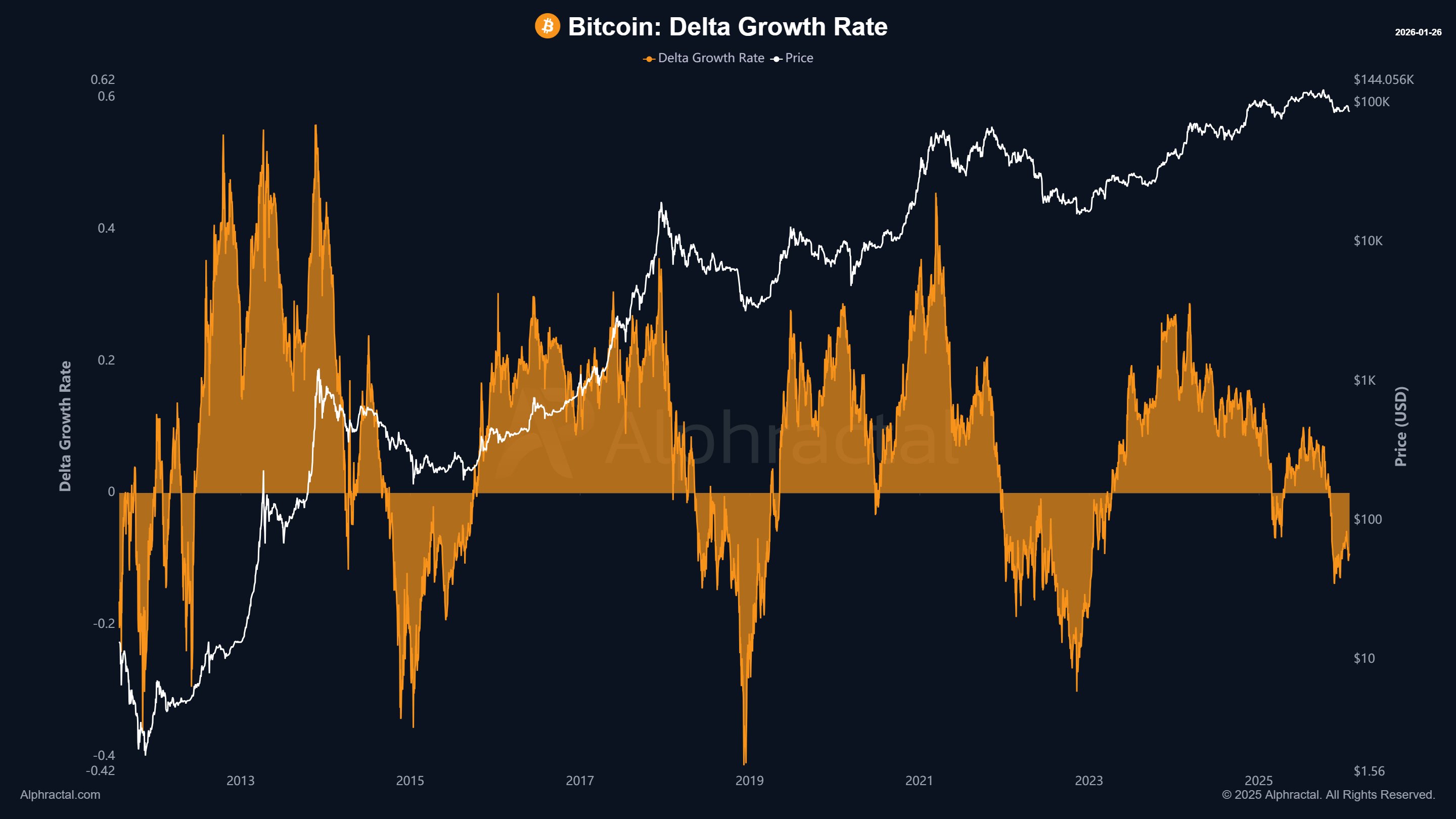
Bitcoin’s delta growth rate vs. price chart. Source: Alphractal
The metric compares Bitcoin’s market value with its realized value.
A drop below zero suggests price is slipping toward (or below) the network’s aggregate cost basis, signaling a market that is cooling and moving away from speculation and into accumulation.
In simple terms, the data suggests the market is cooling and still vulnerable to another drawdown before a durable bottom is set.
Related: CZ rules out return to Binance, predicts 2026 Bitcoin supercycle
Alphractal said the process can be painful but often sets up “generational buying opportunities,” a view that fits with the yen-intervention fractal.


Subscribe to daily byte-sized crypto news from Cointelegraph
This article is produced in accordance with Cointelegraph's Editorial Policy and is intended for informational purposes only. It does not constitute investment advice or recommendations. All investments and trades carry risk; readers are encouraged to conduct independent research.
More on the subject