


 Written by Nancy Lubaleformer writerEdited by Allen Scottformer editor
Bitcoin’s Mayer Multiple hits 2022 levels: Where is BTC price bottom?
MarketsPublishedFeb 10, 2026
The Bitcoin Mayer Multiple reached 0.65, echoing the deep bear market conditions of 2022 and sparking debate on whether BTC’s real bottom lies at $50,000 or lower.

Bitcoin (BTC) has entered the “darkest days” of its bear market correction, based on a classic BTC price indicator hitting near four-year lows.
Key takeaways:
- Bitcoin Mayer Multiple fell to 0.65, matching deep bear market lows in May 2022.
- A repeat of 2022 would see BTC drop further to as low as $40,000.
Mayer Multiple returns to May 2022 levels
Bitcoin’s 45% crash from its $126,000 peak has placed onchain indicators in focus as market participants search for where BTC price is likely to bottom.
The Mayer Multiple is among the indicators suggesting that a bottom could be reached soon.
In a post on X on Tuesday, analyst On-Chain College said that the Bitcoin Mayer Multiple score had dropped to levels “usually reserved for deep bear market corrections.”
Related: BTC traders wait for $50K bottom: Five things to know in Bitcoin this week
The indicator measures Bitcoin’s current price against its 200-day moving average, and the resulting ratio is used as a buy or sell signal. Its creator, Trace Mayer, originally gave a reading of below 2.4 as “buy” territory, the red line in the chart below.
Data from onchain analytics firm Glassnode shows that as of Monday, the Mayer Multiple measured 0.65, below its “oversold” 0.8 level (green band), a reading last seen in May 2022.
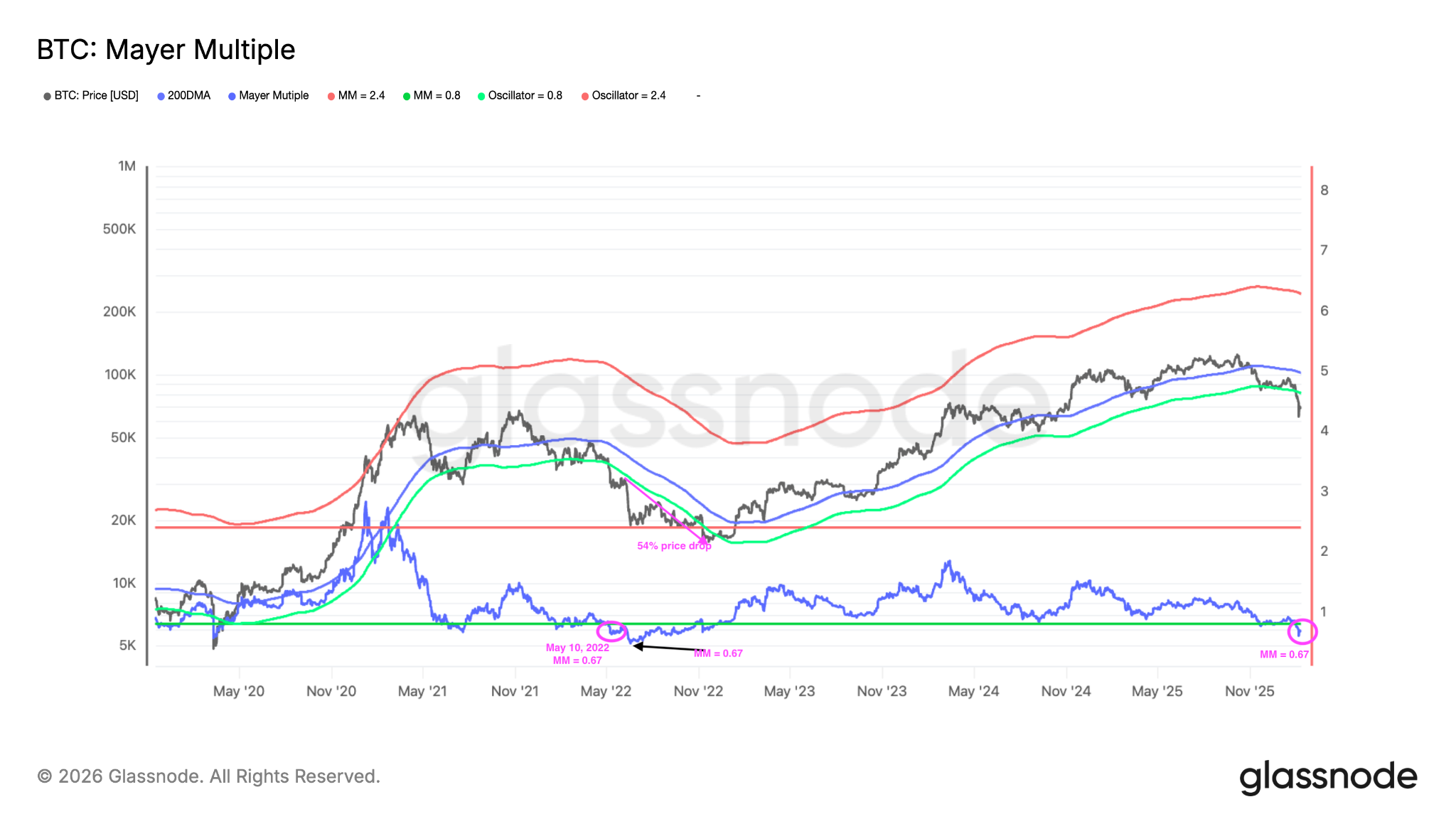
Bitcoin Mayer Multiple. Source: Glassnode
“Bitcoin is now officially under the green band of the Mayer Multiple Z-Score, which is usually reserved for deep bear market corrections,” On-Chain College wrote, adding:
“It can still take months before finding a bottom, but BTC is in a period in history typically reserved for the darkest days of bear markets.”
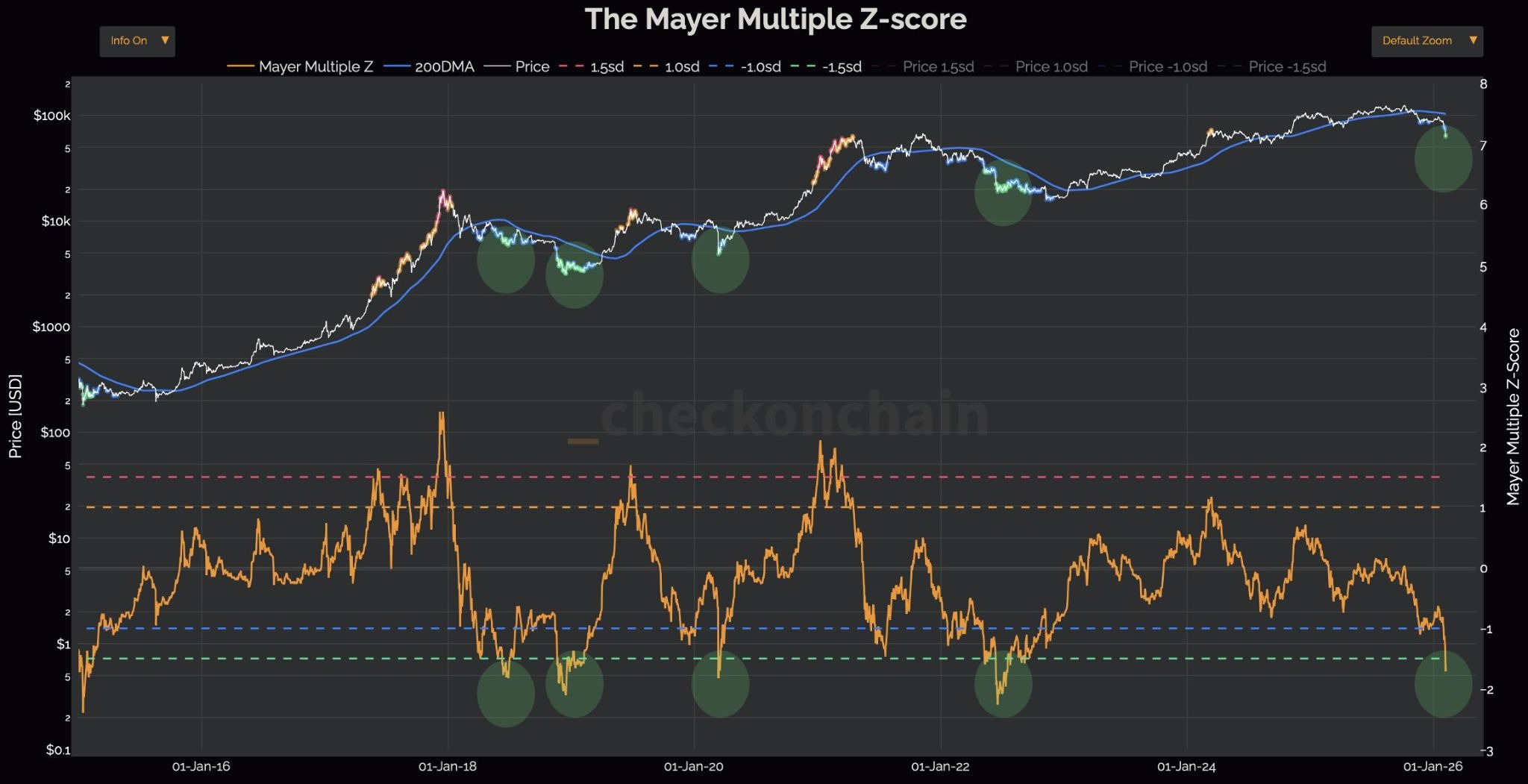
Bitcoin Mayer Multiple. Source: On-Chain College
Levels like this have historically marked some of Bitcoin’s best long-term buying opportunities.
The Mayer Multiple at 0.6 means that Bitcoin is trading 40% below its 200-day MA, analyst CryptosRus said in a Sunday X post, adding:
“This doesn’t happen during normal pullbacks. It only shows up during full-blown capitulation.”
“Historically, being below this level is exactly where I want to be stacking,” said analyst On-Chain Mind, while Capriole Investments founder Charles Edwards said:
“This is historically one of the best buy signals in Bitcoin history.”
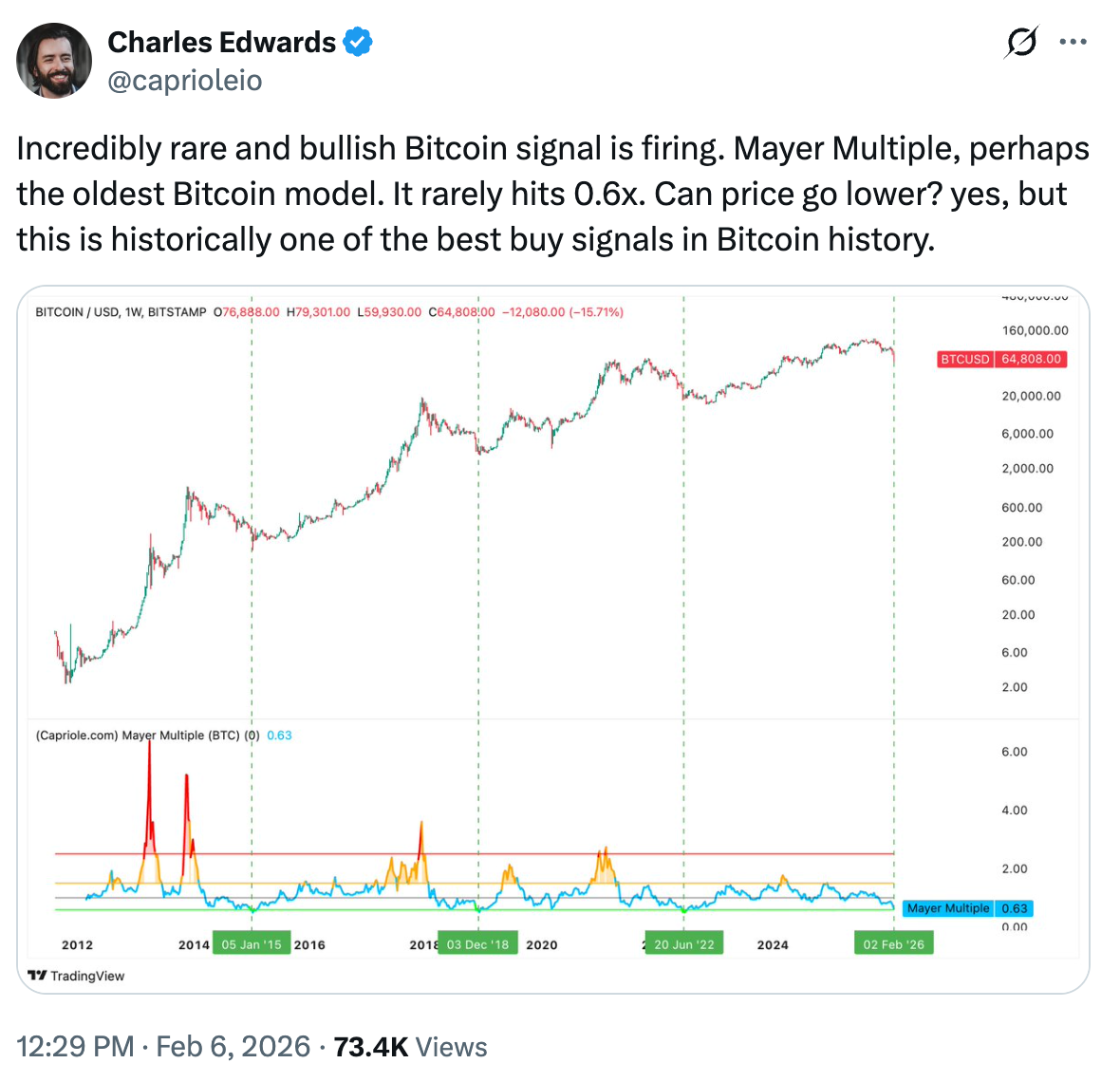
Source: Charles Edwards
Extreme lows in the Mayer Multiple do not always correspond to BTC price floors. In mid-2022, the indicator bottomed at around 0.47. But the BTC/USD pair dropped another 58% over the following four months before reaching the bottom at $15,500.
Where is Bitcoin’s real bottom?
As Cointelegraph continues to report, the question of whether Bitcoin price has already hit its bottom below $60,000 remains a topic of debate as several metrics still suggest that BTC’s downside may not be over.
The 200-week MA, currently at $58,000, is often considered the ultimate support level for Bitcoin in bear markets. This level is about 15% below the current price.
Historically, BTC/USD has dropped to this level in extreme bearish conditions, but has rarely dropped below it except in 2020 and 2022, with losses averaging 30%.
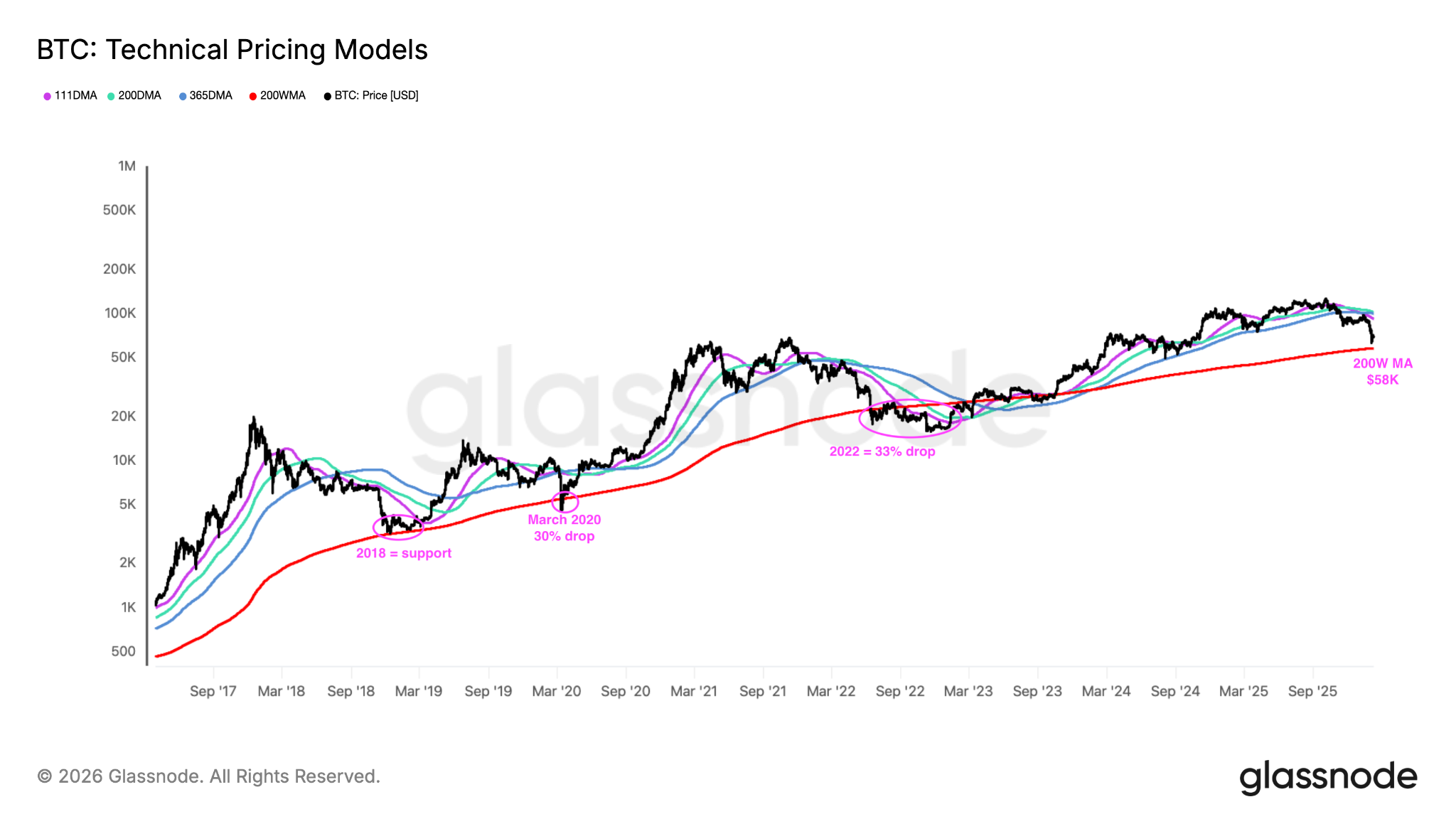
Bitcoin technical pricing models. Source: Glassnode
Therefore, Bitcoin could drop lower to retest the 200-day MA at $58,000, but in extreme cases, it could fall another 30% toward the $40,000 zone.
This target is reasonable based on the relative strength index (RSI), which can still drop another 55% from its 37 mark, bringing Bitcoin to the lower $40,000 region, said Jelle in a recent analysis on X.
Historically, the lows have been less deep, making 55% an “extreme” dip, the analyst said, adding that 40% below the RSI’s 37 level would be in line with the last two bottoms, which would be around $52,000 before summer.
“There’s decent confluence around that area for me to at least pay close attention to the low $50Ks.”
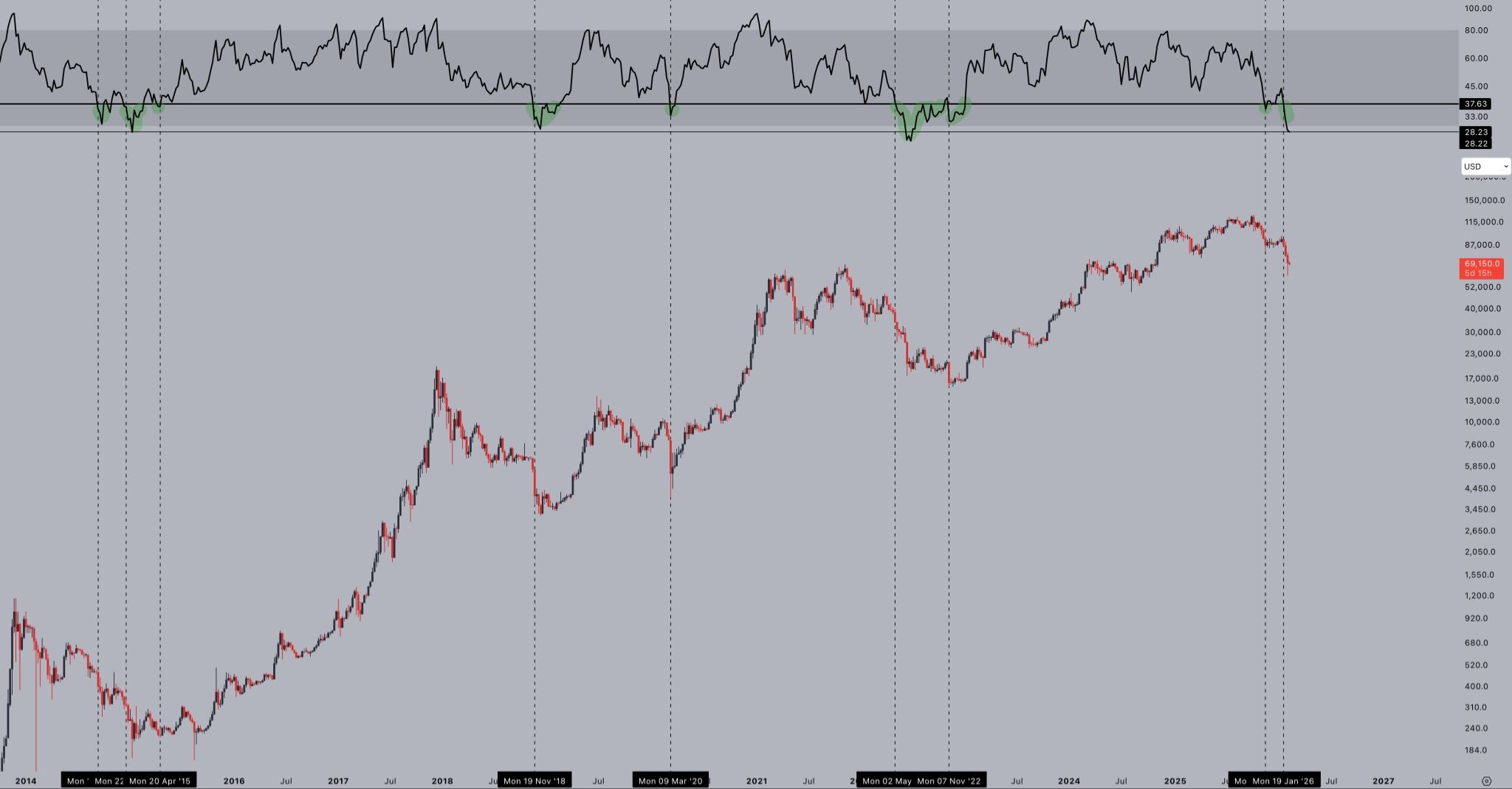
BTC/USD weekly chart. Source: Jelle
As Cointelegraph reported, Bitcoin could find a “real bottom” around $50,000 in a repeat of the 2022 bear market.


Subscribe to daily byte-sized crypto news from Cointelegraph
This article is produced in accordance with Cointelegraph's Editorial Policy and is intended for informational purposes only. It does not constitute investment advice or recommendations. All investments and trades carry risk; readers are encouraged to conduct independent research.
More on the subject