


 Written by Turner Wrightstaff writerEdited by Robert Lakinstaff editor
Stripe-owned Bridge gets OCC conditional approval for national bank charter
Latest NewsPublishedFeb 17, 2026
While still subject to final approval, the regulator's nod would enable Bridge to offer stablecoin and digital asset services to businesses.

Stablecoin platform Bridge, owned by the payments processor Stripe, said it had received conditional approval to operate as a federally chartered national trust bank under the US Office of the Comptroller of the Currency (OCC).
In a Tuesday notice, Bridge said it had received conditional approval from the banking regulator, allowing the company to “operate stablecoin products and services under direct federal oversight” once fully approved. Bridge said the charter would allow it to offer custody of digital assets, issue stablecoins and manage stablecoin reserves.
“Our compliance framework already positions Bridge to be GENIUS ready,” said the company, referring to the stablecoin bill signed into law in July 2025. “Now achieving a national trust bank charter will provide our customers the regulatory backbone they need to build with stablecoins confidently and at scale.”
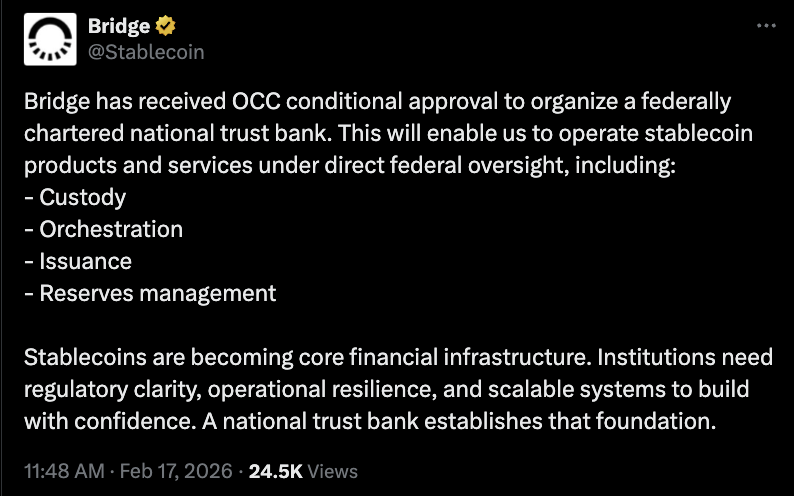
Source: Bridge
Bridge is one of several crypto-aligned companies seeking a national trust bank charter from the OCC following the passage of the GENIUS Act. In December, the agency conditionally approved applications from BitGo, Fidelity Digital Assets and Paxos to convert their respective state-level trust companies, and conditionally approved Circle and Ripple for national trust bank charters.
Related: Bankers push OCC to slow crypto trust charters until GENIUS rules clarified
According to OCC records, Bridge applied for a bank charter in October and was given approval on Feb. 12. Stripe acquired the platform in 2025 as part of a $1.1 billion deal for the company to support stablecoin payments.
In a Wednesday letter, the American Bankers Association (ABA) urged the OCC to slow its approval of crypto companies for national bank trust charters, saying rules under the GENIUS Act were still unclear. According to the banking group, companies could use national trust charters to essentially bypass oversight by US financial regulators.
“[…] ABA strongly encourages OCC to be patient, not measure its application decisioning progress against traditional timelines, and allow each charter applicant’s regulatory responsibilities to come fully into view before moving a charter application forward,” said the letter.
US policymakers still considering how to handle stablecoin rewards
As US lawmakers in the Senate advance bills to establish a comprehensive digital asset market structure framework, White House officials continue to meet with representatives from the crypto and banking industries to address stablecoin yield. Addressing stablecoins within the market structure bill, as well as issues related to tokenized equities and conflicts of interest, could be a sticking point for many lawmakers ahead of a potential vote in the Senate.
Magazine: IronClaw rivals OpenClaw, Olas launches bots for Polymarket — AI Eye


Subscribe to daily byte-sized crypto news from Cointelegraph
Cointelegraph is committed to independent, transparent journalism. This news article is produced in accordance with Cointelegraph’s Editorial Policy and aims to provide accurate and timely information. Readers are encouraged to verify information independently.
More on the subject