


 Written by Vince Quillformer writerEdited by Robert Lakinstaff editor
Coinbase’s Base transitions to its own architecture with eye on streamlining
Latest NewsPublishedFeb 18, 2026
The Base engineering team said the protocol would remain open-source and encouraged developers to continue building unique implementations.

Base, the decentralized Ethereum layer-2 scaling network, said Wednesday that it is transitioning from running on Optimism’s L2 tech stack to its own unified software architecture.
Launched in 2023 as an Optimism chain, Base is shifting to its own tech stack to reduce dependence on external service providers and shorten the time to ship new upgrades, according to an announcement from Base. The team said:
“Consolidating into Base changes how Base packages and releases software for the network. We will ship one official distribution for each upgrade: a single Base binary for operating nodes on the network.”
The transition is also expected to simplify the Base network’s sequencer, which helps network validators to order transactions, the Base engineering team said.
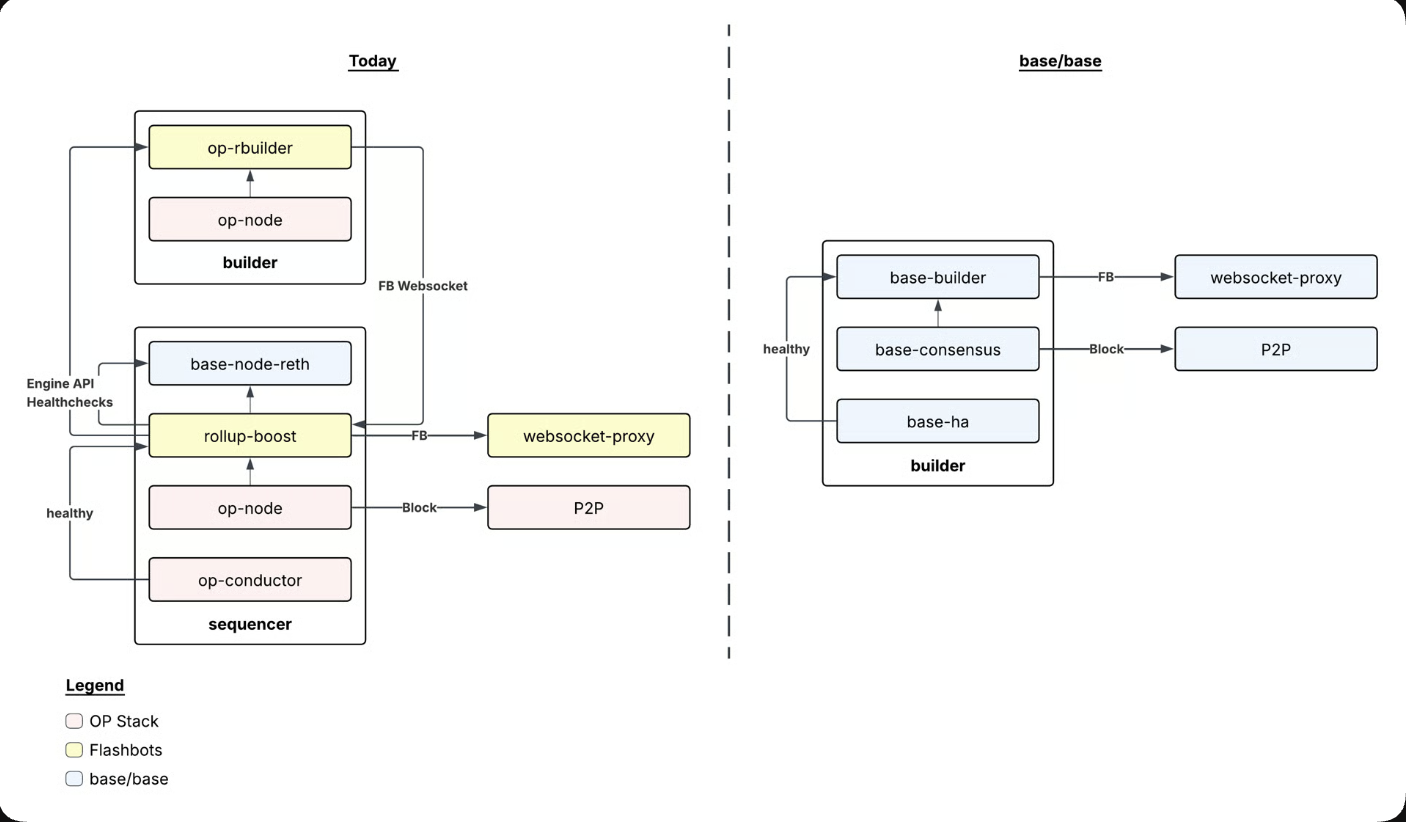
The Base sequencer before and after the shift to a unified architecture. Source: Base
The rollout will take place in four phases, according to the project's roadmap, with node runners required to switch to the new Base client over the next several months for official upgrades.
Related: Base says configuration change caused transaction delays, fixes issue
Ethereum co-founder changes tune on layer-2 scaling networks
Earlier this month, Vitalik Buterin, the co-founder of the Ethereum L1 blockchain network, reversed course on scaling Ethereum through L2s.
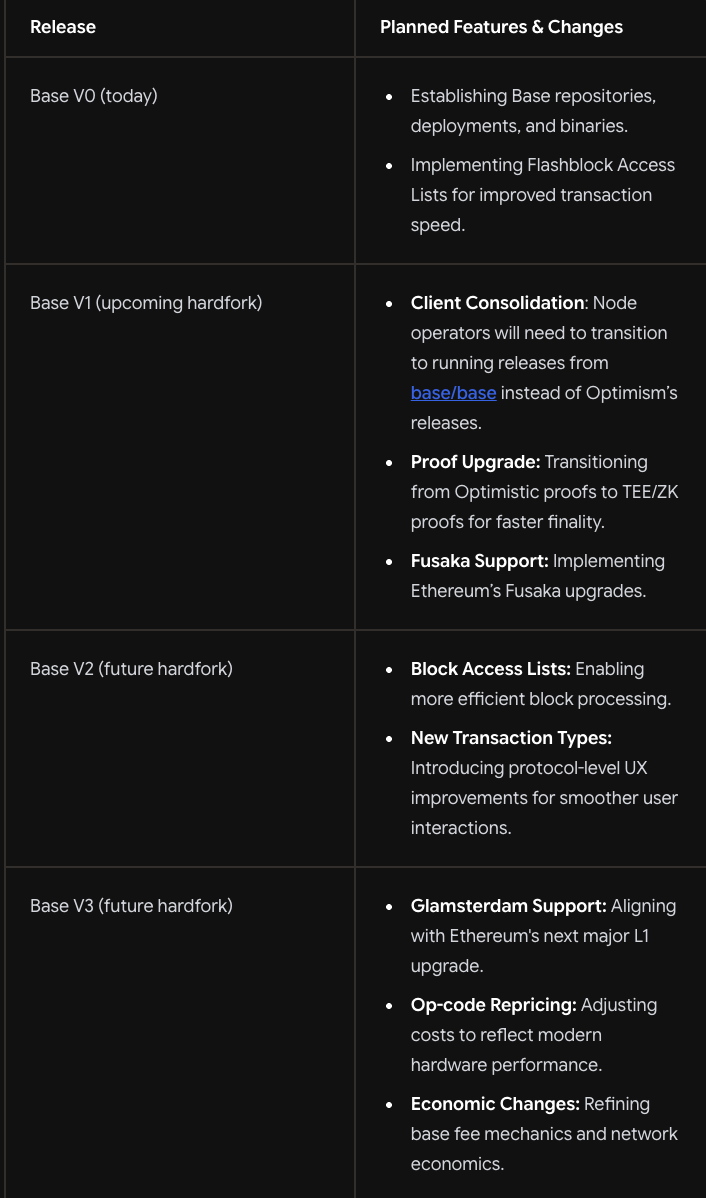
The Base roadmap for the shift away from the Optimism tech stack. Source: Base
L2s are taking longer than initially thought to transition to fully decentralized models, Buterin said, adding that the Ethereum L1 is already scaling on its own and features record-low network fees.
“The original vision of L2s and their role in Ethereum no longer makes sense, and we need a new path,” Buterin said in February.
Buterin’s comments drew mixed reactions from L2 teams, with some agreeing that scaling networks must pivot beyond being a cheaper execution layer for Ethereum.
“It’s great to see Ethereum scaling L1 — this is a win for the entire ecosystem. Going forward, L2s can’t just be ‘Ethereum but cheaper,’” Base founder Jesse Pollak said in response.

Source: Jesse Pollak
Other L2 founders contend that scaling layers are already in alignment with the network’s long-term goals.
There are more than 128 different Ethereum L2 scaling networks at the time of publication, according to L2Beat.
Magazine: Coinbase and Base: Is crypto just becoming traditional finance 2.0?


Subscribe to daily byte-sized crypto news from Cointelegraph
Cointelegraph is committed to independent, transparent journalism. This news article is produced in accordance with Cointelegraph’s Editorial Policy and aims to provide accurate and timely information. Readers are encouraged to verify information independently.
More on the subject