

Here’s what happened in crypto today
20 minutes ago

 Written by Zoltan Vardaistaff writerEdited by Bryan O'Sheastaff editor
Crypto exchanges are seeking market share of TradFi trading venues, but tokenized commodities adoption is limited by pricing and liquidity concerns.

Update April 9, 2026, 1:00 p.m. UTC: This article has been updated to include a comment from Mamadou Kwidjim Toure, CEO and founder of tokenization platform Ubuntu Tribe.
Cryptocurrency exchanges are taking market share from traditional finance (TradFi) trading venues through tokenized commodities products, but finding that mainstream adoption of tokenized precious metals is limited by pricing and liquidity issues.
Silver perpetuals have peaked at about 40% of the equivalent volume of the Comex Silver (SI) Contract, the world’s largest silver futures market that accounts for over 70% of global exchange-traded silver futures volume, according to a Thursday report from Binance Research.
During March and April, tokenized silver accounted for 14.90% and 14.98% of the Comex’s volume, respectively, up from just 1.37% in January.
The growth suggests crypto exchanges are capturing more demand for round-the-clock exposure to traditional assets, particularly in metals-linked perpetuals, but analysts at Kaiko said liquidity depth and price formation still pose major obstacles to wider adoption among traditional investors.
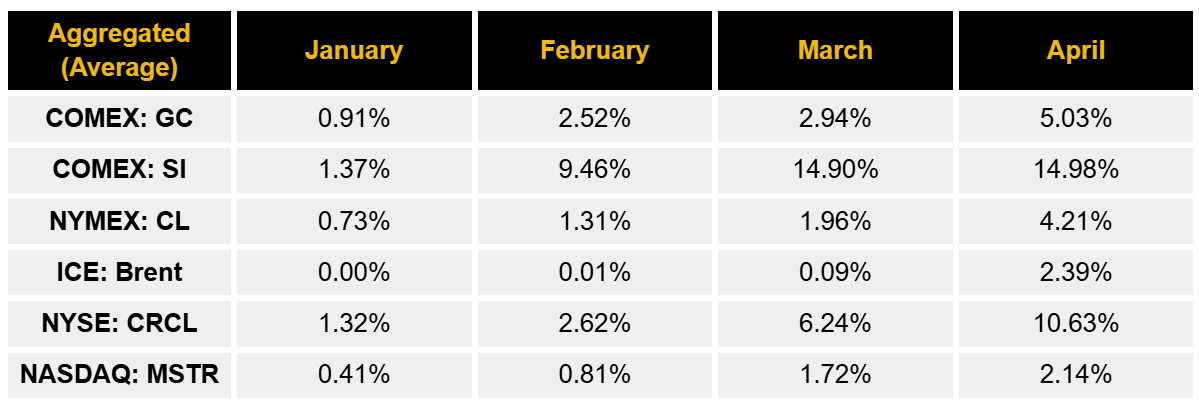
Average aggregated TradFi-perps volume to the primary futures equivalents on traditional exchanges. Source: Binance Research
Tokenized commodities offer 24/7 trading, which can create vulnerabilities compared to TradFi gold and silver futures, where the holiday and weekend close create “natural circuit breakers that actually protect market quality,” Kaiko research analyst Laurens Fraussen told Cointelegraph.
This exposes tokenized commodities to degraded order book depth, widened spreads and less reference pricing from closed traditional venues.
Legacy commodities offerings avoid these issues through centralized clearing, consolidated liquidity, standardized contracts and “coordinated operating hours that prevent liquidity deserts,” Fraussen said, adding that crypto needs “better chain abstraction and unified liquidity aggregation” to compete with TradFi.
Others argued that cryptocurrency exchanges lack the necessary trust and reserve audits to attract more institutional precious metals investment.
Crypto exchanges won’t become the “settlement backbone of global commodity markets, because they lack the one thing institutional actors require: a credible, audited claim on physical metal,” Mamadou Kwidjim Toure, CEO and founder of tokenization platform Ubuntu Tribe, told Cointelegraph.
Related: NYSE taps Securitize for 24/7 tokenized securities platform
Despite the infrastructure concerns, tokenized gold perps have surpassed the gold futures trading volumes of several regional commodity exchanges, a trend seeing monthly acceleration, according to Binance Research.
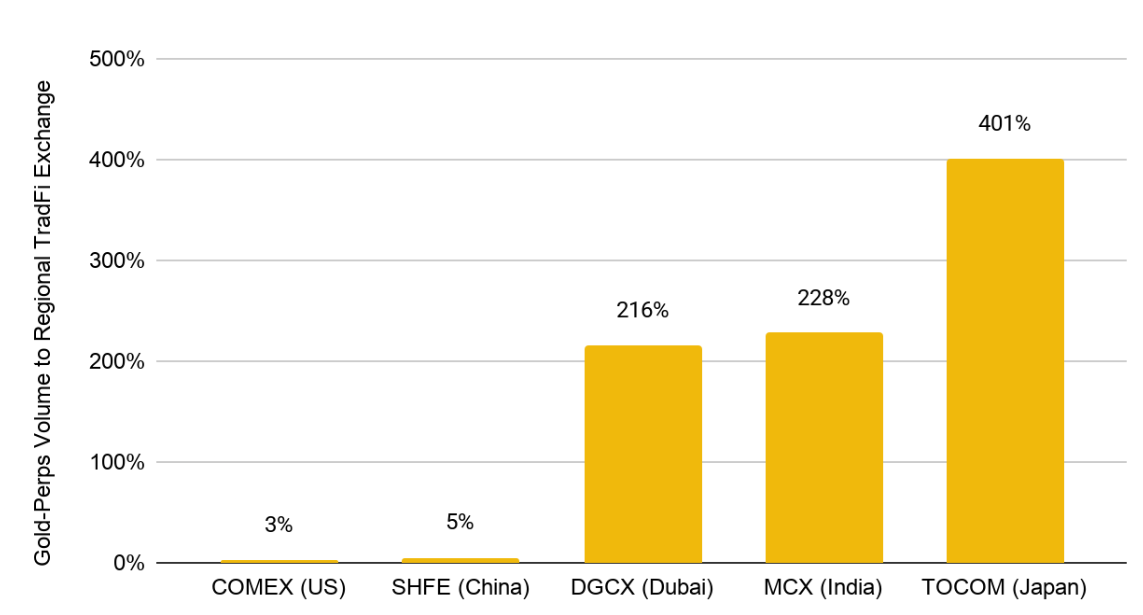
Figure 3: Average Aggregated Volume of Gold-Perps to Gold Futures in Regional Exchanges, in March
Binance Research also said gold perpetuals outpaced several regional commodity exchanges in March, reaching 401% compared to gold futures trading on the Japanese energy commodities futures exchange TOCOM, 228% of India’s Multi Commodity Exchange (MCX) and 216% of the Dubai Gold & Commodities Exchange (DGCX).
Binance attributed part of this growth to “market-moving events” that routinely occur on weekends, which would leave investors exposed to gap risks through traditional venues operating under regular trading hours.
Magazine: Can Robinhood or Kraken’s tokenized stocks ever be truly decentralized?