


 Written by William Subergstaff writerEdited by Allen Scottformer editor
Exchange stablecoin reserve hits $27B as Bitcoin rises toward $50K ‘fair value’
MarketsPublishedFeb 10, 2022
More stablecoins find their way to exchanges than ever before — where will they be deployed next?

Cryptocurrency exchanges now have more stablecoins on their books than ever before in a fresh sign investors are waiting to buy Bitcoin (BTC) and altcoins.
Data from on-chain analytics platform CryptoQuant shows that this week, exchanges’ total stablecoin reserves passed 27 billion for the first time.
Exchange users herd stablecoins to accounts
After reaching a previous peak in late December, stablecoin reserves tumbled at the start of 2022 as BTC/USD and altcoin markets fell in tandem to multi-month lows.
In recent weeks, however, the trend has reversed, with exchange users sending more to their accounts than at any point in history as of Feb. 9.
As such, liquid capital for potential deployment into cryptocurrencies from exchanges has never been greater.
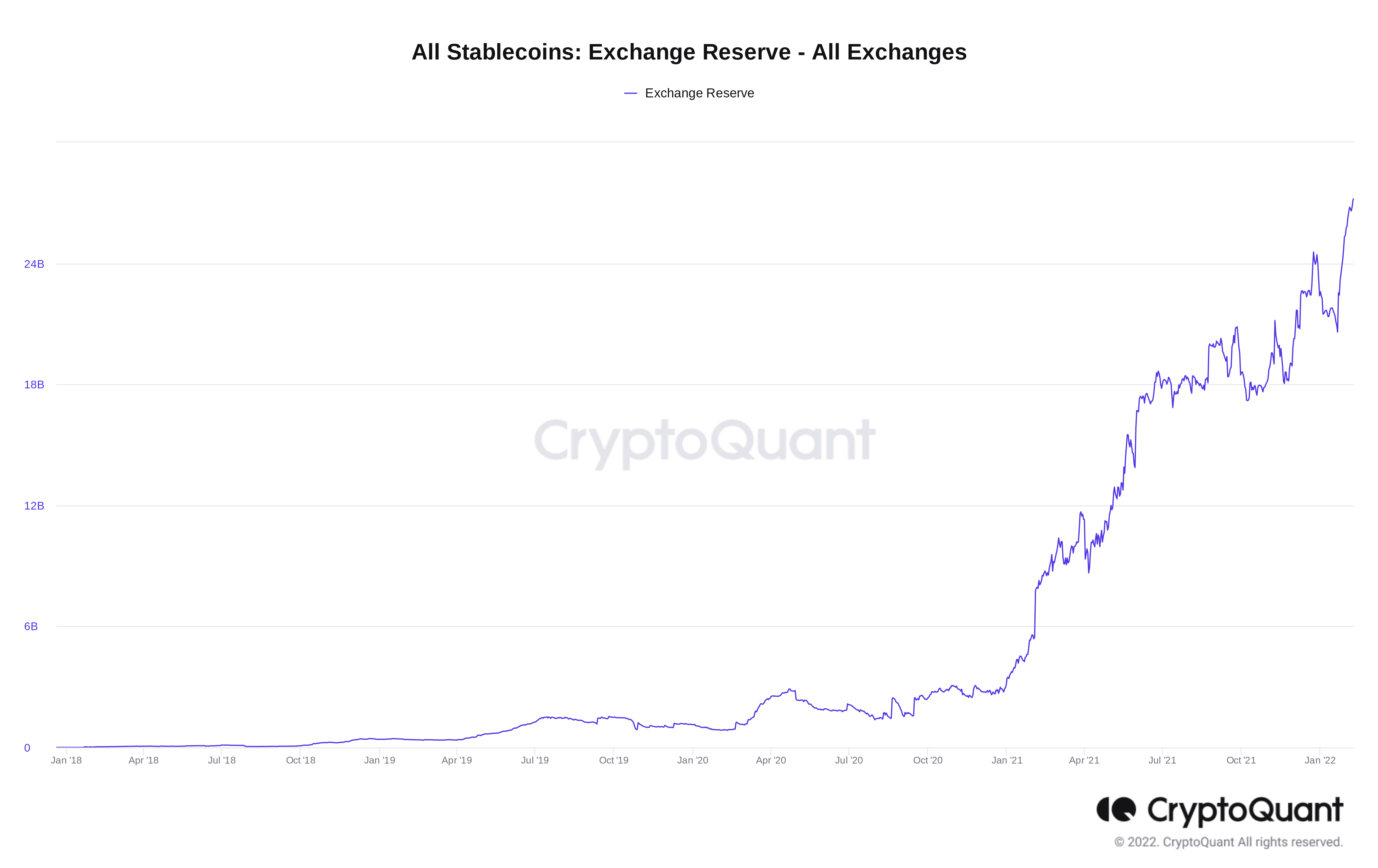
Exchange stablecoin reserves chart. Source: CryptoQuant
CryptoQuant data analyzes a total of 43 retail and derivatives trading platforms.
Turning to BTC reserves on the firm’s 21 monitored exchanges, the trend is one of continual withdrawals — even after the Bitcoin spot price has increased almost 50% since week three of January.
As of Feb. 9, exchanges had 2.361 million BTC available.
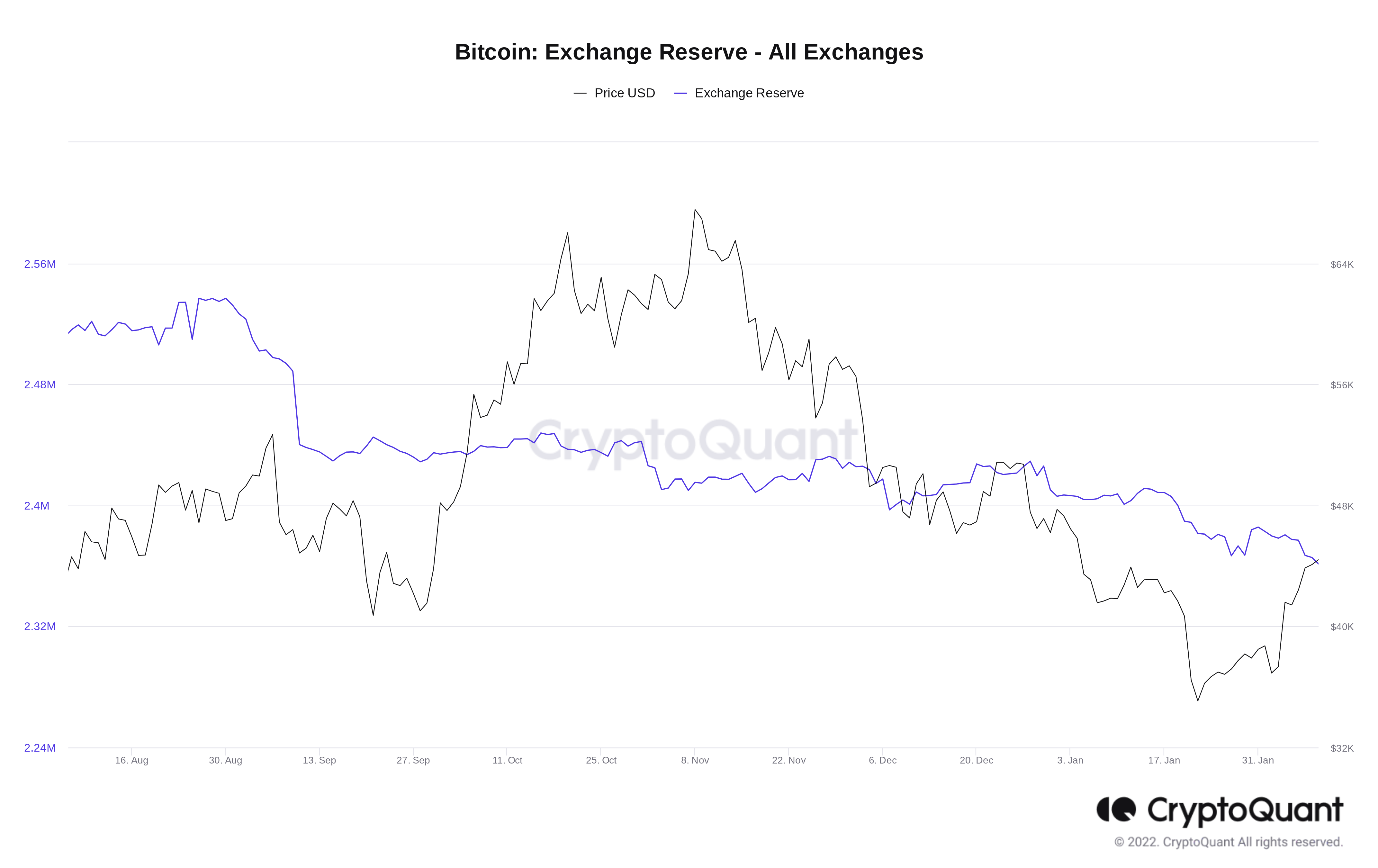
Bitcoin exchange reserves vs BTC/USD chart. Source: CryptoQuant
Supply Shock model leaves $5,000 gains open for BTC
As demand for BTC persists through the recent gains, popular analyst Willy Woo argued that Bitcoin’s current fair market value is $50,000.
Related: BlackRock expected to offer crypto trading as Three Arrows exec says long Bitcoin, ETH in 2022
Pointing to his Supply Shock Valuation metric, Woo showed that while it had decreased in January, it was still above spot price movements even after recent successes.
I put it at $50k, would love to see their models, assuming they have any. pic.twitter.com/wx9FKXQXnt— Willy Woo (@woonomic) February 10, 2022
Supply Shock determines the market price of Bitcoin when supply was at similar levels to a given point in time.
“In market conditions when the Supply Shock is within recent historical levels, it is possible to model a fundamental price. We simply do a look-back on previous times the market had a similar Supply Shock and then find the array of prices the market recently assigned,” Woo explained in an introduction to the tool last year.


Subscribe to daily byte-sized crypto news from Cointelegraph
This article is produced in accordance with Cointelegraph's Editorial Policy and is intended for informational purposes only. It does not constitute investment advice or recommendations. All investments and trades carry risk; readers are encouraged to conduct independent research.
More on the subject