


 Written by Vince Quillstaff writerEdited by Sam Bourgistaff writer
P2P.me team apologizes for betting on own fundraising outcome
Latest NewsPublishedMar 27, 2026
The P2P.me team opened positions on the Polymarket prediction platform to wager whether the project would hit its $6 million fundraising goal.

The team behind the P2P.me decentralized trading platform said it took positions on Polymarket tied to its recent capital raise.
The team opened the positions 10 days before the raise went live, wagering whether the project would hit its $6 million fundraising target, according to a disclosure published on X.
At the time the positions were opened, P2P.me had only one “oral commitment” from venture firm Multicoin Capital for $3 million in funding, “no signed term sheets” and “no guaranteed allocations,” the team said.
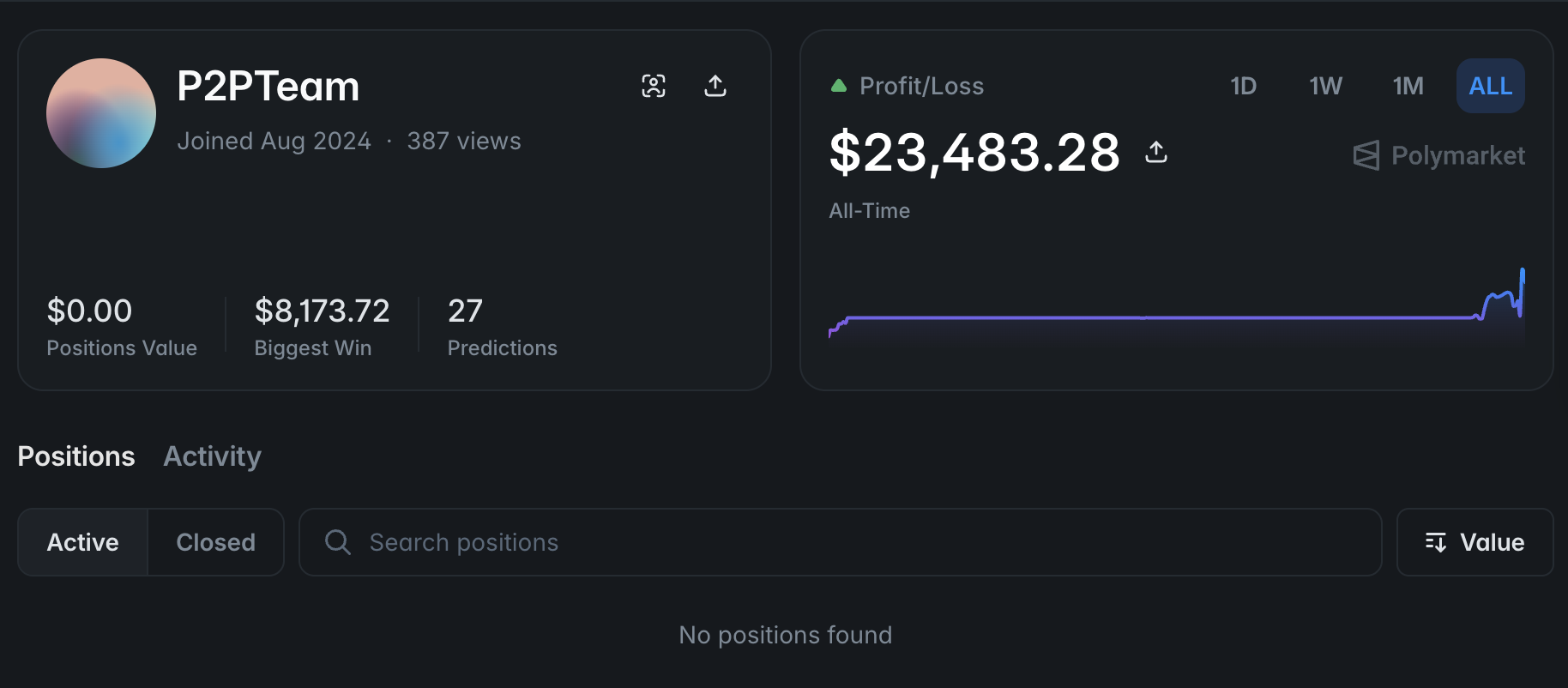
The Polymarket account for the P2P.me team shows an all-time profit of over $23,480. Source: Polymarket
However, the project only managed to raise $5.2 million in the funding round, which resulted in the market resolving to a “no.” Following the outcome, the team said:
“Trading on an outcome you can influence erodes trust. We don't believe we were trading on a done deal, but we recognize reasonable people can see it differently. We named the account "P2P Team" deliberately to give a marketing signal of our presence. But intent isn't the same as action. Not disclosing at the time was a mistake we own.”
Any profits will be returned to the project’s MetaDAO treasury, the DAO reserve backing the platform, the P2P.me team said.
The team also said it is liquidating all open positions on Polymarket and adopting a “formal company policy” on prediction market trading activity.
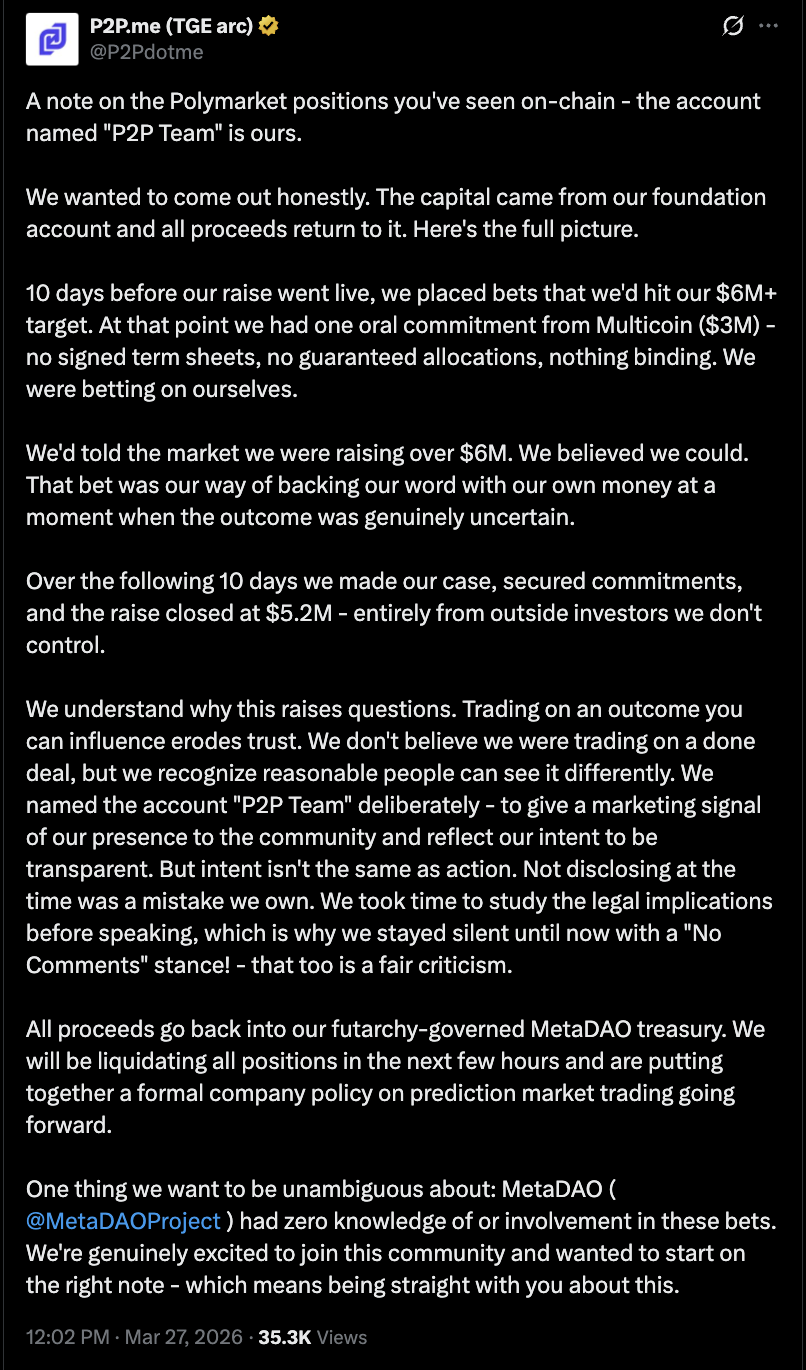
Source: P2P.me
Cointelegraph reached out to P2P.me about the disclosure, but did not receive a response by the time of publication.
Prediction markets have come under increased scrutiny from US lawmakers for insider trading activity, and in response, popular prediction market platforms like Polymarket and Kalshi have announced countermeasures to curb insider trading.
Related: Federal regulation looms as 11 states go after prediction markets
US lawmakers take steps to curb insider trading activity on prediction markets
US lawmakers are seeking to restrict insider trading activity on prediction markets, particularly those linked to elections, legislation and geopolitical issues with national security implications.
Congress members Adrian Smith and Nikki Budzinski introduced the “Preventing Real-time Exploitation and Deceptive Insider Congressional Trading Act,” also known as the PREDICT Act, on Wednesday to ban the US president and lawmakers from prediction markets.
A competing bill was also introduced on Thursday, aiming to curb political insider trading activity on prediction market platforms.
Magazine: IronClaw rivals OpenClaw, Olas launches bots for Polymarket — AI Eye


Subscribe to daily byte-sized crypto news from Cointelegraph
Cointelegraph is committed to independent, transparent journalism. This news article is produced in accordance with Cointelegraph’s Editorial Policy and aims to provide accurate and timely information. Readers are encouraged to verify information independently.
More on the subject