 Written by Turner Wrightstaff writerEdited by Robert Lakinstaff editor
Russia targets British 17-year-old for alleging digital assets were skirting sanctions
Latest NewsPublishedJun 4, 2026
Political activist Bill Browder, the teenager’s father, said his son was “the first high school student in the world to be sanctioned by an authoritarian regime” over a report on the ruble-pegged stablecoin A7A5.
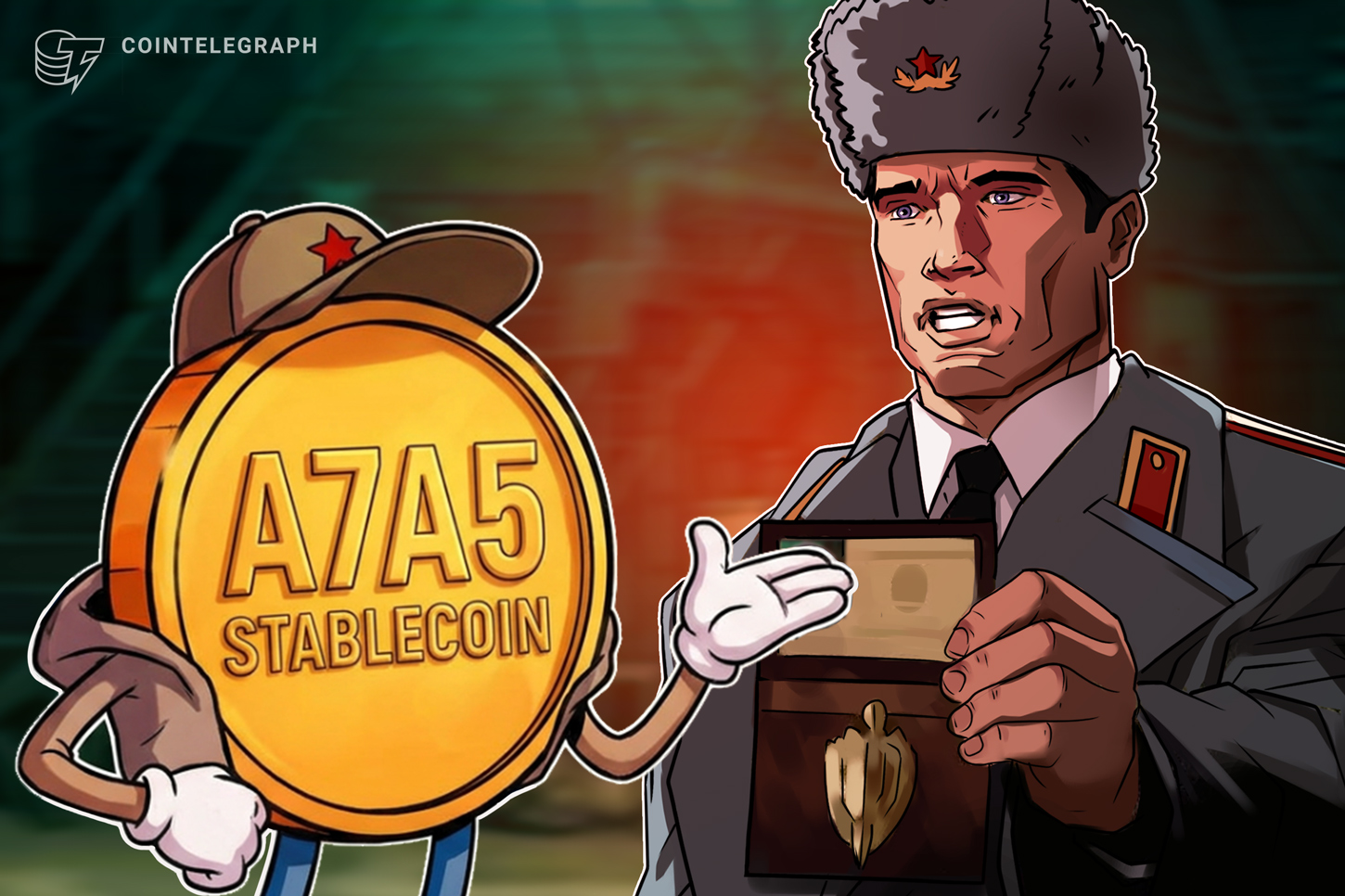
Alexander Browder, the son of American-British political activist Bill Browder, said that he has been targeted by Russia over allegations that officials used the ruble-pegged A7A5 stablecoin to evade sanctions amid the country's war on Ukraine.
In a Wednesday X post, Browder said his work through the website Global Cryptocurrency Laundering Database had resulted in him being “sanctioned by an authoritarian regime for uncovering corruption.” Specifically, he alleged in a March report that A7A5 was backed by deposits from Russian financial institution Promsvyazban and was used to circumvent Western sanctions stemming from Russia’s war on Ukraine.
“The Ruble-backed stablecoin A7A5 is one of the most prevalent issues facing the West. It is sanctioned in the UK, US and EU but it still operates,” said Browder. “A7A5 holds value through its ability to be converted into cash by criminals. Western governments need to put pressure on the specific exchanges which allow the conversions to happen and the countries which facilitate these exchanges.”
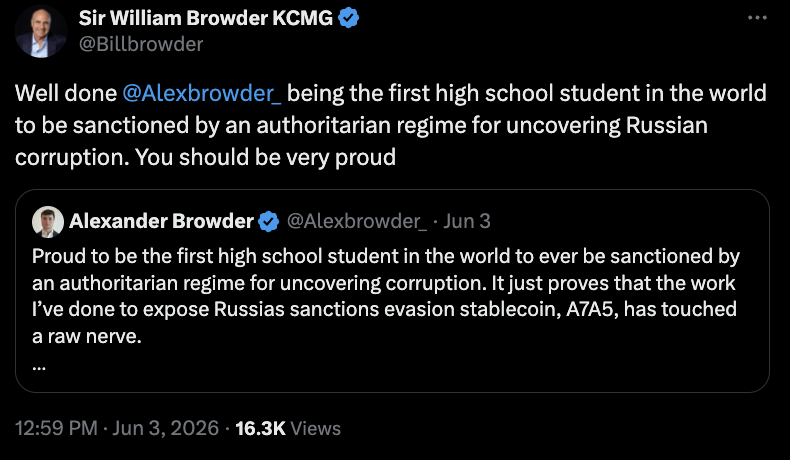
Source: Bill Browder
The stablecoin pegged to the ruble processed more than $110 billion in onchain transactions, according to a CertiK report this week. European Union officials sanctioned A7A5 in October 2025, saying the stablecoin was intended to bypass war-related financial restrictions on Russia’s economy.
Related: HTX denies UK sanctions allegations as new data flags $7.6B Russia-linked flows
Browder says his actions “touched a raw nerve” with Russia’s government. According to British news outlet The Times, he may be the youngest person to ever be sanctioned by Russia. The government has also banned certain journalists from entering the country.
His father is known for exposing corruption in Russia and leading the Global Magnitsky Justice Campaign.
Russian lawmakers weigh legislation to impose criminal penalties for unlicensed crypto activities
In April, lawmakers in Russia’s parliament advanced a bill that could allow authorities to impose criminal penalties on unlicensed digital asset services and mandate registration with the country’s central bank. The proposed bill, “On Digital Currency and Digital Rights,” if passed, could ban unlicensed crypto platforms starting in July 2027.
Magazine: Bitcoin miners are pivoting to AI, so why is the hashrate near ATHs?


Subscribe to daily byte-sized crypto news from Cointelegraph
Cointelegraph is committed to independent, transparent journalism. This news article is produced in accordance with Cointelegraph’s Editorial Policy and aims to provide accurate and timely information. Readers are encouraged to verify information independently.
More on the subject