

 Written by Zoltan Vardaistaff writerEdited by Bryan O'Sheastaff editor
Solana validator count drops 68% as node costs squeeze small operators
Latest NewsPublishedJan 29, 2026
Solana’s validator count has dropped 68% since 2023 as rising costs and zero-fee competition push smaller node operators offline.

Solana’s validator count has fallen dramatically over the past three years, raising concerns about the blockchain network’s decentralization as the economics of running a node squeezes out smaller operators.
The number of Solana validators fell 68% to 795 as of Wednesday, from a peak of 2,560 validator nodes in March 2023, according to Solanacompass data.
Validators are responsible for adding new blocks and verifying transactions in proposed blocks, playing a vital role in the operations of the decentralized ledger.
While some of the decline reflects the removal of inactive or “zombie” nodes, industry participants say increasing operating costs and fee competition are forcing smaller validators offline.
An independent Solana validator operator who posts under the name Moo said on X that many small validators are considering shutting down because the economics no longer make sense.
“Many small validators are actively considering shutting down (including us). Not due to lack of belief in Solana, but because the economics no longer work.”
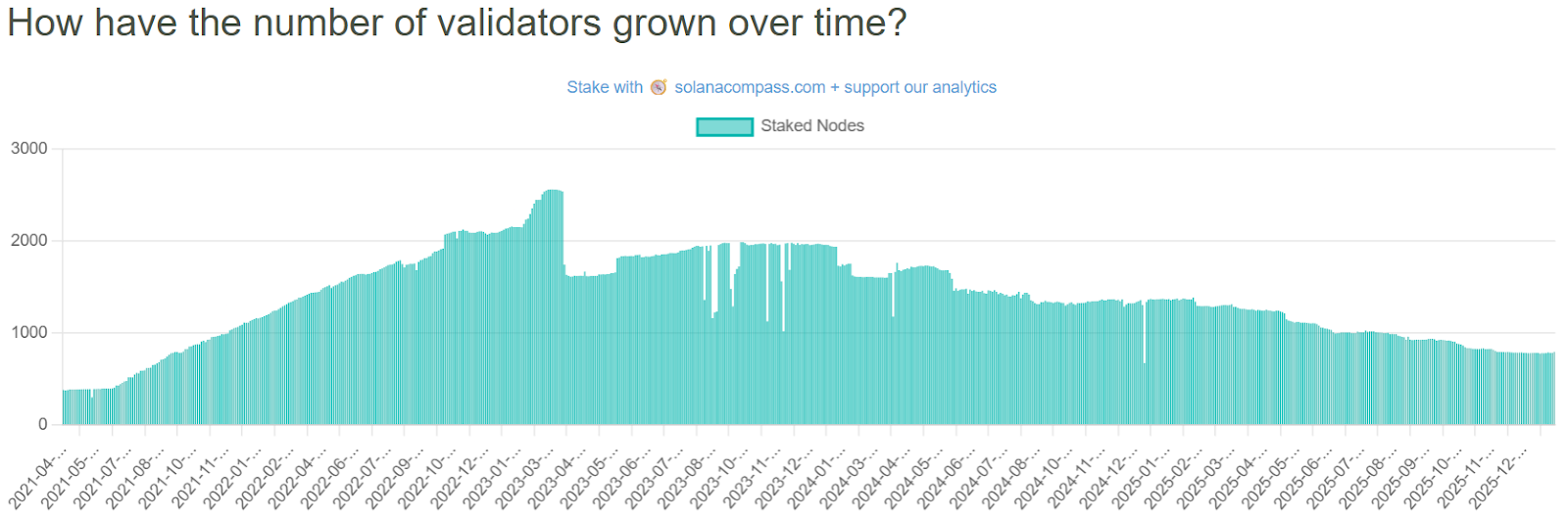
Solana validator count, all-time chart. Source: Solanacompass
Related: Solana-based Natix brings DePIN data into self-driving AI with Valeo
Moo said large validators charging 0% fees are forcing smaller validators out of profit, making it economically unviable to continue running a node.
“We started validating to support decentralization. But without economic viability, decentralization becomes charity,” Moo said.
The trend signals that retail validators can no longer sustainably contribute to securing the network. It also shows that Solana’s nodes will be increasingly run by large operators, pushing out smaller players and raising potential concerns related to the network's degree of decentralization.
Related: Crypto loses speculative edge as AI and robotics attract capital: Delphi
Solana’s Nakamoto Coefficient sees 35% decline
Along with the declining validator count, Solana’s Nakamoto Coefficient also fell by 35% during the same period, to 20 as of Wednesday from 31 in March 2023, according to Solanacompass.
The Nakamoto Coefficient measures the decentralization of a blockchain by determining the minimum number of independent entities, such as validators or miners. The decline signals that the staked Solana supply is becoming less distributed and the network less decentralized.
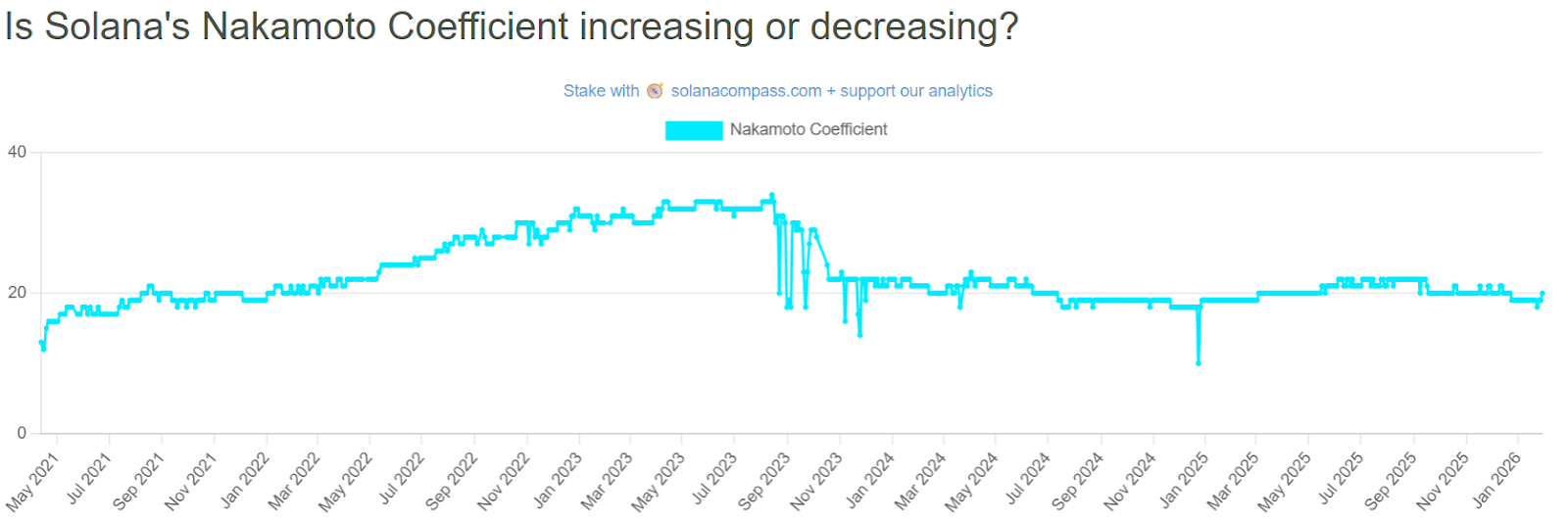
Solana Nakamoto Coefficient, all-time chart. Source: Solanacompass
A reason behind this decline may be the increasing costs of running a profitable validator node, which rose significantly over the past three years along with the Solana (SOL) token.
Excluding hardware and server costs, validators need an initial investment of at least $49,000 in SOL tokens for the first year of operations, requiring at least 401 SOL each year for voting fees to remain operational.
This is because validators need to participate in protocol consensus, requiring them to send a vote transaction for each block the validator agrees on, which can cost up to 1.1 SOL per day, according to Solana validator Agave’s technical documentation.
Cointelegraph contacted the Solana Foundation for comment, but had not received a response by publication.
Magazine: Solana vs Ethereum ETFs, Facebook’s influence on Bitwise — Hunter Horsley


Subscribe to daily byte-sized crypto news from Cointelegraph
Cointelegraph is committed to independent, transparent journalism. This news article is produced in accordance with Cointelegraph’s Editorial Policy and aims to provide accurate and timely information. Readers are encouraged to verify information independently.
More on the subject