


 Written by Turner Wrightstaff writerEdited by Sam Bourgistaff editor
Wrench attacks increased by 75% in 2025, resulting in $41M losses: CertiK
Latest NewsPublishedFeb 2, 2026
The blockchain security auditor said violence against wallet holders has become a “core threat vector in the crypto ecosystem,” marking a sharp rise from 2024.

Physically targeting crypto users or their relatives, colloquially known as “wrench attacks,” significantly increased in the last year, according to blockchain security auditor CertiK.
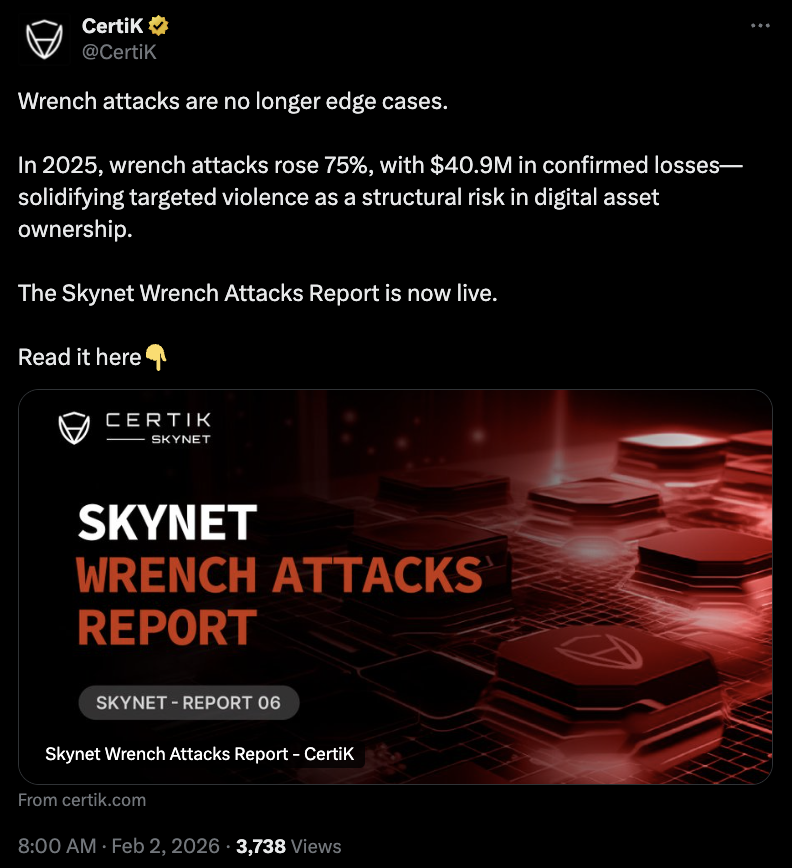
In a report on wrench attacks released on Sunday, CertiK said there had been 72 verified cases worldwide in 2025 in which crypto users had been subject to physical attacks. According to the platform, such attacks were “no longer edge cases,” given that physical assaults and kidnappings had increased by about 75% over incidents in 2024.
“Beyond direct losses, the psychological and reputational fallout is reshaping behavior across the industry, pushing founders and high-net-worth individuals toward operational anonymity and geographical relocation,” said CertiK. “2025 marks a clear inflection point: physical violence is now a core threat vector in the crypto ecosystem.”
Source: CertiK
According to CertiK, there had been $40.9 million in confirmed losses due to wrench attacks in 2025, but the figure could be larger due to “under-reporting, silent settlements, and untraceable ransoms.” France recorded the largest number of attacks last year, with 19 confirmed incidents, while all of Europe accounted for about 40% of all attacks globally in 2025.
Related: Wrench attacks against crypto holders are rising and growing ‘more violent’
Among some of the most high-profile attacks in 2025 included crypto wallet Ledger founder David Balland and his wife, Amandine, being kidnapped and held for ransom in January. In another case, an Italian crypto holder was reportedly kidnapped and tortured during a visit to New York City in May.
“Every week, there is a Bitcoiner, at least one in the world, who gets kidnapped, tortured, extorted, and sometimes even worse,” said SatoshiLabs founder Alena Vranova in August, adding:
“We have seen cases of kidnappings for as little as $6,000 worth of crypto, and we have seen people murdered for $50,000 in crypto.”
Possible solutions to wrench attacks
One of the suggestions to address physical attacks or intimidation against crypto users has been the development of “panic wallets.” The wallets can potentially call for help, wipe balances when the holder is under duress, or send false decoys.
However, many experts advise crypto holders not to openly discuss their wealth or holdings.
Magazine: 6 weirdest devices people have used to mine Bitcoin and crypto


Subscribe to daily byte-sized crypto news from Cointelegraph
Cointelegraph is committed to independent, transparent journalism. This news article is produced in accordance with Cointelegraph’s Editorial Policy and aims to provide accurate and timely information. Readers are encouraged to verify information independently.
More on the subject