


 Written by Marcel Pechmanstaff writerEdited by Ray Salmondstaff editor
HYPE open interest soars by 30%: Are Hyperliquid bulls prepping for new price highs?
MarketsPublishedMay 30, 2026
Soaring HYPE futures demand highlights a healthy ecosystem for the DEX, but token dilution and increasing bearish bets may prevent a rally above $70.

Key takeaways:
- A 30% weekly surge in HYPE futures open interest signals strong bullish demand and poses a major risk for bears.
- Hyperliquid leads global DApp revenues, yet large token unlocks could cap near-term HYPE gains.
Hyperliquid (HYPE) jumped to a $67 all-time high on Friday following the approval of onshore Bitcoin perpetual futures trading in the United States. HYPE futures open interest surged to an all-time high, fueling speculation for a potential short squeeze and further price appreciation above $70.
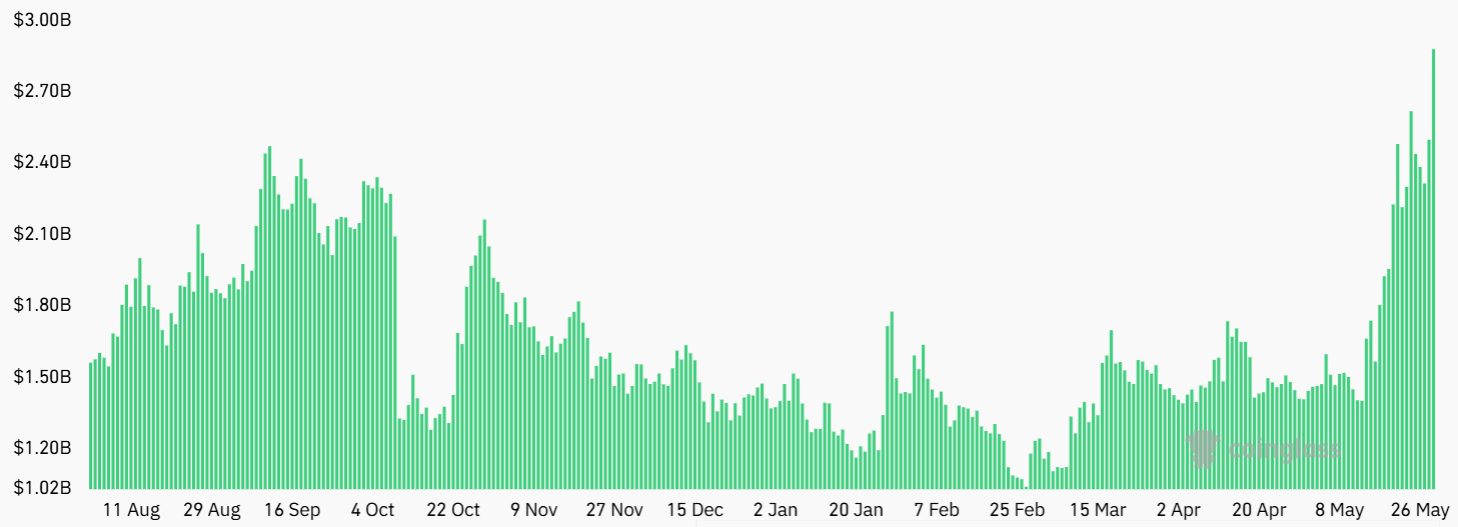
HYPE futures aggregate open interest on major exchanges, USD. Source: CoinGlass
HYPE futures aggregate open interest on major exchanges surged to $2.9 billion on Friday, up 30% from the prior week. The increased demand for leveraged positions following a 23% weekly HYPE price gain signals growing confidence among bulls, while posing a major risk to bears. Further HYPE price gains could trigger a massive short squeeze.
The US Commodity Futures Trading Commission (CFTC) acknowledged on Friday that perpetual futures are legitimate and essential for price discovery and risk management. While decentralized protocols, including Hyperliquid, do not directly benefit from the decision, it eliminates the gray area for regulated US entities, which is accretive for the industry as a whole.
Source: X/jchervinsky
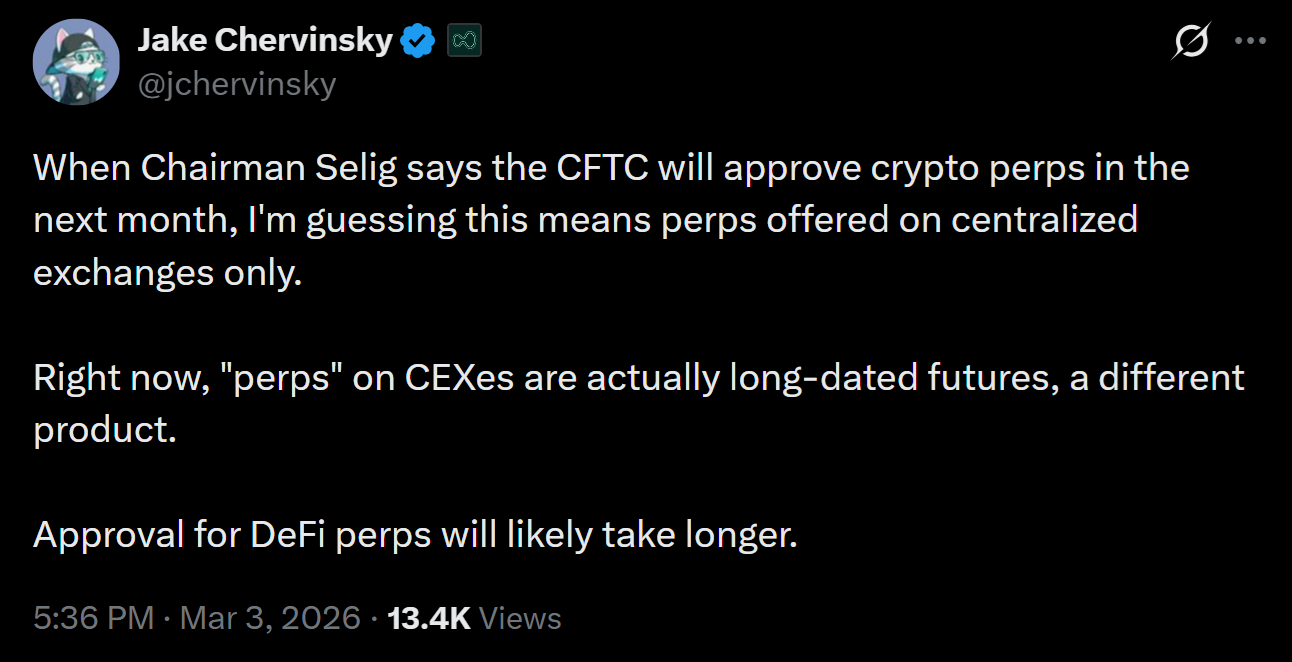
Jake Chervinsky, lawyer and CEO of Hyperliquid Policy Center, correctly asserted that the CFTC’s impending decision would initially benefit centralized exchanges only. According to Chervinsky, eventual approval for perpetual futures on decentralized finance (DeFi) “will likely take longer”.
Hyperliquid is the clear leader in volumes and revenues
Hyperliquid’s self-custodial, permissionless markets offer advantages that cannot be matched by traditional financial markets. The absence of know-your-customer (KYC) rules, mandatory volatility controls, and leverage limits provides decentralized applications (DApps) with a sustainable competitive advantage.
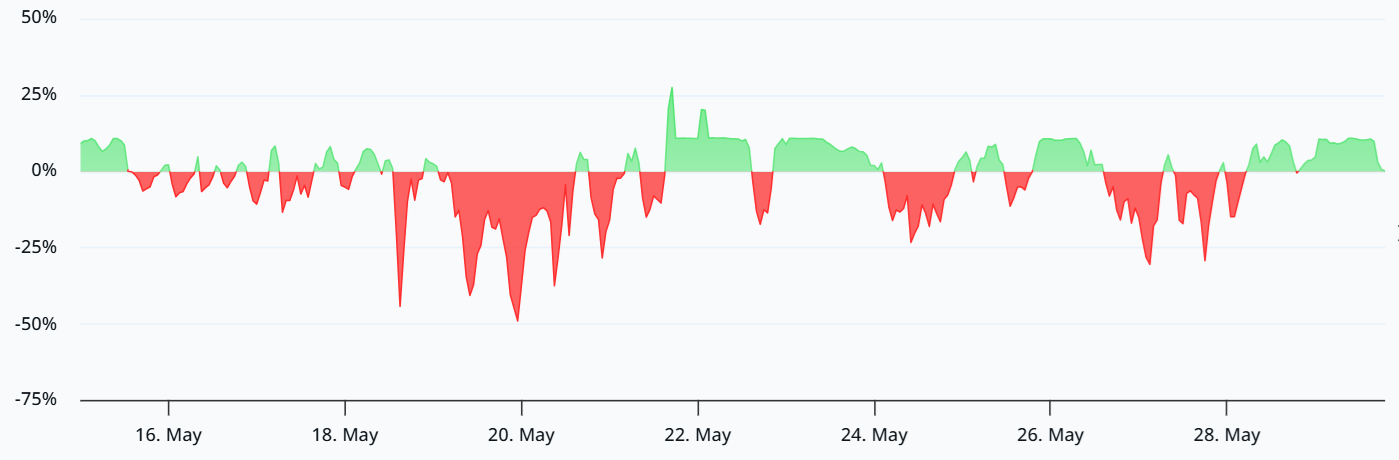
HYPE perpetual futures annualized funding rate. Source: Laevitas
Curiously, the funding rate on HYPE perpetual futures plummeted to zero on Friday, indicating increased demand for bearish bets. Under neutral conditions, the associated cost of keeping positions open is near 9%, as shorts (sellers) demand compensation for the cost of capital and associated risks.
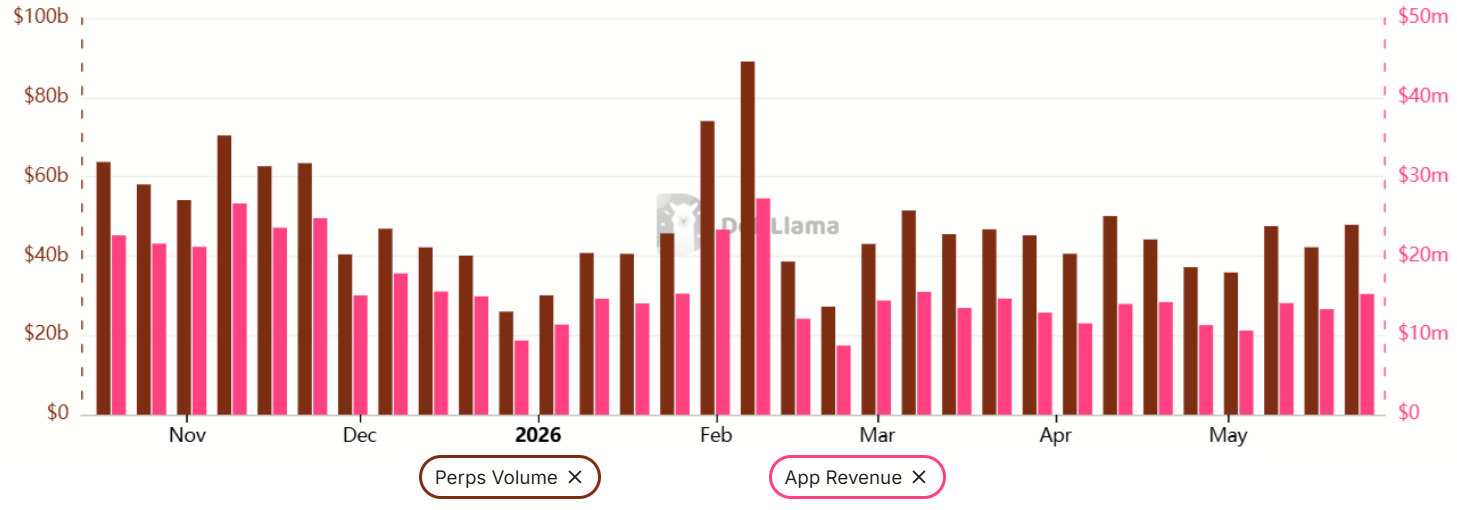
Hyperliquid weekly perpetual volumes vs. revenue, USD. Source: DefiLlama
Hyperliquid weekly perpetual volumes have sustained above $35 billion for the past 2 months despite overall weakness in DeFi activity. Hyperliquid holds the leading position in global DApps revenue, which is then used to buy HYPE on the open market through the Hyperliquid decentralized exchange.
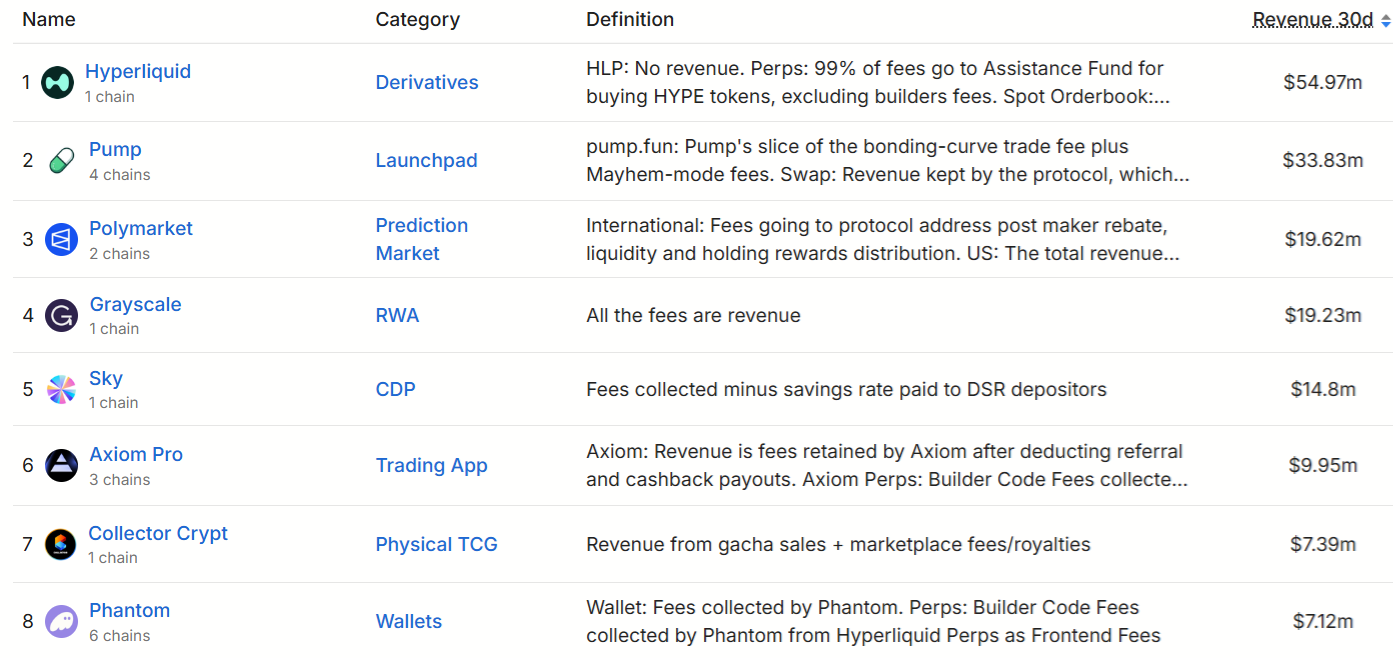
DApps ranked by 30-day revenue, USD. Source: DefiLlama
Hyperliquid’s 30-day revenue totaled $55 million, while the runner-up token launchpad platform Pump stood at $33.8 million, followed by the Polymarket prediction market at $19.6 million. Hyperliquid created a model that offers on-chain transparency and incentivizes liquidity providers by sharing a portion of its revenue.
Related: Coinbase brings global crypto derivatives markets to US institutional clients
HYPE token unlocks and ETF inflows
The monthly token unlock somewhat limits HYPE’s potential as some 309,000 tokens are added to circulation every month. The inflationary calendar is scheduled to end in November 2027. However, another 389 million HYPE tokens are yet to be released and are presently without a specific allocation.
The successful launch of HYPE exchange-traded funds (ETFs) in the US likely contributed to the price rally. Since the debut on May 12, the funds offered by Bitwise and 21Shares have gathered a combined $122 million in net assets, according to SoSoValue.
Ultimately, the increased demand for HYPE futures signals a healthy market, but that indicator alone does not signal a potential rally above $70.


Subscribe to daily byte-sized crypto news from Cointelegraph
This article is produced in accordance with Cointelegraph's Editorial Policy and is intended for informational purposes only. It does not constitute investment advice or recommendations. All investments and trades carry risk; readers are encouraged to conduct independent research.
More on the subject