


 Written by Yashu Golastaff writerReviewed by Fernando Quirósstaff editor
Four Bitcoin charts to watch heading into 2026
MarketsPublishedDec 31, 2025
Gold fractals, Bitcoin cost basis heatmap, and long-term moving averages offer clues on where BTC’s next major move may emerge in 2026.

Key takeaways:
- Bitcoin is consolidating as gold leads, a pattern seen before past BTC rallies.
- $84,000–$85,000 and the 100-week EMA are key levels to watch.
Bitcoin (BTC) failed to rise above the $90,000 mark in December, with sharp rejections toward the $85,000-87,000 area on each attempt.
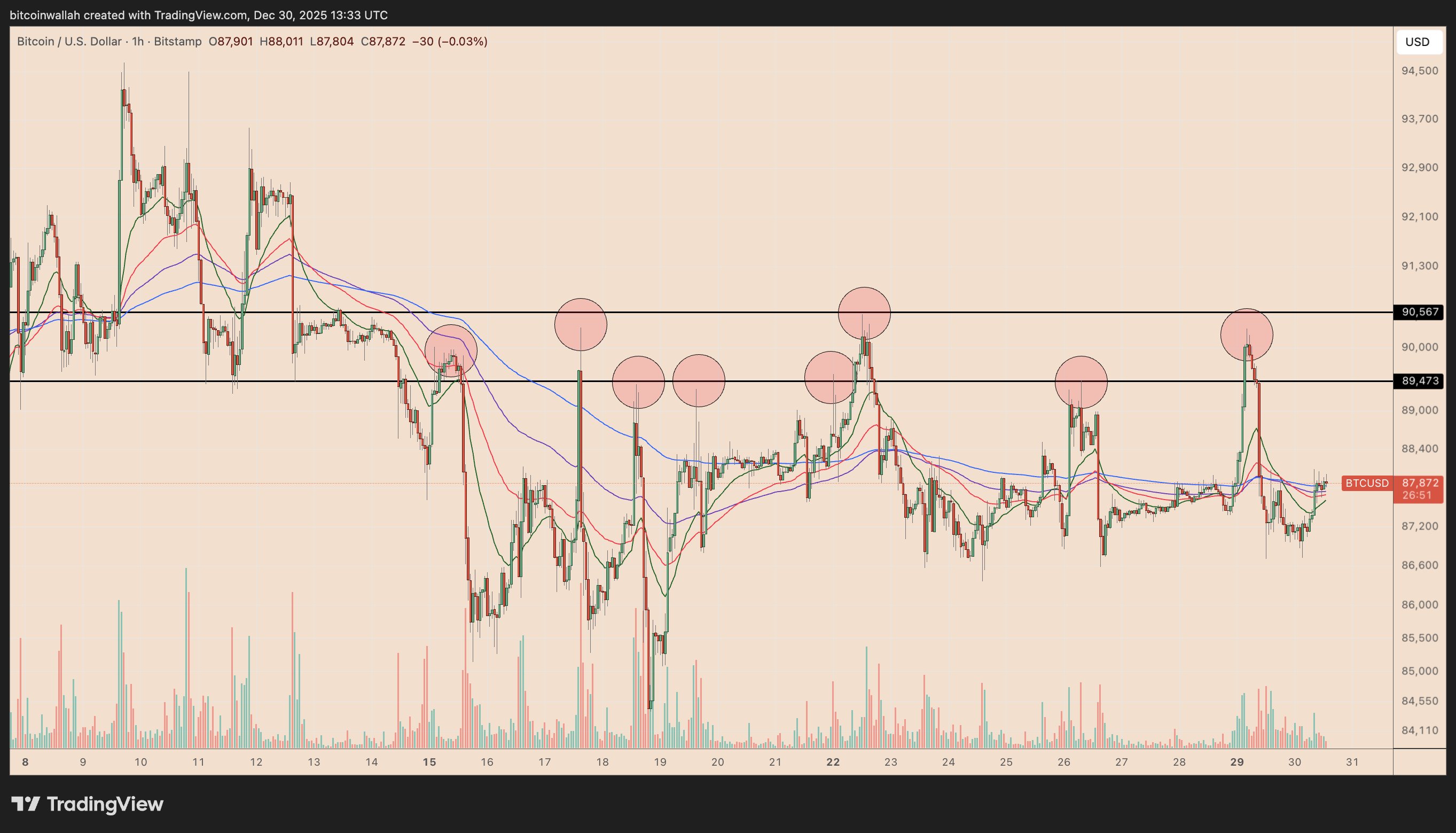
BTC/USD hourly chart. Source: TradingView
The sideways price action followed a sharp pullback of more than 30% from Bitcoin’s October all-time high above the $126,000 mark.
Bitcoin’s consolidation resembled pauses seen in previous four-year cycle downtrends, when its price often moved sideways for extended periods before establishing a clearer trend, according to multiple analysts.
Related: Bitcoin’s $90K rejection: Is BTC’s digital gold narrative losing to bonds?
With 2026 approaching, is this boring BTC range about to give way to a major breakout or a deeper correction?
Gold, silver charts: Lagging BTC price correlation
Bitcoin’s 30% pullback and sideways trading are consistent with past liquidity cycles, according to data highlighted by analyst Bull Theory.
In a Monday note, the analyst said gold (XAU) and silver (XAG) tend to move first after major market stress, while Bitcoin lags.
For instance, the precious metals rallied during the May-August 2020 period, but Bitcoin traded inside the $9,000-12,000 range in the same period.
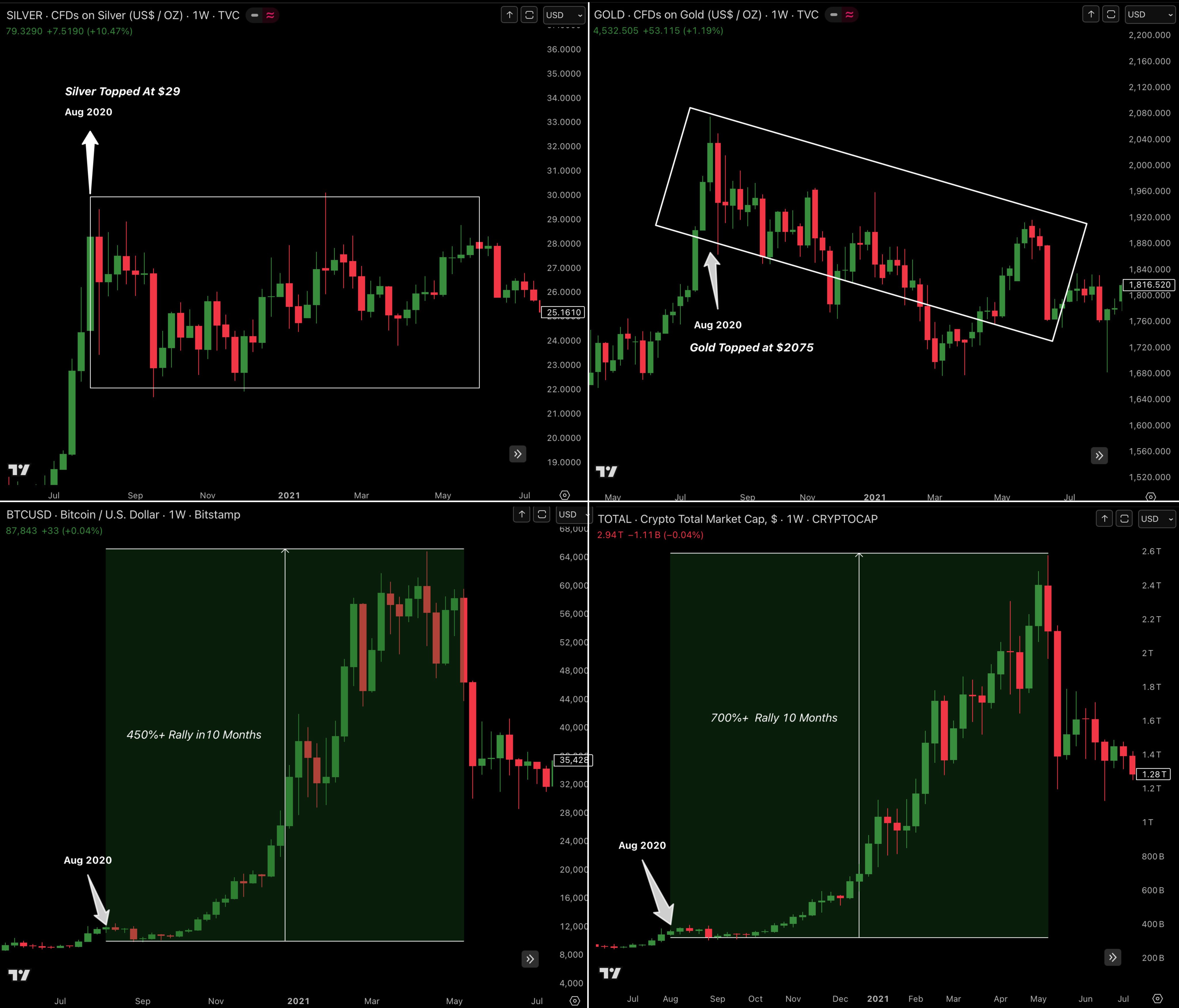
BTC/USD, TOTAL crypto market cap, XAU/USD and XAG/USD weekly chart. Source: TradingView/Bull Theory
“Gold and silver peaked in August 2020, and money started rotating into risk assets,” Bull Theory wrote, adding:
“This is when Bitcoin started moving. From August 2020 to May 2021: Bitcoin went from $12,000 to $64,800 (nearly 5.5x). Total crypto market cap went up almost 8x by mid-2021.”
A similar pattern was visible as of December 2025.
Gold and silver reached their respective all-time highs, while Bitcoin consolidated, hinting that the top cryptocurrency may benefit from delayed risk rotation just like it did after August 2020.
“That is why the current sideways action in BTC is not the start of the bear market, but rather a calm before the storm,” Bull Market added.
Bitcoin cost basis
The next chart to watch in 2026 is Bitcoin’s Cost Basis Distribution (CBD) heatmap, which shows where large portions of BTC supply were accumulated across different price levels.
In simple terms, it helps identify where most holders bought their coins and where buying or selling pressure is likely to emerge.
As of December, the heatmap highlighted a dense supply cluster of more than 940,000 BTC around the $84,000–$85,000 range, the largest concentration recorded since 2020.
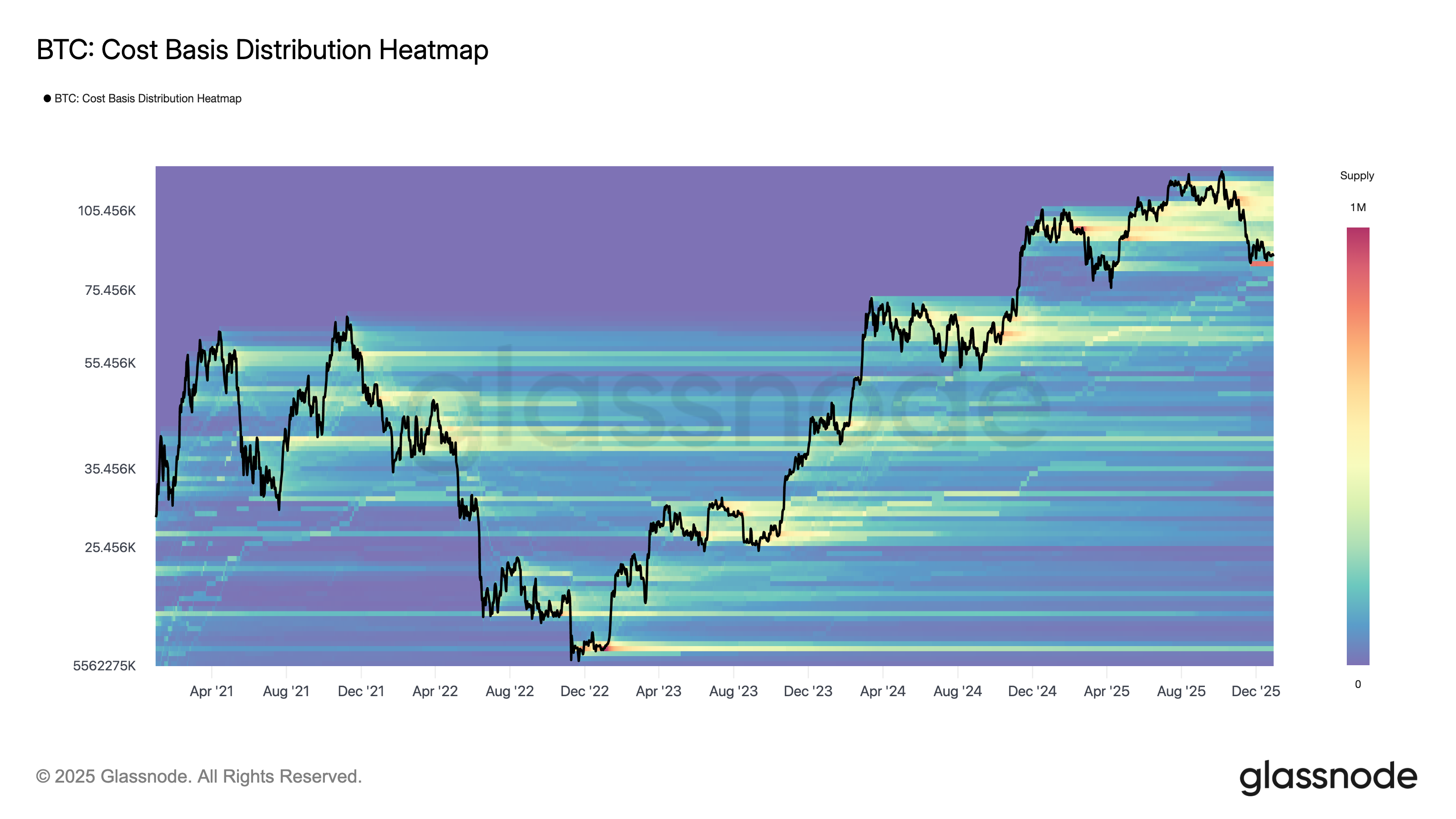
BTC cost basis distribution heatmap. Source: Glassnode
In the past, such supply zones appeared ahead of strong Bitcoin uptrends.
For example, in early 2023, heavy buying activity around $16,000 created a strong base. Over the following year, Bitcoin climbed steadily from that zone to above $38,000.
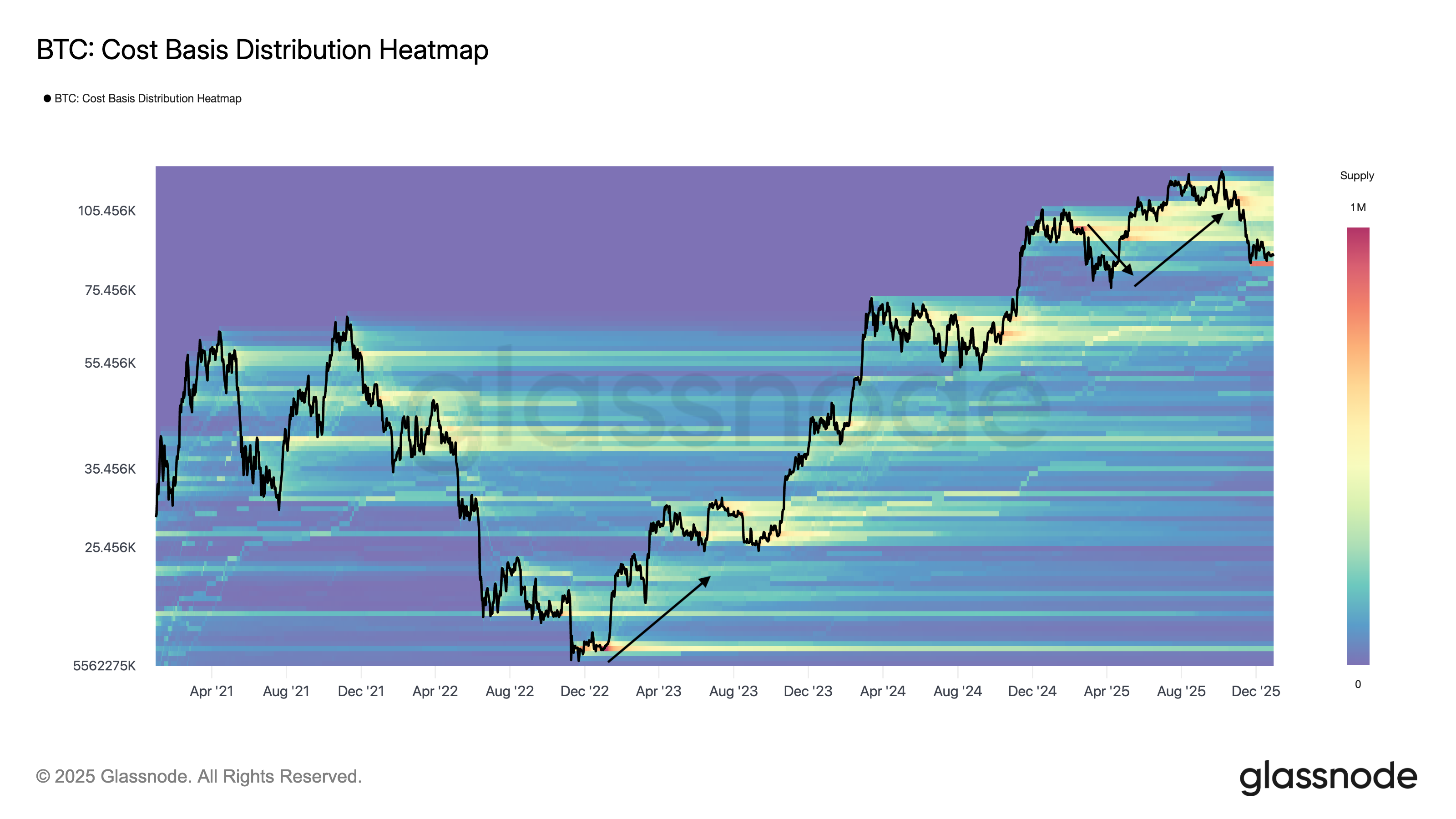
BTC cost basis distribution heatmap. Source: Glassnode
In 2025, Bitcoin dropped to the $75,000-76,000 range despite strong accumulation inside the $96,000-98,000 zone earlier.
BTC later recovered back into that high-accumulation zone, showing that buyers were willing to step in again rather than abandon their positions.
Bitcoin hash rate chart
Bitcoin mining has come under pressure as rising energy costs squeeze margins, forcing some miners to rely on debt or equity-linked financing to stay liquid.
Against this backdrop, the Bitcoin network’s hash rate has slipped after peaking in late October, raising concerns about miner stress.
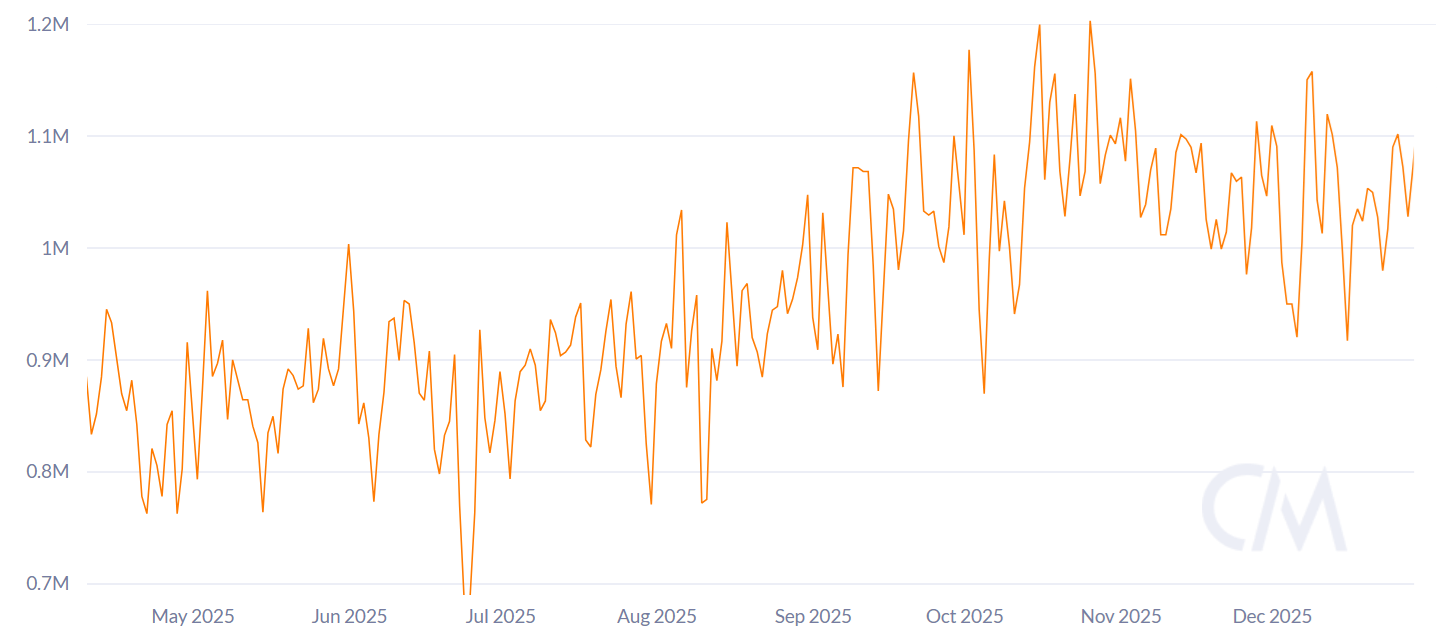
Estimated Bitcoin hash rate, petahashes/second. Source: Coinmetrics.io
Analysts at VanEck view the trend differently.
In a recent note, crypto research head Matt Sigel said miner capitulation has historically acted as a “bullish contrarian signal,” with Bitcoin posting positive 90-day returns roughly 65% of the time following sustained hash rate declines.
Bitcoin’s price rose 77% of the time over the following 180 days, with an average gain of about 72% after sustained hash rate declines. This fractal makes BTC’s hash rate a key chart to watch in 2026.
Bitcoin’s weekly trendline support
Bitcoin’s weekly chart highlights why the boring range matters heading into 2026.
As of December, BTC consolidated sideways while holding above its 100-week exponential moving average (100-week EMA; the purple wave) support.
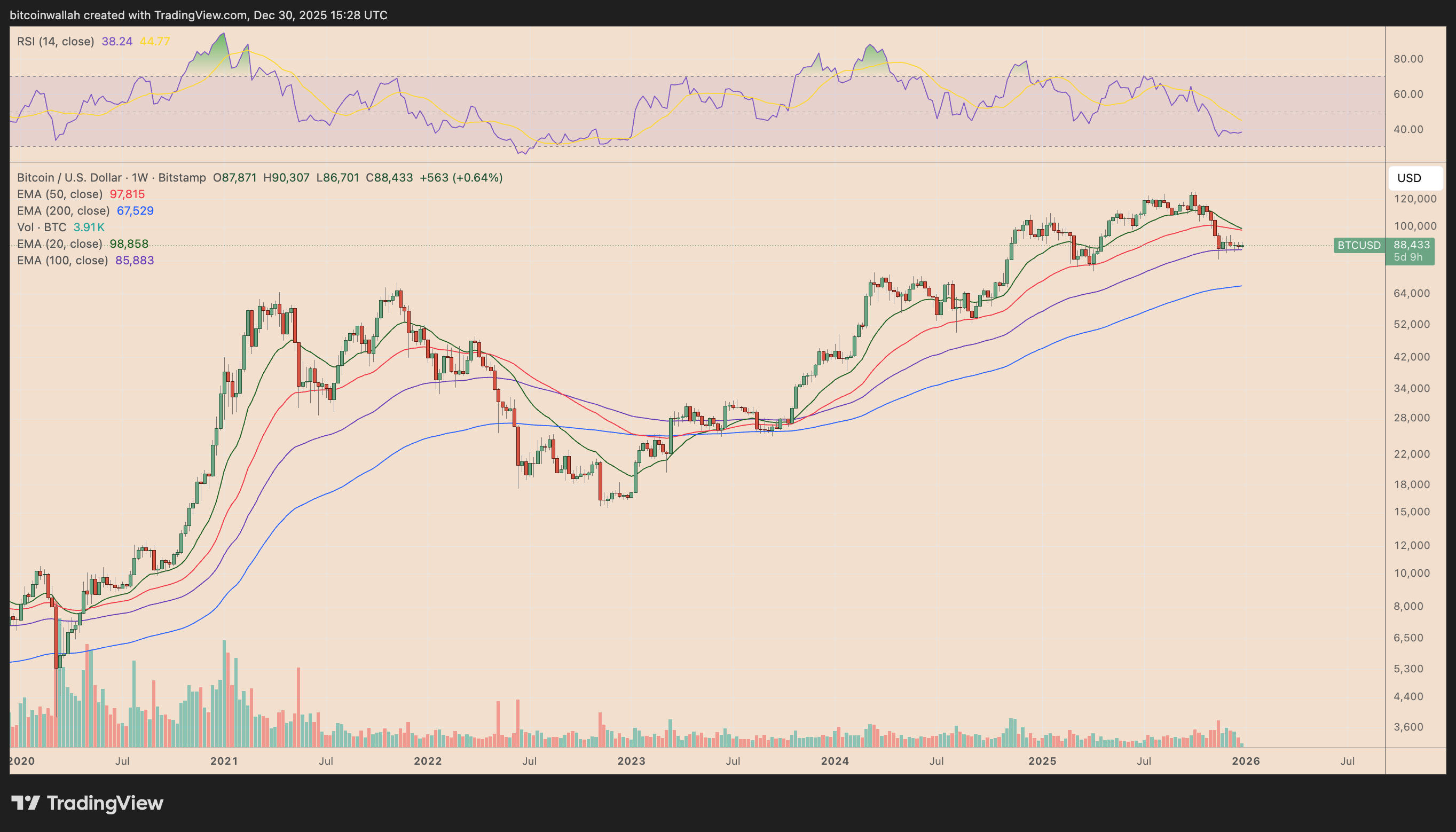
BTC/USD weekly chart. Source: TradingView
As long as price holds near this zone, the broader uptrend structure remains intact, even if momentum stays muted. In that case, BTC could rebound toward its 50-week EMA (the red wave) at around the $97,000-98,000 zone.
However, a sustained break below the 100-week EMA would raise risks of deeper pullbacks toward the 200-week EMA (the blue wave) at around the $67,500-66,000 area.
This article does not contain investment advice or recommendations. Every investment and trading move involves risk, and readers should conduct their own research when making a decision. While we strive to provide accurate and timely information, Cointelegraph does not guarantee the accuracy, completeness, or reliability of any information in this article. This article may contain forward-looking statements that are subject to risks and uncertainties. Cointelegraph will not be liable for any loss or damage arising from your reliance on this information.


Subscribe to daily byte-sized crypto news from Cointelegraph
This article is produced in accordance with Cointelegraph's Editorial Policy and is intended for informational purposes only. It does not constitute investment advice or recommendations. All investments and trades carry risk; readers are encouraged to conduct independent research.
More on the subject