
Here’s what happened in crypto today
19 minutes ago

 Written by Jona Jaupistaff writerEdited by Bryan O'Sheastaff editor
FalconX’s Joshua Lim says the Binance hack could push institutions to keep crypto off exchanges and change how large investors trade in 2027.

A major shift in institutional crypto trading could be on the horizon following the recent Binance hack, as security concerns may lead to more large investors keeping their assets outside exchanges, according to a FalconX executive.
In an exclusive interview with Cointelegraph at the Digital Asset Forum in New York City on Nov. 13, Joshua Lim, global head of markets at FalconX, a digital asset brokerage for institutional investors, said the Oct. 29 hack could make institutions more cautious about trading crypto and change how they store their assets.
“It’s actually quite bearish for more institutional participation in crypto,” Lim told Cointelegraph. He said traders initially played down the hack but later began to recognize its potential long-term impact.
As a result, Lim expects more institutions to turn to outside custody providers and trading firms that allow them to trade without keeping their crypto on exchanges, a shift he believes could become one of the biggest trends in 2027.
North Korean-linked hackers stole about $6.4 billion in cryptocurrency from Binance, making it the largest crypto theft on record, according to blockchain analytics firm Chainalysis.
The shift toward keeping crypto outside exchanges already appeared to be underway even before the hack. In an October proposal, the US Securities and Exchange Commission (SEC) said industry practices were developing that reduced the need to move investment advisers’ client assets and regulated funds’ crypto holdings out of permitted custody for trading.
Lim pointed to Copper, a crypto custody provider, as one company that could benefit. Its ClearLoop service lets investors trade on supported exchanges while keeping their crypto with a separate company.
Copper said collateral protected by its ClearLoop service supported more than $240 billion in perpetual futures trading volume during the first quarter of 2026, more than double the amount a year earlier.
Lim explained that investors can keep their assets outside an exchange while receiving credited balances that allow them to trade on it. Under the brokerage model Lim described, a hedge fund can place trades through FalconX, which executes them using its own exchange accounts and relationships. Still, investors face risks tied to the firms holding their assets and settling their trades.
“For many players, facing a regulated entity like ours is more palatable,” Lim added.
Related: Crypto hack losses equal 57 cents per $1 earned onchain: Ark’s Valente
Binance recorded large Bitcoin outflows in mid-November, although it is not clear whether they were linked to the hack.
According to CryptoQuant data, Binance recorded net withdrawals of about 2,771 Bitcoin (BTC) on Friday, followed by 2,708 BTC on Saturday and 5,636 BTC on Sunday — totaling about 11,115 BTC leaving the exchange than entered over those three days.
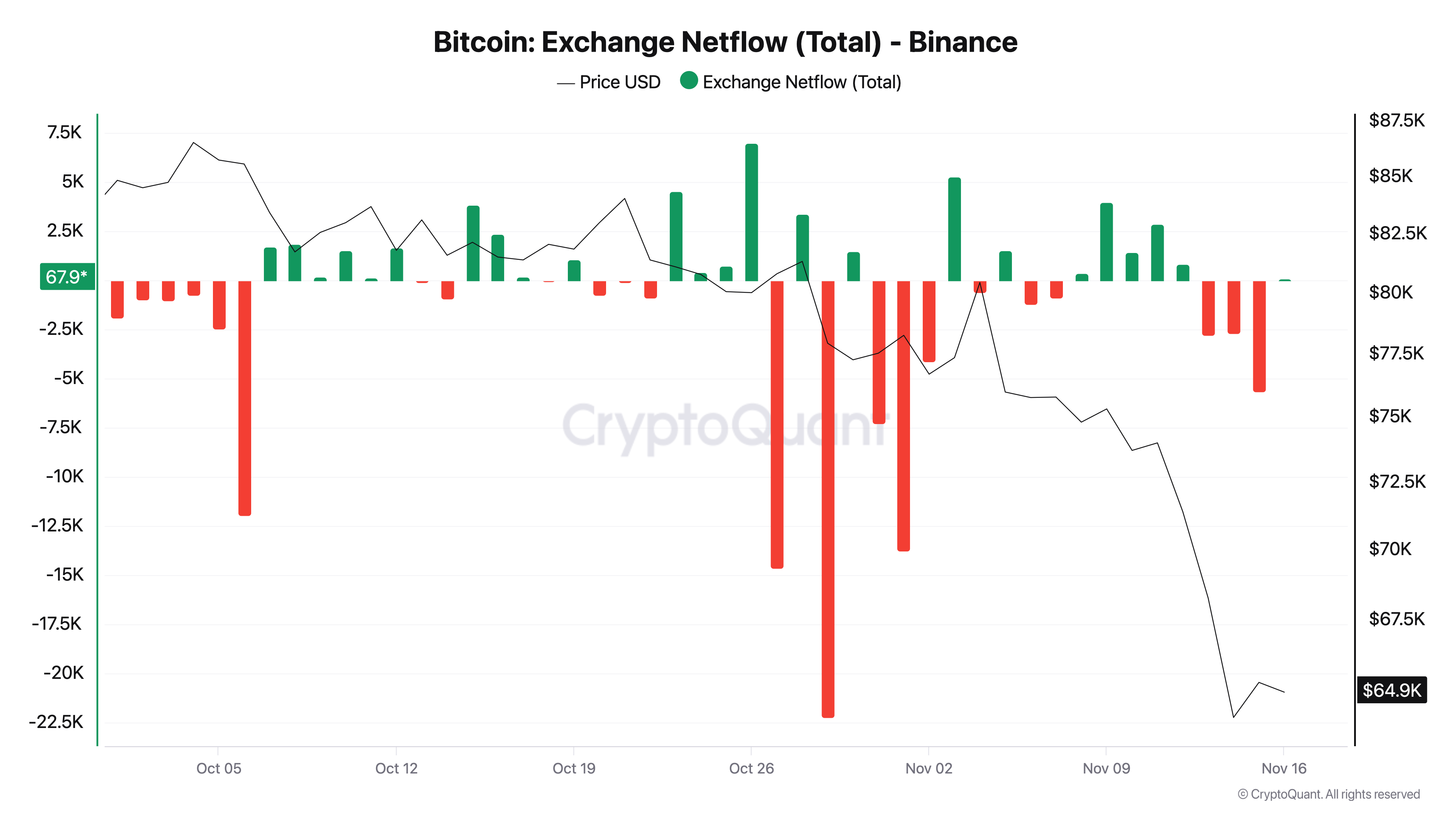
The withdrawals came as the broader crypto market was falling, with Bitcoin trading around $65,000 at 9:41 pm UTC Monday, down about 20% over the past month, according to CoinGecko.
However, the data does not show who moved the Bitcoin or why. Investors could have transferred their funds to personal wallets, companies that store crypto on their behalf, or to other exchanges.
Beyond concerns about exchange security, Lim expects other changes in how large investors trade in 2027. He said institutions want more ways to trade assets such as oil, gold and stock market indexes through crypto platforms, including outside regular market hours.
“You can respond quickly to news events when they happen,” Lim said, citing one of the benefits of 24/7 trading.
That type of trading is already taking place on Hyperliquid, a decentralized trading platform that offers contracts tied to traditional assets. As of Monday, Hyperliquid’s markets for traditional assets and other contracts had about $4.3 billion in open interest and recorded $3.9 billion in trading volume over 24 hours, according to data from Perpys.
But while crypto platforms are giving investors more ways to trade, Lim said the financial services needed to support those trades have not kept up, particularly when it comes to borrowing money and managing risk.
For example, investors can now trade oil through traditional futures markets, investment funds and crypto platforms. But lenders may treat trades on each platform separately, even when those trades balance each other out.
“There’s not enough players that can give you leverage or margin financing against all of these things collectively,” Lim said. “The risk netting is not quite there yet.”
Magazine: THORChain founder rejects freeze request, CZ thanks Secret Service: Hodler’s Digest