


 Written by Yashu Golaformer writerEdited by Fernando Quirósformer editor
Bitcoin-gold correlation signals at least 50% BTC price gains by March
MarketsPublishedJan 13, 2026
Bitcoin may take the lead over gold in 2026 as liquidity expansion and cycle fractals point to a rally that may take BTC price to $144,000.

Bitcoin’s (BTC) 52-week correlation with gold reached zero for the first time since mid-2022 and may turn negative by the end of January.
Key takeaways:
- BTC–gold divergence has historically preceded strong Bitcoin rallies.
- Liquidity trends and cycle fractals point to BTC leading the way with a $144,000–$150,000 price target.
Past fractals show Bitcoin rallying after gold
In the past four comparable instances, Bitcoin rallied by an average of 56% within roughly two months after its correlation with gold turned negative.
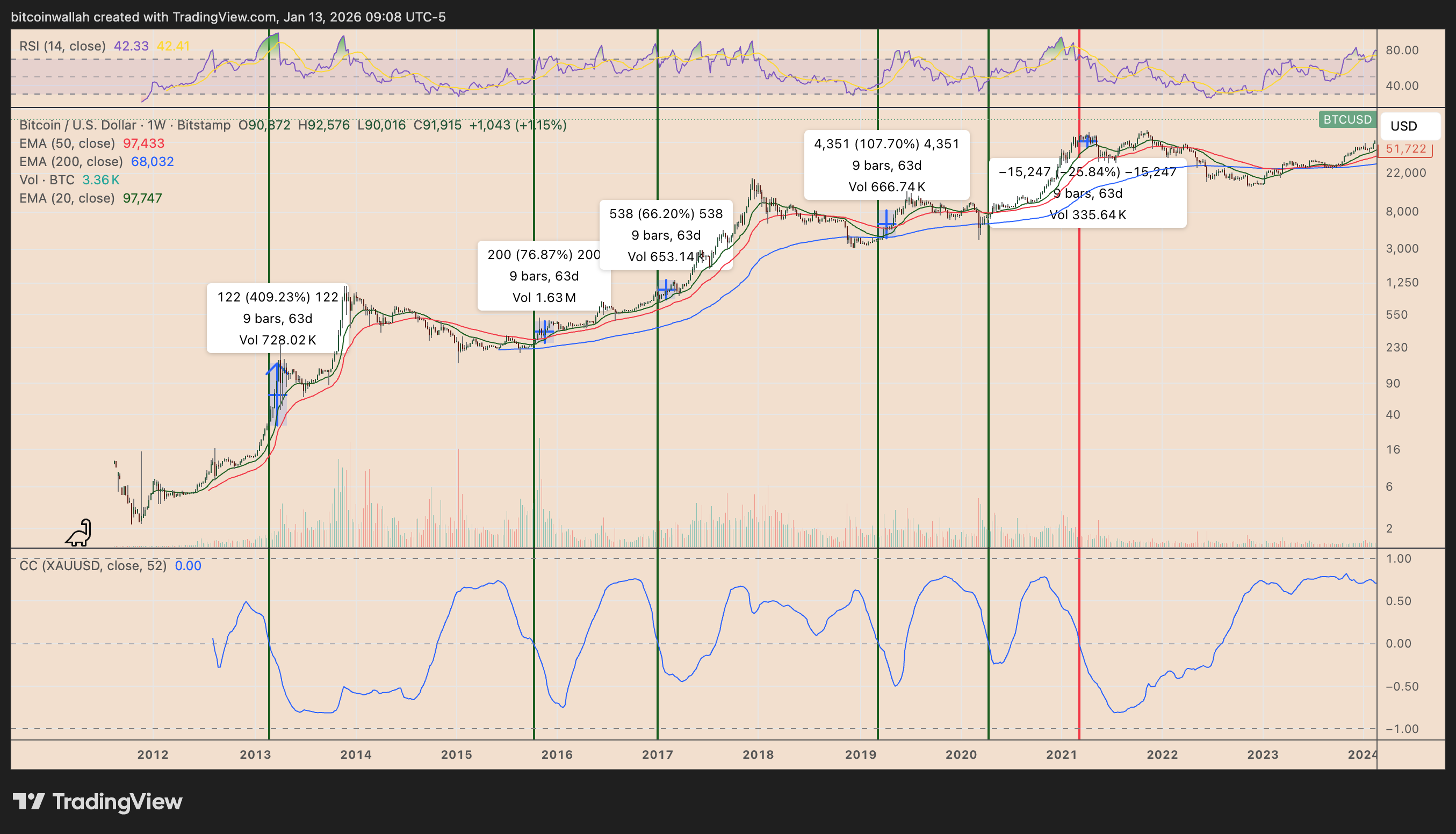
BTC/USD weekly chart. Source: TradingView
Bitcoin broke this pattern in May 2021, when it fell 26% instead of rallying.
Back then, Tesla had suspended Bitcoin payments, while China had intensified its crackdown on mining and trading, triggering forced deleveraging across the market and overriding the historical correlation signal.
The current setup looks bullish due to several macro tailwinds, including rising global liquidity (as tracked by the global M2 supply) and the end of the Federal Reserve’s quantitative tightening.
“Historically, Bitcoin bull markets have aligned with periods of increased global liquidity,” said Matt Hougan, the global head of research at Bitwise Asset Management, in their latest report, adding:
“As a new monetary easing cycle has begun globally and with the Fed’s QT program ending, it is likely that we will see this growth rate continue to the upside throughout 2026, a positive catalyst for Bitcoin’s price.”
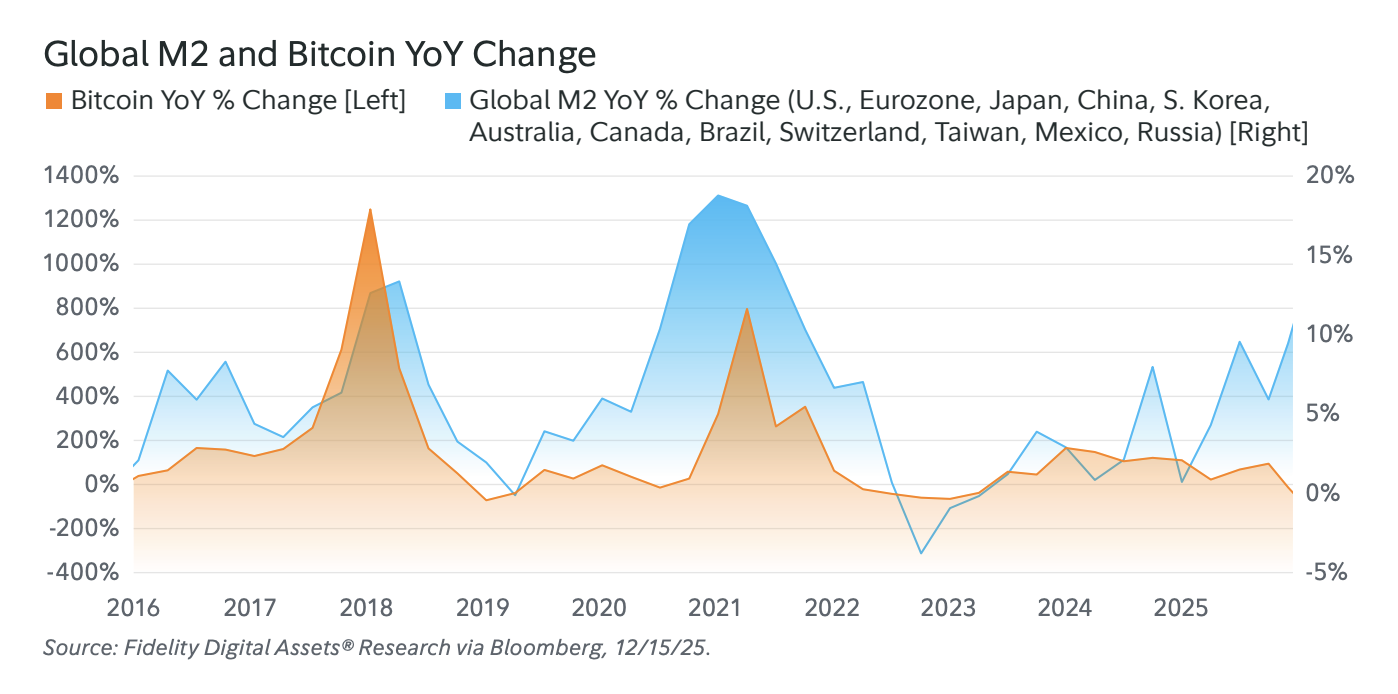
Global M2 and Bitcoin year-over-year percentage change. Source: Fidelity
Under the same macro conditions, gold surged 65% in 2025, while Bitcoin’s returns were almost flat. But, according to Hougan, BTC will take the lead over gold in 2026.
“Although gold and Bitcoin occasionally move in tandem, their long-term correlation is only mildly positive, which we somewhat counterintuitively find attractive,” he wrote, adding:
“This suggests Bitcoin can potentially enhance a portfolio’s risk-adjusted returns without adding a ‘levered gold’ asset.”
Analyst Tuur Demeester echoed a similar sentiment, saying that “accelerated money printing remains a major tailwind for Bitcoin” in 2026.
Bitcoin mirroring 2020-2021 bull cycle
A 56% rally could push the BTC price into the $144,000-150,000 price range.
A similar bullish case emerged from a long-term fractal shared by crypto analyst Midas, who compared Bitcoin’s current structure with its 2020–2021 cycle.
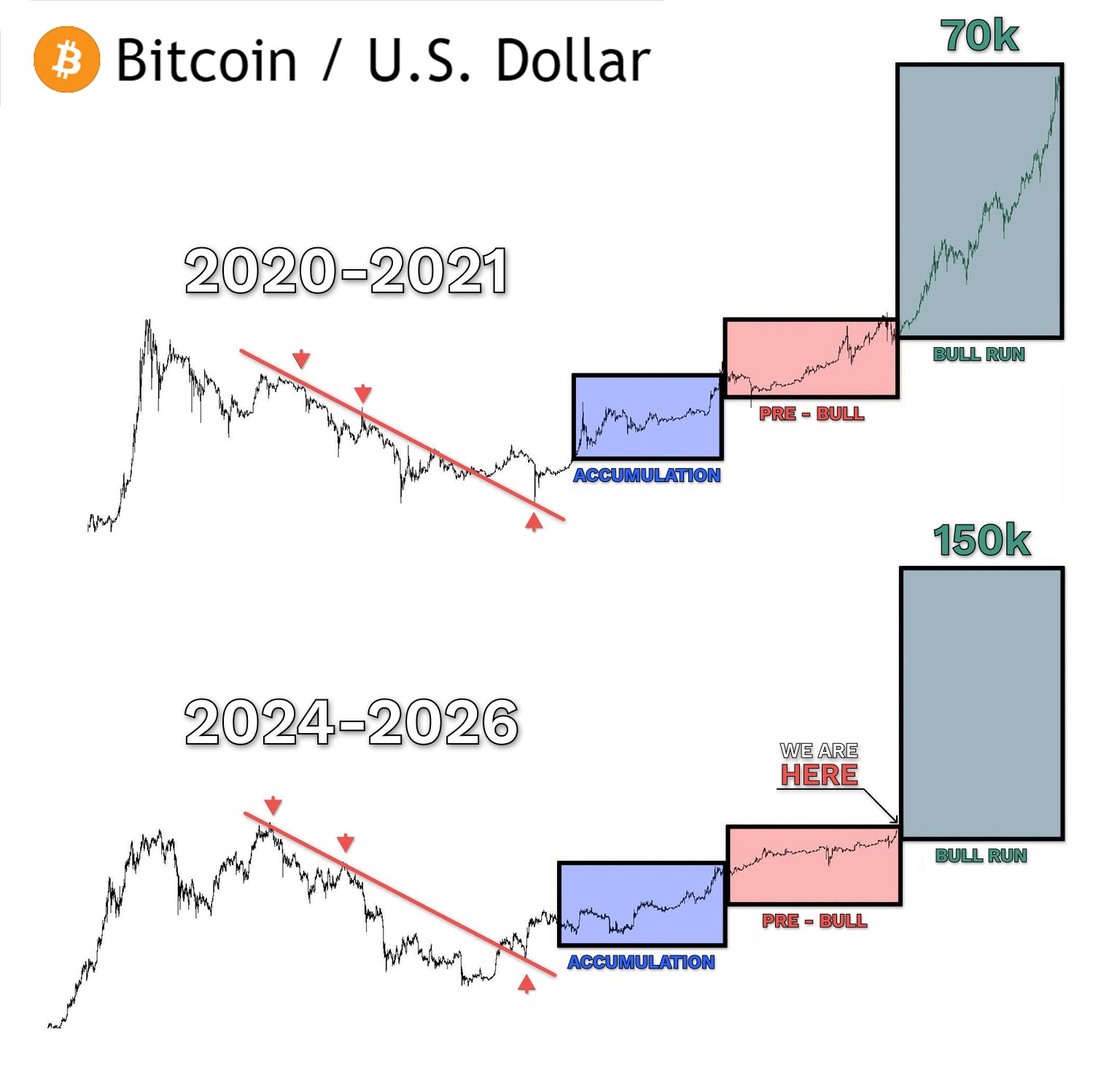
BTC/USD 2020-2021 vs. 2024-2026 cycle comparison. Source: Midas
The chart showed BTC completing a prolonged downtrend, followed by a multi-month accumulation phase and a steady pre-bull breakout, a sequence that previously preceded a parabolic advance toward $70,000.
Related: Bitcoin attempts $92K breakout as stocks hit new record on low US CPI data
In the current 2024–2026 setup, Bitcoin appears to be following the same course, with price already transitioning out of accumulation and into a pre-parabolic phase.
The next leg may resemble the prior bull expansion, placing $150,000 as a primary target if the fractal continues to play out.


Subscribe to daily byte-sized crypto news from Cointelegraph
This article is produced in accordance with Cointelegraph's Editorial Policy and is intended for informational purposes only. It does not constitute investment advice or recommendations. All investments and trades carry risk; readers are encouraged to conduct independent research.
More on the subject