


 Written by Nate Kostarstaff writerEdited by Robert Lakinstaff editor
Hut 8 posts $279M Q4 loss despite surge in compute revenue
Latest NewsPublishedFeb 25, 2026
The Bitcoin miner's digital asset losses mounted, even as it advanced a 15-year, $7 billion AI data center lease.

(Update Feb. 26, 3:00 PM UTC): Adds information disclosed in filing on Coinbase Credit facility, in the eighth paragraph.)
Hut 8 (HUT) reported a fourth-quarter net loss on Wednesday of $279.7 million, from income of $152.2 million a year earlier.
Revenue for the quarter ended Dec. 31 was $88.5 million, compared with $31.7 million in the same period a year earlier.
In its earnings report, Hut 8 said compute revenue for the three-month period totaled $81.9 million, up from $19.2 million a year earlier. The company did not disclose quarterly Bitcoin (BTC) production or sales figures.
Operating results were affected by a $401.9 million loss on digital assets in the quarter, compared with a $308.2 million increase a year earlier.
Hut 8 said it ended the year with about $1.4 billion in cash and Bitcoin reserves and up to $400 million in revolving credit capacity.
During the quarter, the company signed a 15-year lease for 245 megawatts of AI data center capacity at its River Bend campus valued at $7 billion. The agreement includes payments financially backstopped by Google and builds on Hut 8’s broader expansion into AI and high-performance computing infrastructure.
The company also completed the sale of a 310 MW natural gas portfolio in February and said it launched American Bitcoin Corp. as a separately listed vehicle focused on Bitcoin accumulation.
At the end of December, Hut 8 amended and expanded its Bitcoin-backed credit facility with Coinbase Credit to $200 million, drawing the full amount under the agreement and securing it with Bitcoin held in custody, the miner said.
According to BitcoinTreasuries.NET data, Hut 8 holds 13,696 BTC, ranking it among the larger public Bitcoin holders. Shares were down about 4.5% at last look in Wednesday morning trading. Industry tracker CoinShares Bitcoin Mining ETF (WGMI) was up less than 1%.
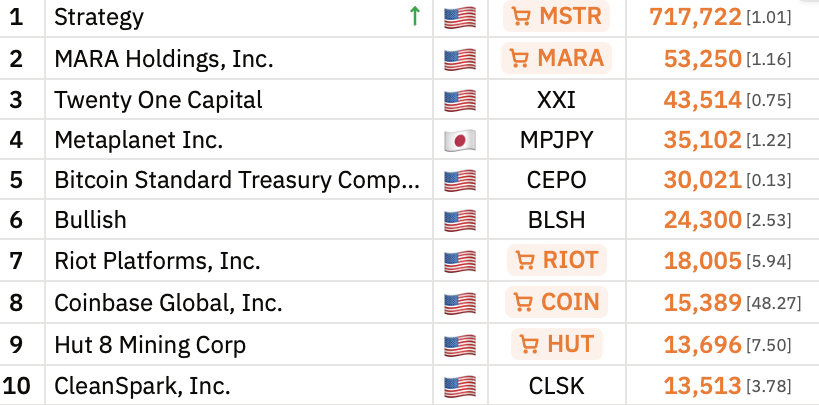
Top 10 Bitcoin treasury companies. Source: BitcoinTreasuries.NET
Related: Solo Bitcoin miner bags over $200K block reward using rented hashrate
AI and infrastructure initiatives lift mining stocks
Even as Bitcoin has fallen to about $68,150 from about $87,500 at the start of the year, per CoinGecko data, shares of most of the biggest publicly traded Bitcoin miners by market capitalization have posted year-to-date gains.
TeraWulf is up more than 50% this year, while Riot Platforms and Hut 8 have advanced about 30% and 29%, respectively, according to data from BitcoinMiningStock.io.
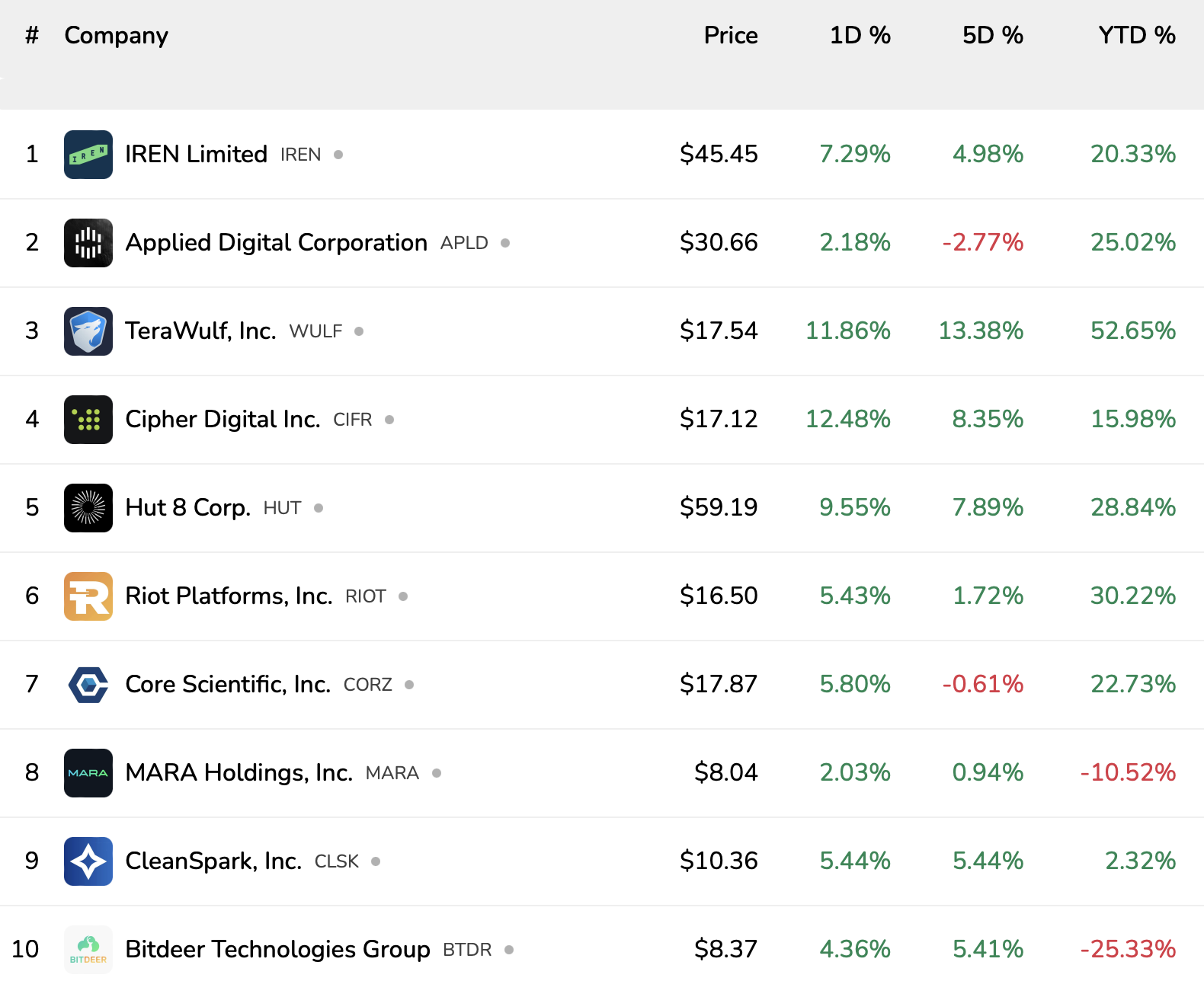
Top 10 Bitcoin mining stocks by market cap. Source: Bitcoinminingstock.io
The divergence suggests investors may be valuing miners not solely on Bitcoin price exposure, but increasingly on their energy infrastructure and data center strategies.
In August, TeraWulf signed 10-year colocation leases with AI infrastructure provider Fluidstack valued at $3.7 billion. Google is backing about $1.8 billion of the lease obligations and providing debt financing, receiving warrants for about 41 million WULF shares, or about 8% of the company.
Last week, activist investor Starboard Value urged Riot Platforms to speed up its push into high-performance computing and AI data centers, saying Texas-based development could unlock $9 billion to $21 billion in equity value. Starboard holds about 12.7 million Riot shares.
Other miners are also repositioning toward AI-linked infrastructure. CleanSpark, Core Scientific, HIVE Digital and MARA Holdings have repurposed portions of their infrastructure or outlined similar AI and high-performance computing initiatives.
Cango said it sold $305 million worth of Bitcoin on Feb. 9, in part to finance its planned expansion into AI and HPC.
Magazine: Clarity Act risks repeat of Europe’s mistakes, crypto lawyer warns


Subscribe to daily byte-sized crypto news from Cointelegraph
Cointelegraph is committed to independent, transparent journalism. This news article is produced in accordance with Cointelegraph’s Editorial Policy and aims to provide accurate and timely information. Readers are encouraged to verify information independently.
More on the subject