


 Written by Biraajmaan Tamulystaff writerReviewed by Ray Salmondstaff editor
Multi-day negative Bitcoin funding signals ‘overcrowded’ short trade: Reversal coming?
MarketsPublishedFeb 12, 2026
Bitcoin’s daily funding rate has been deeply negative for days, reflecting heavy short positioning, but historical data also suggests that a squeeze on bears could be brewing.
Bitcoin (BTC) formed a new weekly low at $65,500 on Thursday, as the price has continued to trend lower over the past four days. Derivatives data also indicate that traders are heavily positioned to the downside.
Analysts said that this setup may lead to a sharp move higher that forces sellers to close their positions, even as other indicators hint that the move may not be straightforward.
Key takeaways:
- The seven-day average funding rate for Bitcoin has turned strongly negative for the first time since March 2023 and November 2022.
- Bitcoin liquidity and stablecoin flow data show renewed capital outflows, reducing the odds of a sustained squeeze.
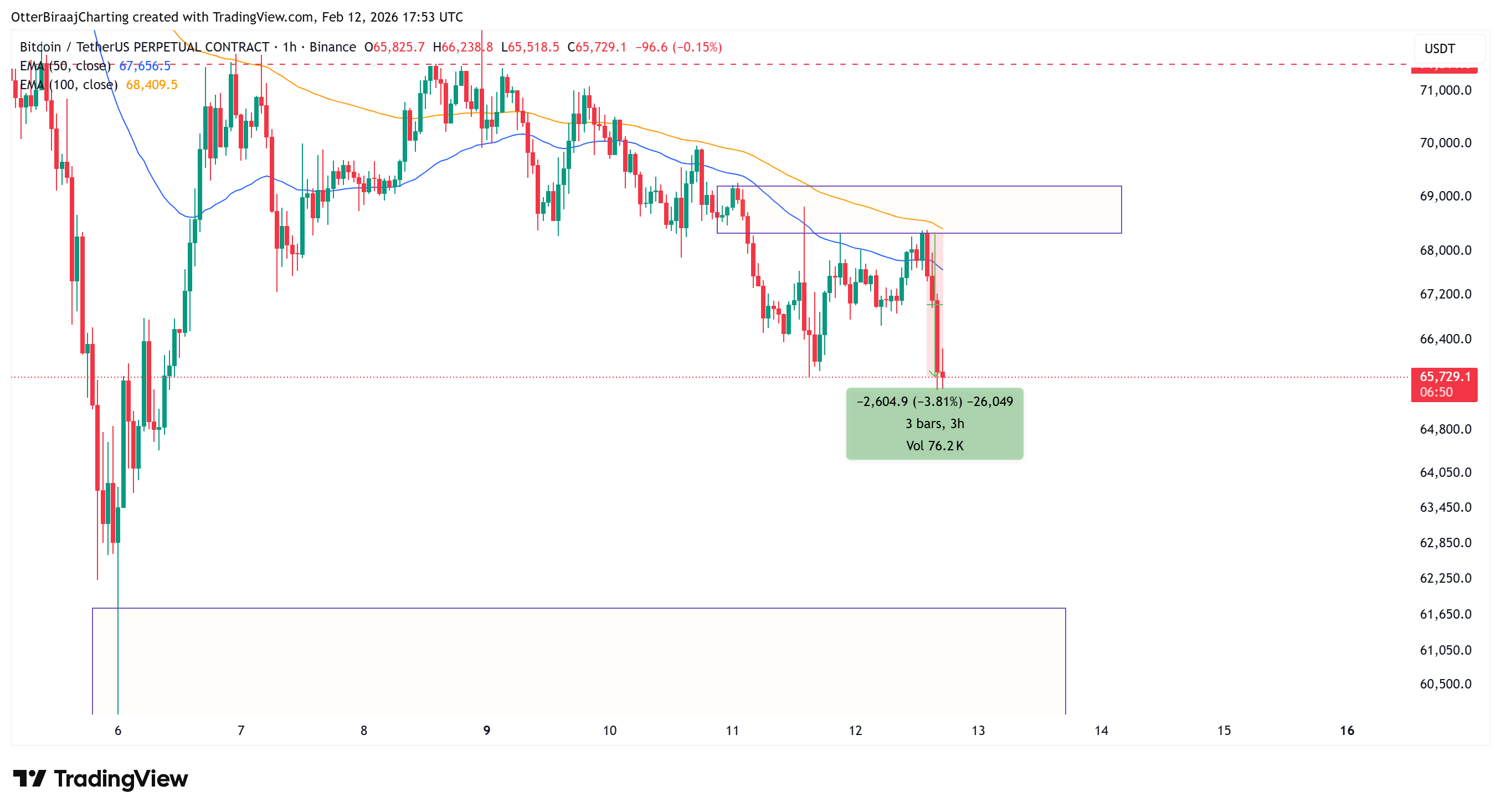
Bitcoin one-hour chart. Source: Cointelegraph/TradingView
Bitcoin funding stays red as short positions rise
Bitcoin’s daily funding rate has remained in deep red territory since the beginning of February, marking its most negative period since May 2023. The seven-day simple moving average (SMA) has flipped negative for the first time in nearly a year.
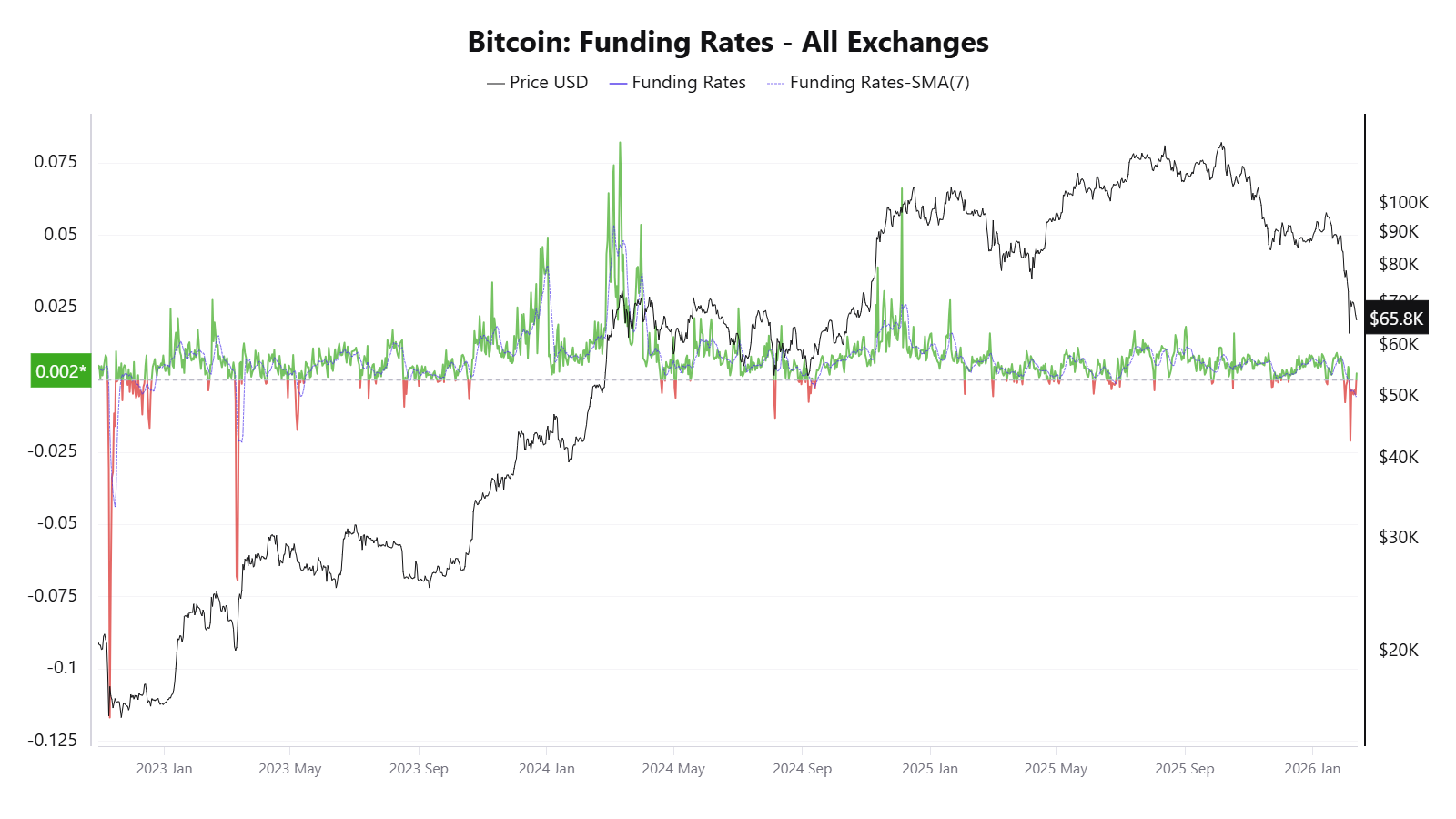
Bitcoin daily funding rate. Source: CryptoQuant
The funding rate is a periodic payment between the traders in futures markets. When it is negative, the short sellers pay long traders, signaling that the bearish positions are crowded, and vice versa.
Crypto analyst Leo Ruga said the current “red funding rate for days” signals that the bearish or short trade may be getting overcrowded. Ruga added:
“This is the kind of negative funding that typically appears during bottoming phases. Not because shorts are wrong, but because extended negative funding often marks exhaustion of selling pressure.”
Similarly, market analyst Pelin Ay highlighted that the funding rate recently dropped near -0.02 last Friday, with sharp negative spikes. Ay added that when sharp price declines coincide with negative funding, it can set the stage for a short squeeze, particularly if $58,000 holds as the local support.
Related: Bitcoin must close week at $68.3K to avoid ‘bearish acceleration:’ Analyst
The last time Bitcoin’s daily funding rate stayed deeply negative for 10 to 20 days after a bullish phase was in May 2021 and January 2022. In May 2021, BTC corrected for nearly two months before breaking out to new highs. In January 2022, the negative stretch preceded a broader bearish cycle. Thus, extended negative funding has not consistently produced an immediate reversal in the past
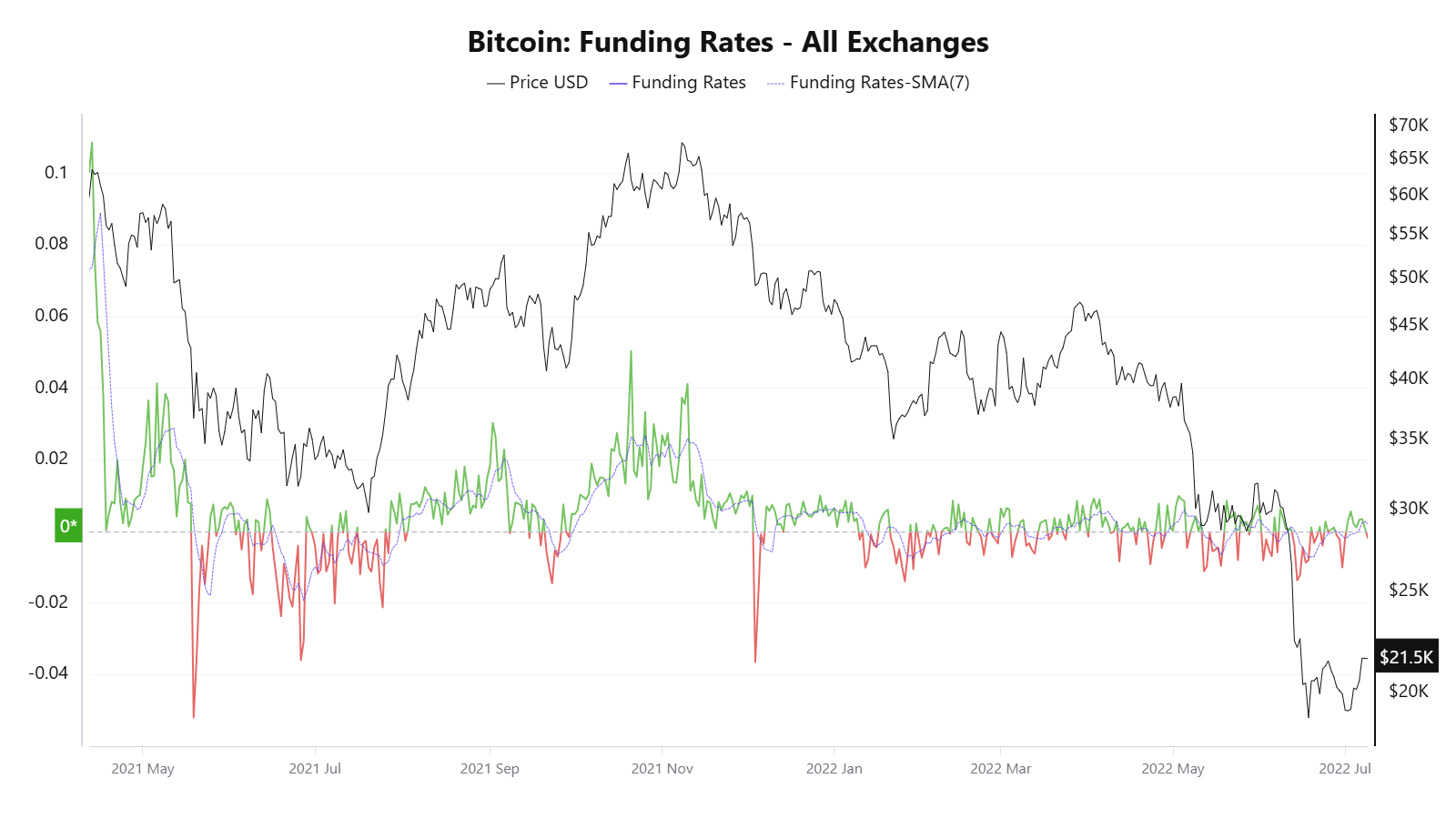
Bitcoin funding rate comparison between May 2021 and January 2022. Source: CryptoQuant
Onchain data supports a cautious view. Bitcoin researcher analyst Axel Adler Jr. noted that the SSR oscillator, which measures Bitcoin’s strength relative to stablecoins, has mostly stayed in negative territory since August 2025.
A brief move into positive territory in mid-January (+0.057) coincided with a rally above $95,000, but the oscillator has since dropped to -0.15 as the price pulled back toward $67,000.
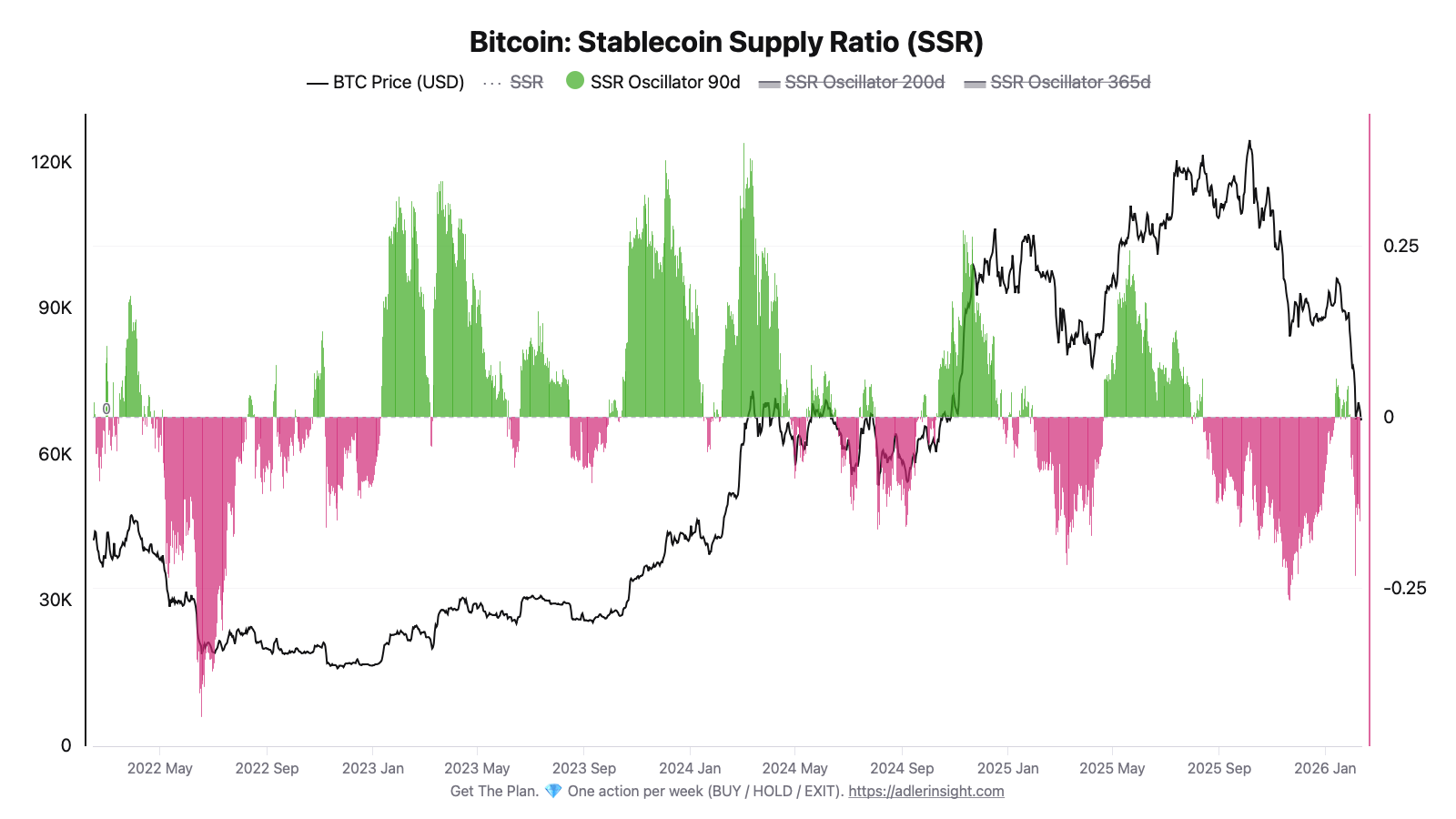
Bitcoin Stablecoin Supply Ratio (SSR). Source: Axel Adler. Jr
Stablecoin flows tell a similar story. The 30-day change in USDt (USDT) market cap turned positive in early January (+$1.4 billion), but it has since reversed to -$2.87 billion, signaling a period of capital outflows.
Until liquidity trends and the SSR oscillator turn sustainably positive, Adler Jr. said that the BTC market remains in a “risk-off” phase.
Related: Binance completes $1B Bitcoin conversion for SAFU emergency fund


Subscribe to daily byte-sized crypto news from Cointelegraph
This article is produced in accordance with Cointelegraph's Editorial Policy and is intended for informational purposes only. It does not constitute investment advice or recommendations. All investments and trades carry risk; readers are encouraged to conduct independent research.
More on the subject

